
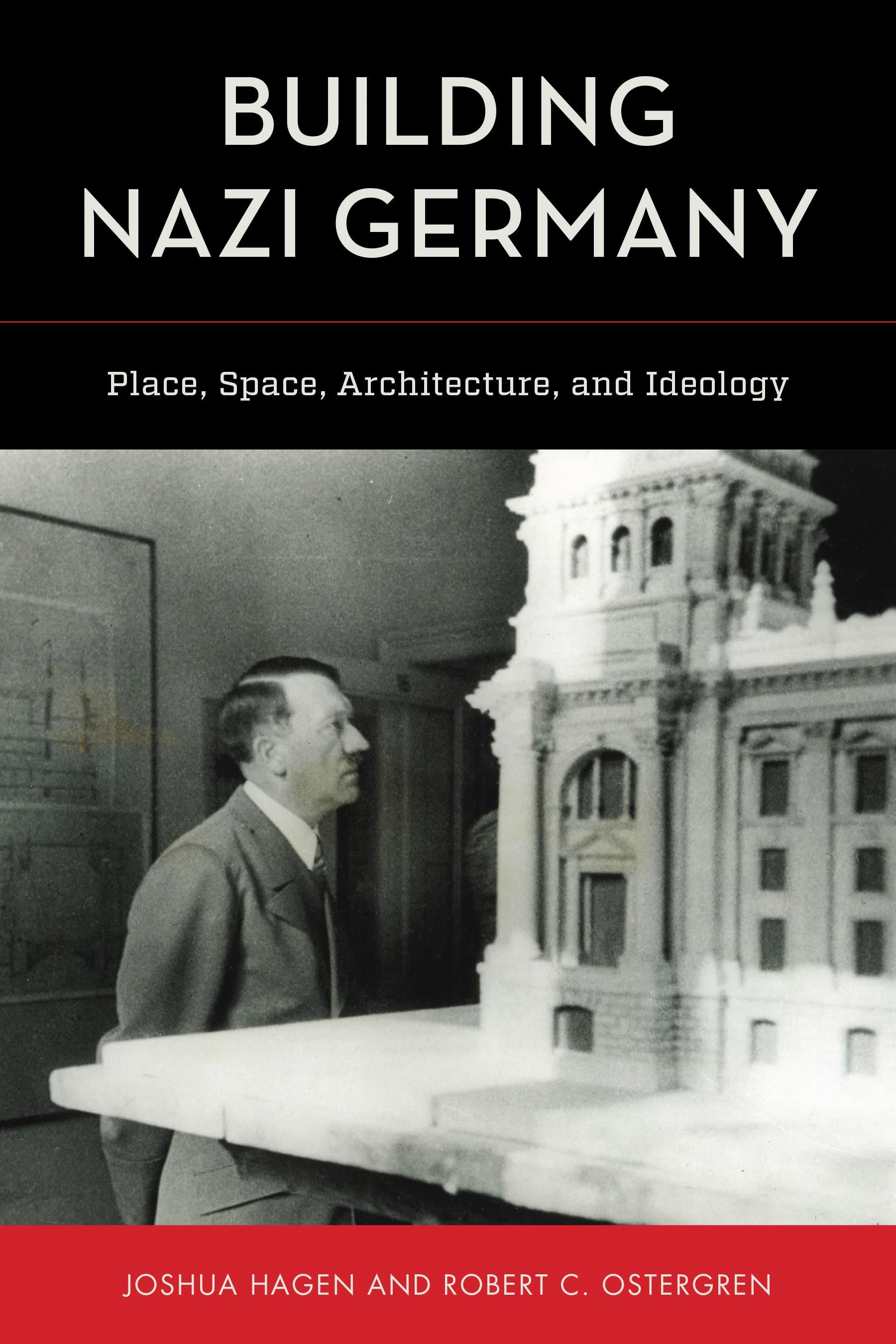
This richly illustrated book details the wide-ranging construction and urban planning projects launched across Germany after the Nazi Party seized power. Hagen and Ostergren show that it was far more than just an architectural and stylistic enterprise. Instead, it was a series of interrelated programs intended to thoroughly reorganize Germany’s economic, cultural, and political landscapes. The authors trace the specific roles of its component parts—the monumental redevelopment and cleansing of cities; the construction of new civic landscapes for educational, athletic, and leisure pursuits; the improvement of transportation, industrial, and military infrastructures; and the creation of networked landscapes of fear, slave labor, and genocide. Through distinctive examples, the book draws out the ways in which combinations of place, space, and architecture were utilized as a cumulative means of undergirding the regime and its ambitions. The authors consider how these reshaped spaces were actually experienced and perceived by ordinary Germans, and in some cases the world at large, as the regime intentionally built a new Nazi Germany.
Betal nemt med kort, Klarna, Apple Pay eller Google Pay. Ikke tilfreds? Du har altid 14 dages fortrydelsesret. Læs mere i vores vilkår. Har du spørgsmål, så send os en mail på hello@memmo.org.
Memmo gør det nemmere at studere – uanset hvor du er i verden. Hos os samler du dine kursusbøger og smarte studieværktøjer ét sted: resuméer, quizzer, podcasts og flashcards. Og så er der Ted, din studieven, der svarer på alt, du undrer dig over. Over 50 000 studerende studerer allerede her – bygget til at hjælpe dig med at lære hurtigere og stresse mindre.