
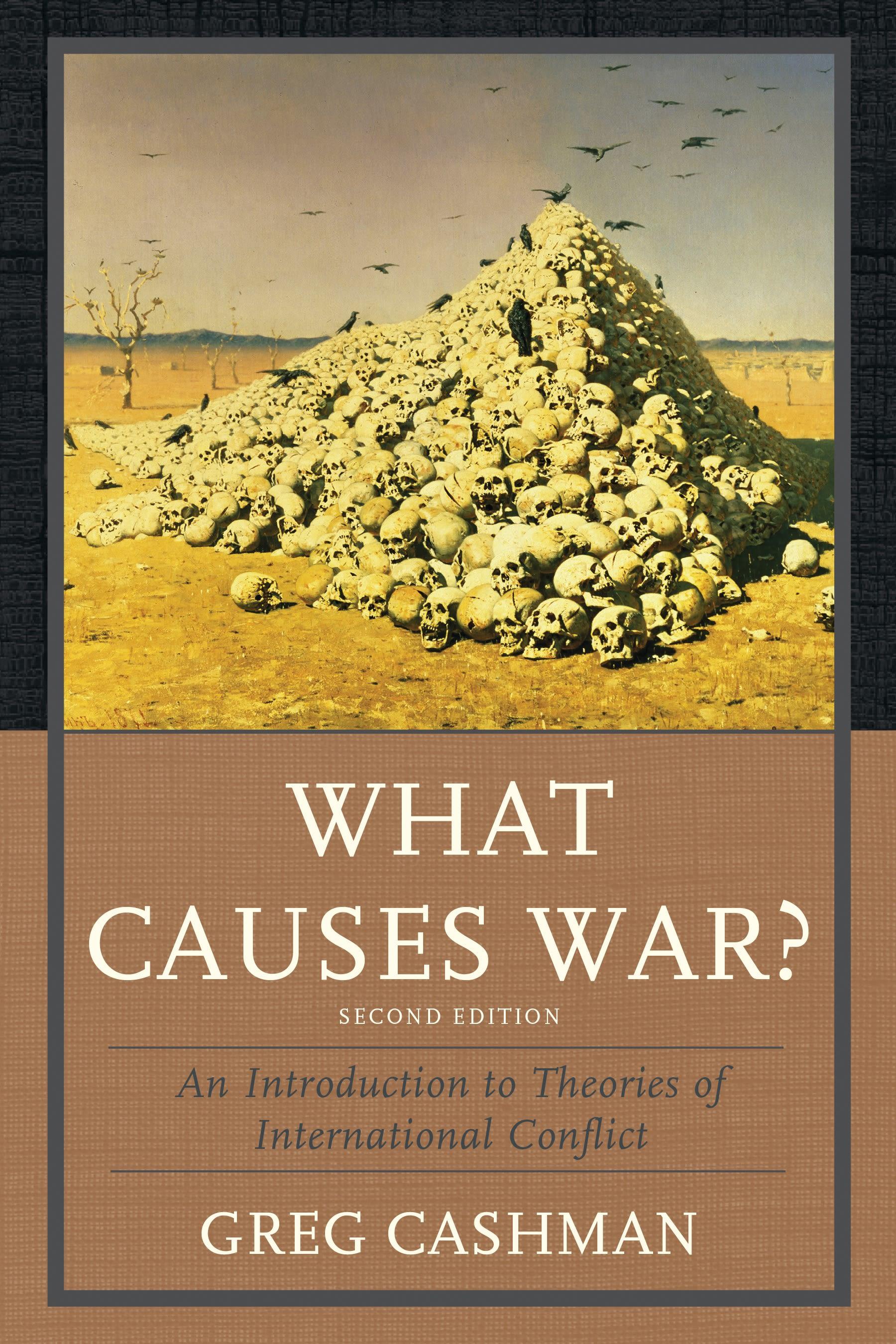
Now in a thoroughly revised and updated edition, this classic text presents a comprehensive survey of the many alternative theories that attempt to explain the causes of interstate war. For each theory, Greg Cashman examines the arguments and counterarguments, considers the empirical evidence and counterevidence generated by social-science research, looks at historical applications of the theory, and discusses the theory’s implications for restraining international violence.
Among the questions he explores are: Are humans aggressive by nature? Do individual differences among leaders matter? How might poor decision making procedures lead to war? Why do leaders engage in seemingly risky and irrational policies that end in war? Why do states with internal conflicts seem to become entangled in wars with their neighbors? What roles do nationalism and ethnicity play in international conflict? What kinds of countries are most likely to become involved in war? Why have certain pairs of countries been particularly war-prone over the centuries? Can strong states deter war? Can we find any patterns in the way that war breaks out? How do balances of power or changes in balances of power make war more likely? Do social scientists currently have an answer to the question of what causes war?
Cashman examines theories of war at the individual, substate, nation-state, dyadic, and international systems level of analysis. Written in a clear and accessible style, this interdisciplinary text will be essential reading for all students of international relations.
Among the questions he explores are: Are humans aggressive by nature? Do individual differences among leaders matter? How might poor decision making procedures lead to war? Why do leaders engage in seemingly risky and irrational policies that end in war? Why do states with internal conflicts seem to become entangled in wars with their neighbors? What roles do nationalism and ethnicity play in international conflict? What kinds of countries are most likely to become involved in war? Why have certain pairs of countries been particularly war-prone over the centuries? Can strong states deter war? Can we find any patterns in the way that war breaks out? How do balances of power or changes in balances of power make war more likely? Do social scientists currently have an answer to the question of what causes war?
Cashman examines theories of war at the individual, substate, nation-state, dyadic, and international systems level of analysis. Written in a clear and accessible style, this interdisciplinary text will be essential reading for all students of international relations.
Sider: 620
Kategori: Statsvetenskap & Politik
e-ISBN: 9780742566521
Forsendelsesvægt: 1.2 kg
Sendes inden for: 1-2 dage
Betal nemt med kort, Klarna, Apple Pay eller Google Pay. Ikke tilfreds? Du har altid 14 dages fortrydelsesret. Læs mere i vores vilkår. Har du spørgsmål, så send os en mail på hello@memmo.org.
Memmo gør det nemmere at studere – uanset hvor du er i verden. Hos os samler du dine kursusbøger og smarte studieværktøjer ét sted: resuméer, quizzer, podcasts og flashcards. Og så er der Ted, din studieven, der svarer på alt, du undrer dig over. Over 50 000 studerende studerer allerede her – bygget til at hjælpe dig med at lære hurtigere og stresse mindre.