
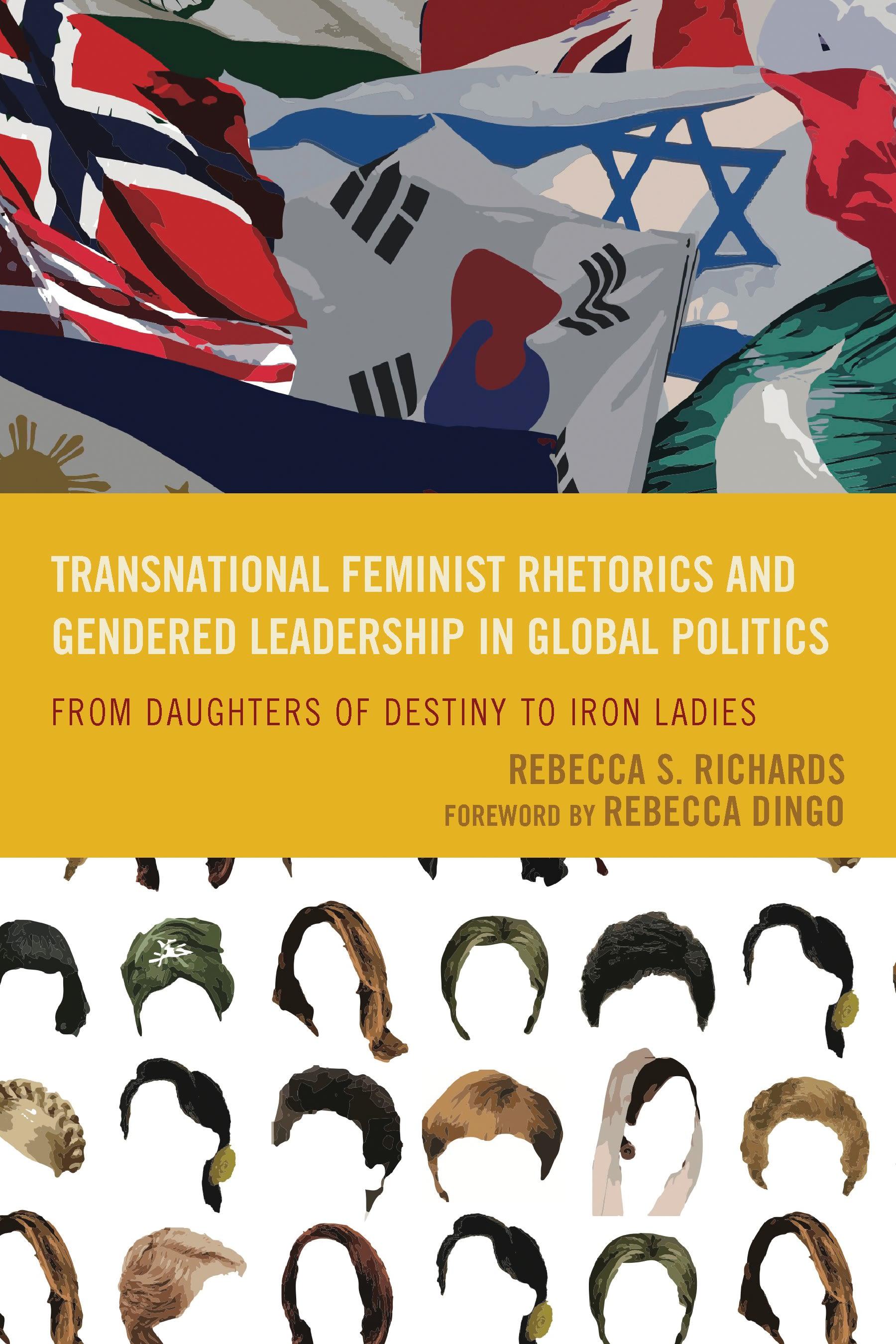
Transnational Feminist Rhetorics and Gendered Leadership in Global Politics examines the rhetoric surrounding women who hold or have held the highest office of a nation-state. Heads of state, such as Golda Meir, Margaret Thatcher, Benazir Bhutto, Ellen Johnson Sirleaf, and Michelle Bachelet, have navigated their ascent to executive government in vastly different ways while contending with gendered expectations of leadership, especially since most of them are the first woman to occupy their country’s highest governmental position. This book analyzes how these women rhetorically perform their positions of power—discursively, visually, and physically—in a traditionally male leadership role. Specifically, this project examines how certain rhetorical acts open up and close down the potential to confront the gendered expectations surrounding political leadership.
When people analyze, campaign for, or critique a “female prime minister” or a “woman president,” they are not just talking about one woman but also referencing a collective neoliberal logic that interrupts and reaffirms the belief that the nation-state is an eternal, inevitable structure. Diverse political figures, such as Angela Merkel, Julia Gillard, and Indira Gandhi, are continually put in conversation with one another, through popular media representations, academic scholarship, and political analyses. This book examines the effect of such comparisons and connections, ultimately arguing that many of these gestures reduce or over-simplify women’s contributions to world politics. In order to show this effect, this book manifests the transnational connections found in autobiographies, organizations, political commentaries, biographical films, and other sources that focus on women who have been heads of state.
When people analyze, campaign for, or critique a “female prime minister” or a “woman president,” they are not just talking about one woman but also referencing a collective neoliberal logic that interrupts and reaffirms the belief that the nation-state is an eternal, inevitable structure. Diverse political figures, such as Angela Merkel, Julia Gillard, and Indira Gandhi, are continually put in conversation with one another, through popular media representations, academic scholarship, and political analyses. This book examines the effect of such comparisons and connections, ultimately arguing that many of these gestures reduce or over-simplify women’s contributions to world politics. In order to show this effect, this book manifests the transnational connections found in autobiographies, organizations, political commentaries, biographical films, and other sources that focus on women who have been heads of state.
Betal nemt med kort, Klarna, Apple Pay eller Google Pay. Ikke tilfreds? Du har altid 14 dages fortrydelsesret. Læs mere i vores vilkår. Har du spørgsmål, så send os en mail på hello@memmo.org.
Memmo gør det nemmere at studere – uanset hvor du er i verden. Hos os samler du dine kursusbøger og smarte studieværktøjer ét sted: resuméer, quizzer, podcasts og flashcards. Og så er der Ted, din studieven, der svarer på alt, du undrer dig over. Over 50 000 studerende studerer allerede her – bygget til at hjælpe dig med at lære hurtigere og stresse mindre.