
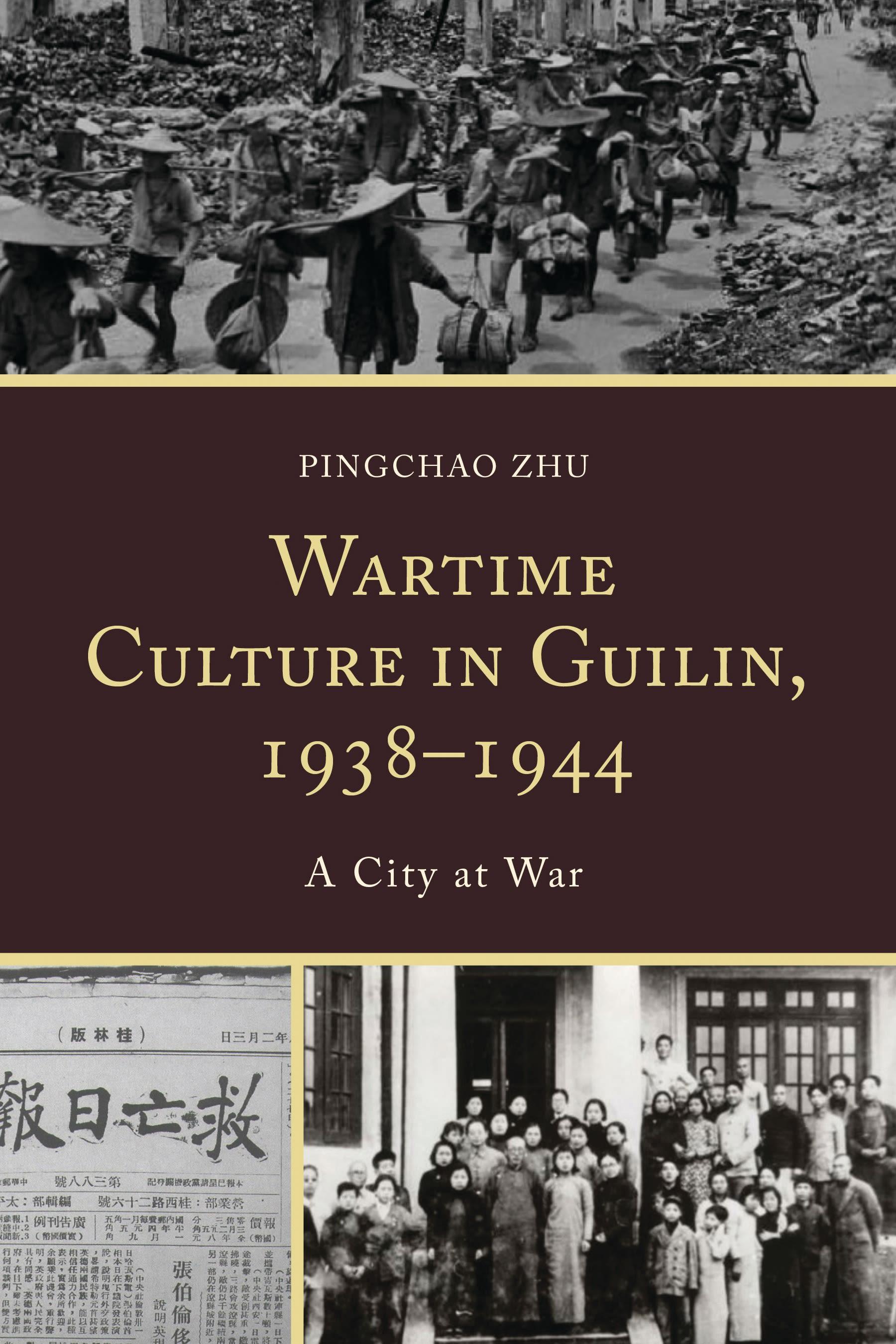
This book examines the development of wartime culture in the city of Guilin, Guangxi Province, in southwestern China during a major part of the country’s war of resistance against Japanese invasion between 1938 and 1944.
This study challenges existing historiography on China’s wartime culture at three levels. First, the Guangxi warlord group played a crucial role in maintaining regional security, providing a liberalized political environment for wartime cultural activities and facilitating wartime nationalist–communist relations at both local and national levels. Second, wartime culture was more literary than political and it reflected a powerful intellectual vigor that was an indispensable component of China’s war efforts. Intellectuals of different social and political backgrounds were their own “organic” selves feeling no pressure to come to intellectual consensus in literary production. Third, wartime culture was characterized by the active participation of many international groups, political organizations, and foreign individuals. The literary works produced in Guilin between 1938 and 1944 clearly reflected a combination of Chinese national and international anti-fascist and anti-military sentiment. Chinese literary masterpieces were translated into different foreign languages and noted foreign literature and political works were introduced to Chinese audiences through various cultural and political exchange programs in the city.
This study challenges existing historiography on China’s wartime culture at three levels. First, the Guangxi warlord group played a crucial role in maintaining regional security, providing a liberalized political environment for wartime cultural activities and facilitating wartime nationalist–communist relations at both local and national levels. Second, wartime culture was more literary than political and it reflected a powerful intellectual vigor that was an indispensable component of China’s war efforts. Intellectuals of different social and political backgrounds were their own “organic” selves feeling no pressure to come to intellectual consensus in literary production. Third, wartime culture was characterized by the active participation of many international groups, political organizations, and foreign individuals. The literary works produced in Guilin between 1938 and 1944 clearly reflected a combination of Chinese national and international anti-fascist and anti-military sentiment. Chinese literary masterpieces were translated into different foreign languages and noted foreign literature and political works were introduced to Chinese audiences through various cultural and political exchange programs in the city.
Betal nemt med kort, Klarna, Apple Pay eller Google Pay. Ikke tilfreds? Du har altid 14 dages fortrydelsesret. Læs mere i vores vilkår. Har du spørgsmål, så send os en mail på hello@memmo.org.
Memmo gør det nemmere at studere – uanset hvor du er i verden. Hos os samler du dine kursusbøger og smarte studieværktøjer ét sted: resuméer, quizzer, podcasts og flashcards. Og så er der Ted, din studieven, der svarer på alt, du undrer dig over. Over 50 000 studerende studerer allerede her – bygget til at hjælpe dig med at lære hurtigere og stresse mindre.