
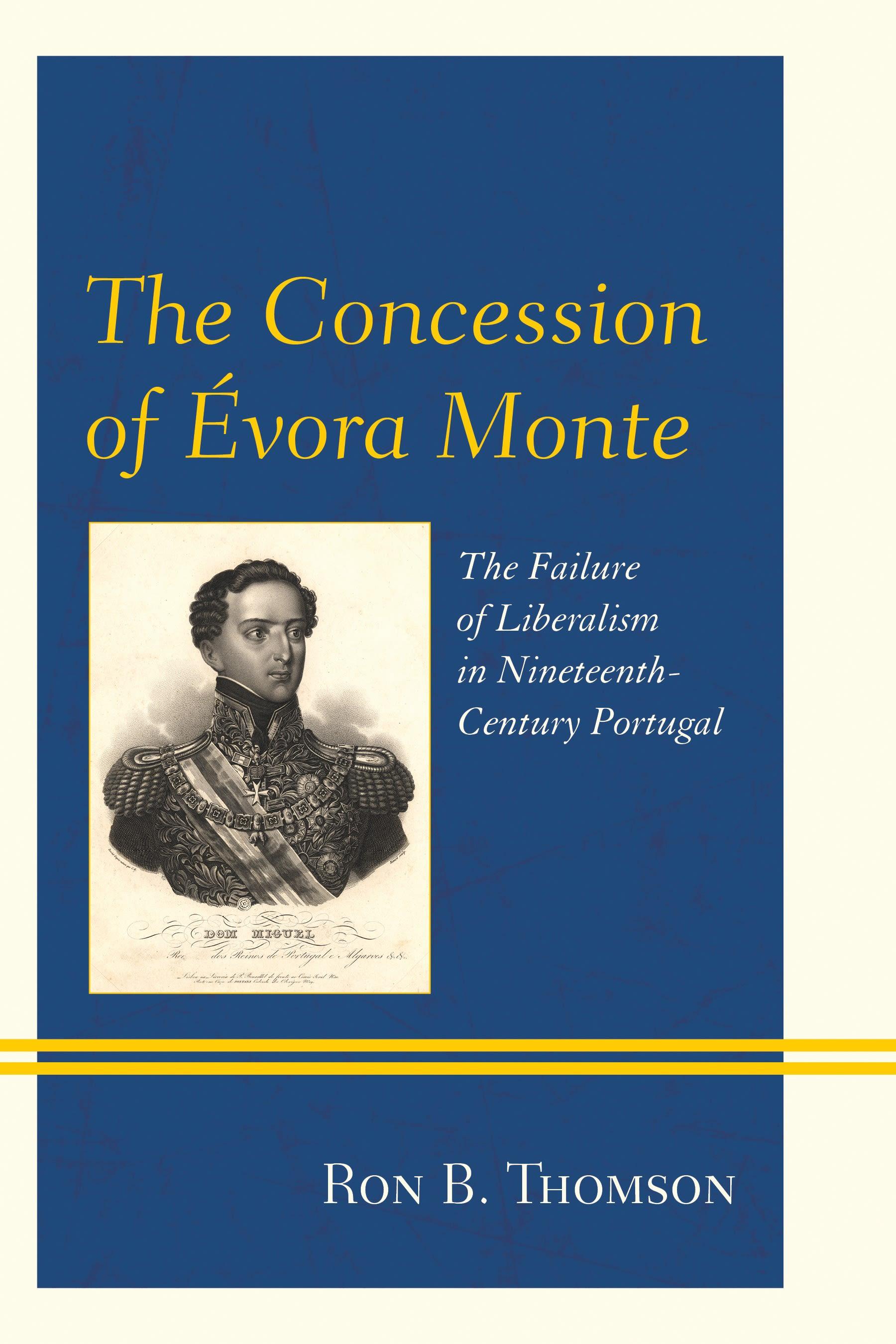
In a period when the monarch was the key figure in the Portuguese government, the struggle for the throne among members of the royal family was of crucial significance. Against a backdrop of new liberal ideas, economic conservatism, and modernization, Dom Pedro challenged his brother, Dom Miguel (the Usurper), on behalf of his young daughter (Maria II) for the throne. But this struggle for the throne, and for a workable constitution, did little to change the fundamentally agrarian economy, so that in the end neither the monarch, nor the liberal ideals of the urban elite, nor foreign pressures had any fundamental effect on society as a whole.
The Concession of Évora Monte describes the economic and political problems unleashed by the Peninsular War and the evacuation of the court to Brazil; the 1820 revolution, the first Portuguese constitution, and the counter revolution; the attempt by Dom Pedro when he became king (while also emperor of Brazil) to introduce the new Constitutional Charter and pass the throne on to his young daughter; the usurpation of the throne by his brother Dom Miguel; the War of the Two Brothers in which Dom Pedro defeated Dom Miguel and forced him into exile. The signing of the Concession in 1834 marked the end of the civil war, but it did not bring peace and stability. The changes introduced by the victorious Dom Pedro did not solve the basic issues of Portuguese society, nor did the efforts of his daughter, Maria II, during the 1830s and the 1840s. Several attempts were made to impose a new liberal constitution on the country, but in the end it was the formation after 1850 of new political parties sharing the governing which brought stability. The country remained conservative despite the modernization which came to the cities but which penetrated the countryside only to a degree.
This book argues that liberalism in Portugal was an urban phenomenon involving a very small minority of the people, and points to a variety of reasons for this. Portugal remained a rural, conservative society into the twentieth century and throughout the Salazar regimes until, perhaps, the Carnation Revolution in 1974.
The Concession of Évora Monte describes the economic and political problems unleashed by the Peninsular War and the evacuation of the court to Brazil; the 1820 revolution, the first Portuguese constitution, and the counter revolution; the attempt by Dom Pedro when he became king (while also emperor of Brazil) to introduce the new Constitutional Charter and pass the throne on to his young daughter; the usurpation of the throne by his brother Dom Miguel; the War of the Two Brothers in which Dom Pedro defeated Dom Miguel and forced him into exile. The signing of the Concession in 1834 marked the end of the civil war, but it did not bring peace and stability. The changes introduced by the victorious Dom Pedro did not solve the basic issues of Portuguese society, nor did the efforts of his daughter, Maria II, during the 1830s and the 1840s. Several attempts were made to impose a new liberal constitution on the country, but in the end it was the formation after 1850 of new political parties sharing the governing which brought stability. The country remained conservative despite the modernization which came to the cities but which penetrated the countryside only to a degree.
This book argues that liberalism in Portugal was an urban phenomenon involving a very small minority of the people, and points to a variety of reasons for this. Portugal remained a rural, conservative society into the twentieth century and throughout the Salazar regimes until, perhaps, the Carnation Revolution in 1974.
Betal nemt med kort, Klarna, Apple Pay eller Google Pay. Ikke tilfreds? Du har altid 14 dages fortrydelsesret. Læs mere i vores vilkår. Har du spørgsmål, så send os en mail på hello@memmo.org.
Memmo gør det nemmere at studere – uanset hvor du er i verden. Hos os samler du dine kursusbøger og smarte studieværktøjer ét sted: resuméer, quizzer, podcasts og flashcards. Og så er der Ted, din studieven, der svarer på alt, du undrer dig over. Over 50 000 studerende studerer allerede her – bygget til at hjælpe dig med at lære hurtigere og stresse mindre.