
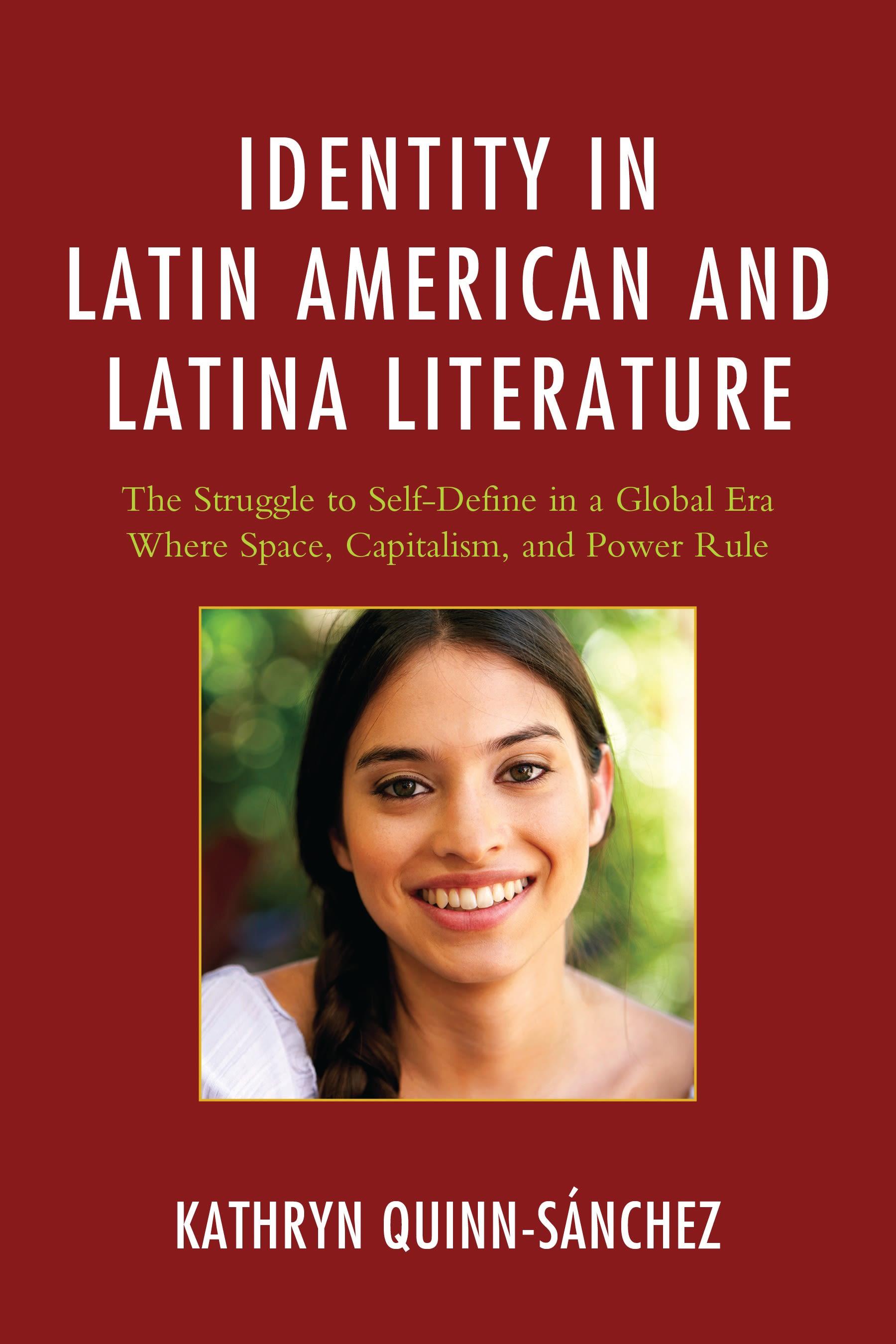
This study demonstrates the ways that Latina authors contest how power and space exploit women while simultaneously subverting the Nation-State through reimagining a counter-space where new definitions of the self lie beyond Power’s reach. Moreover, this book delves into how both Power and Space collude to uphold the out-of-date sexist, racist, and classist societal norms that Eurocentrism and history continue to cleave to as the defining qualities of the nation and its citizens.
With the proliferation of Latin literature within the United States, an ideological readjustment is taking place whereby several late twentieth- and early twenty-first-century authors contest the State’s role in defining its citizens by exposing the unjust role that Space and Power play. With this in mind,the author examines several literary versions of identity to explore how certain authors reject and subvert the social mores against which present-day citizens are measured—especially within government or State institutions but also within families and neighborhoods.
The literary works that are analyzed cover a period of twenty-five years ending in 2010. Several of these texts rewrite the national allegory from the point of view of the marginalized while others demonstrate how an individual successfully renegotiates her identity—gender, social class, or ethnicity—from being a disadvantage to being an identity marker to celebrate. The authors defy the place that women are still relegated to, by representing several characters who consciously decide that it is time to battle the forces that would keep them powerless in the public arena. Above all, these texts are anti-Power; the protagonists refuse to accept the societal forces which constantly barrage them, defining them as worthless. These authors and their characters challenge everything that historically has kept women relegated to a space of weakness.
With the proliferation of Latin literature within the United States, an ideological readjustment is taking place whereby several late twentieth- and early twenty-first-century authors contest the State’s role in defining its citizens by exposing the unjust role that Space and Power play. With this in mind,the author examines several literary versions of identity to explore how certain authors reject and subvert the social mores against which present-day citizens are measured—especially within government or State institutions but also within families and neighborhoods.
The literary works that are analyzed cover a period of twenty-five years ending in 2010. Several of these texts rewrite the national allegory from the point of view of the marginalized while others demonstrate how an individual successfully renegotiates her identity—gender, social class, or ethnicity—from being a disadvantage to being an identity marker to celebrate. The authors defy the place that women are still relegated to, by representing several characters who consciously decide that it is time to battle the forces that would keep them powerless in the public arena. Above all, these texts are anti-Power; the protagonists refuse to accept the societal forces which constantly barrage them, defining them as worthless. These authors and their characters challenge everything that historically has kept women relegated to a space of weakness.
Sider: 144
Kategori: Litteraturvetenskap & Teori
e-ISBN: 9780739192719
Forsendelsesvægt: 1.2 kg
Sendes inden for: 1-2 dage
Betal nemt med kort, Klarna, Apple Pay eller Google Pay. Ikke tilfreds? Du har altid 14 dages fortrydelsesret. Læs mere i vores vilkår. Har du spørgsmål, så send os en mail på hello@memmo.org.
Memmo gør det nemmere at studere – uanset hvor du er i verden. Hos os samler du dine kursusbøger og smarte studieværktøjer ét sted: resuméer, quizzer, podcasts og flashcards. Og så er der Ted, din studieven, der svarer på alt, du undrer dig over. Over 50 000 studerende studerer allerede her – bygget til at hjælpe dig med at lære hurtigere og stresse mindre.