
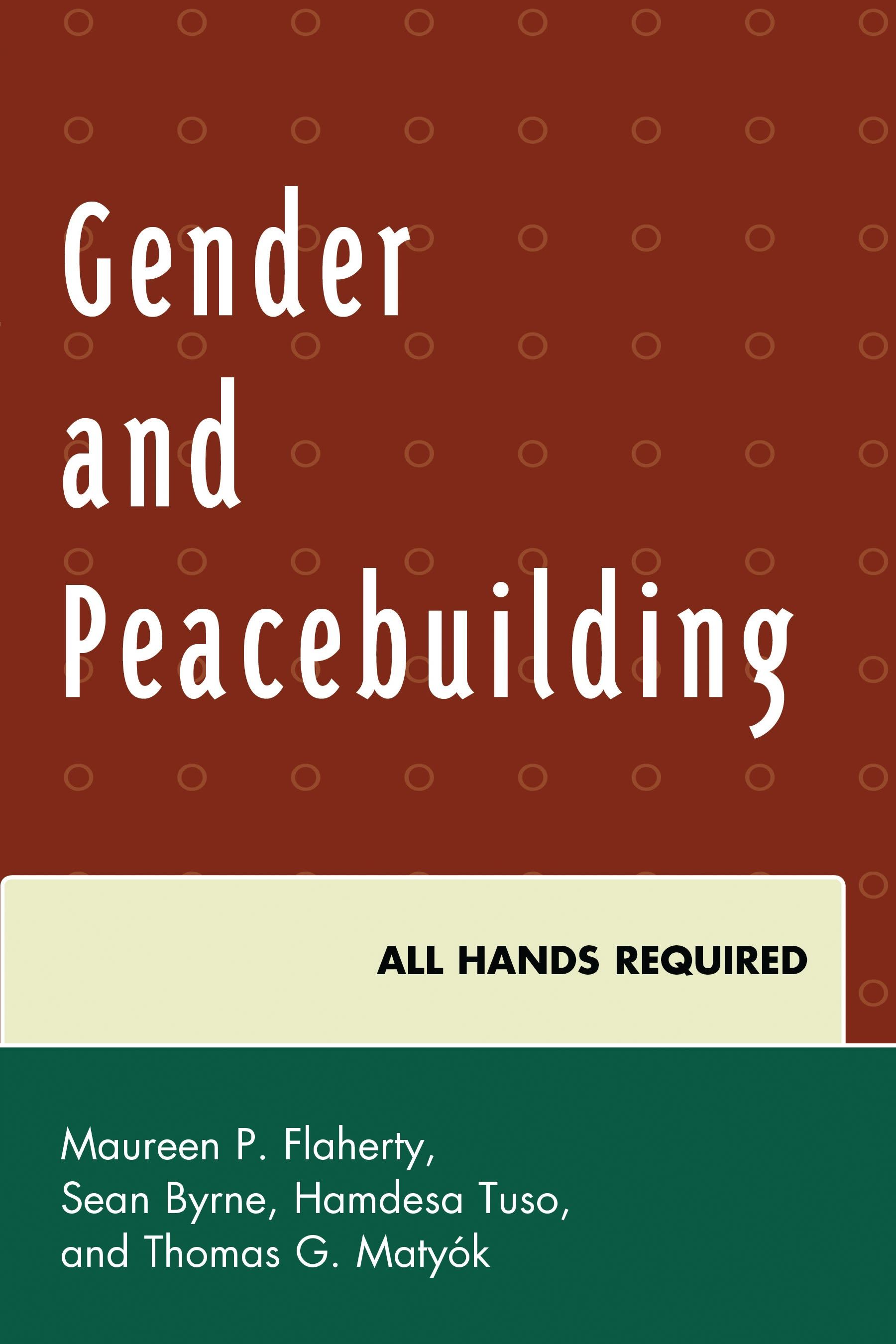
Gender and Peacebuilding
Forfatter: Maureen P. Flaherty, Hamdesa Tuso, Maria Cheung, Celia Cook-Huffman, Patlee Creary, Galia Golan, Shirley Graham, Nancy Hansen, Tuula Heinonen, Roberta Hunte, Régine Uwibereyeho King, Oksana Kis, Angela J. Lederach, Lisa McLean, Monica McWilliams, Robert C. Mizzi, Anna Snyder, Joey Sprague, Katerina Standish, Robin L. Turner, Sinéad Walsh, Franke Wilmer, María Lucía Zapata, Thomas G. Matyók, Sean Byrne
Forlag: Bloomsbury Publishing
Udgave: 1
Udgivelsesdato: 2015
ISBN: 9780739192603
The twenty-first century has brought with it a shift from the notion of human security being located in secure national borders to the need to secure the safety, freedom, and dignity of all. Despite efforts to equalize women’s status in the world evidenced by changes in many international projects requiring a gender focus, women and men experience most of the world in very different ways according to gender. Further, the reality is that humans who do not all fall neatly into one of these categories – male or female – often find their lives further challenged.
In the 1980s, Peace and Conflict Studies first began to acknowledge and study the different experiences males and females have during war and peace. Since then, there have been books about women and war, women working at grassroots levels to build peace, women and transitional justice, women and peace education, and women’s views of human security. All of these works have contributed to the discourse of our changing world.
This book brings together some of those themes and voices and adds more with the final product being more than the sum of its parts. We add to the conversation a book that considers foundational/fundamental issues that span from the interpersonal to the global. Many of the chapters describe empirical research completed with author and community, shared here for the first time. Part One is a collection of case studies, documenting challenges and responses to peacebuilding by women from various parts of the world. Part Two focuses on Peace and Conflict Studies (PACS) as a discipline, examining not only what is, but also what should be taught. This section critiques today’s efforts at teaching Peace and Conflict Studies and provides suggestions of how this important work might be shared in more open and equitable ways. Part Three enters territory found even less in the PACS literature. In this section our authors confront patriarchy, engage in a discussion about the contribution queer theory makes to PACS, and tussle with the notion of inclusivity with considerations of both gender and disability. It then ends with a discussion about the contribution feminist methodologies make to PACS.
In the 1980s, Peace and Conflict Studies first began to acknowledge and study the different experiences males and females have during war and peace. Since then, there have been books about women and war, women working at grassroots levels to build peace, women and transitional justice, women and peace education, and women’s views of human security. All of these works have contributed to the discourse of our changing world.
This book brings together some of those themes and voices and adds more with the final product being more than the sum of its parts. We add to the conversation a book that considers foundational/fundamental issues that span from the interpersonal to the global. Many of the chapters describe empirical research completed with author and community, shared here for the first time. Part One is a collection of case studies, documenting challenges and responses to peacebuilding by women from various parts of the world. Part Two focuses on Peace and Conflict Studies (PACS) as a discipline, examining not only what is, but also what should be taught. This section critiques today’s efforts at teaching Peace and Conflict Studies and provides suggestions of how this important work might be shared in more open and equitable ways. Part Three enters territory found even less in the PACS literature. In this section our authors confront patriarchy, engage in a discussion about the contribution queer theory makes to PACS, and tussle with the notion of inclusivity with considerations of both gender and disability. It then ends with a discussion about the contribution feminist methodologies make to PACS.
Sider: 452
Kategori: Kultur-, Genus- & Postkoloniala studier
e-ISBN: 9780739192610
Forsendelsesvægt: 1.2 kg
Sendes inden for: 1-2 dage
Betal nemt med kort, Klarna, Apple Pay eller Google Pay. Ikke tilfreds? Du har altid 14 dages fortrydelsesret. Læs mere i vores vilkår. Har du spørgsmål, så send os en mail på hello@memmo.org.
Memmo gør det nemmere at studere – uanset hvor du er i verden. Hos os samler du dine kursusbøger og smarte studieværktøjer ét sted: resuméer, quizzer, podcasts og flashcards. Og så er der Ted, din studieven, der svarer på alt, du undrer dig over. Over 50 000 studerende studerer allerede her – bygget til at hjælpe dig med at lære hurtigere og stresse mindre.