
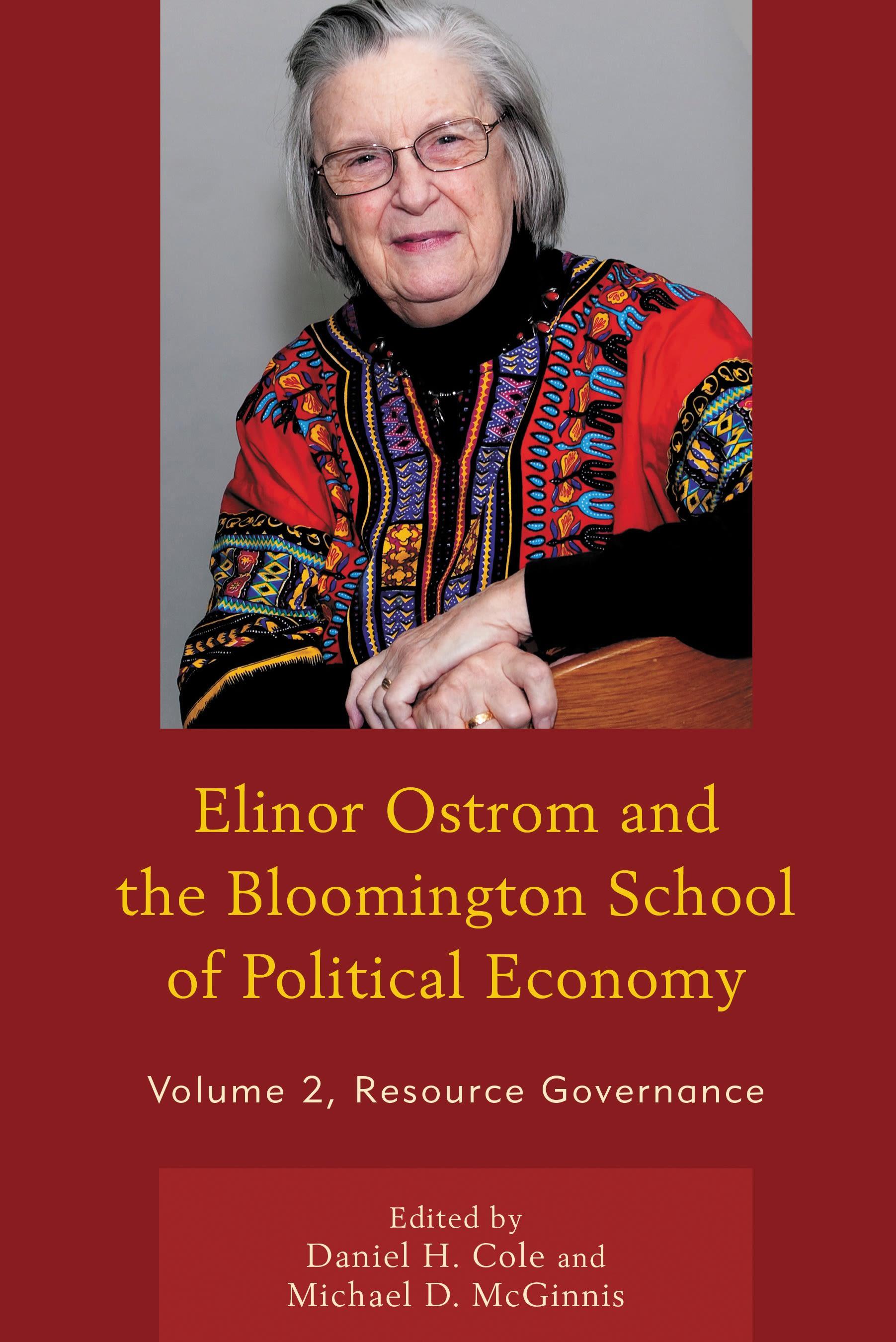
In addition to winning the 2009 Nobel Prize in Economic Sciences for her path-breaking research on “economic governance, especially the commons,” Elinor (Lin) Ostrom also made important contributions to other fields of political economy and public policy. This four-volume compendium of papers written by Lin (often with coauthors, most notably her husband, Vincent), along with papers by others expanding on her work, brings together the strands of her entire empirical, analytical, theoretical, and methodological research program. Together with Vincent’s important theoretical contributions, they defined a distinctive “Bloomington School” of political-economic thought.
Volume 2 examines Lin’s work on “the commons,” in which she demonstrated that, in many cases, local resource users can solve collective-action problems through common-property management regimes. It comprises papers, including some that are not well known, related to and building on the findings of Governing the Commons (1990). Part I focuses on key attributes of biophysical resources and the institutions human communities have designed to govern them. Part II shows how in various social and ecological circumstances, different sets of institutions facilitate or impede the long-run sustainability of resources. Part III highlights Ostrom’s first major research project on water resources in Southern California. It was a topic she (and her students) returned to with the specific intention of gathering data (more than 50 years’ worth) for longitudinal analyses of combined institutional and ecological change. In sum, this volume contextualizes what is, at present, thought to be Lin’s greatest legacy to social science: the conditions under which resources can be sustainably managed over very long periods of time by the collective action of ordinary people, beyond markets and states.
Volume 2 examines Lin’s work on “the commons,” in which she demonstrated that, in many cases, local resource users can solve collective-action problems through common-property management regimes. It comprises papers, including some that are not well known, related to and building on the findings of Governing the Commons (1990). Part I focuses on key attributes of biophysical resources and the institutions human communities have designed to govern them. Part II shows how in various social and ecological circumstances, different sets of institutions facilitate or impede the long-run sustainability of resources. Part III highlights Ostrom’s first major research project on water resources in Southern California. It was a topic she (and her students) returned to with the specific intention of gathering data (more than 50 years’ worth) for longitudinal analyses of combined institutional and ecological change. In sum, this volume contextualizes what is, at present, thought to be Lin’s greatest legacy to social science: the conditions under which resources can be sustainably managed over very long periods of time by the collective action of ordinary people, beyond markets and states.
Betal nemt med kort, Klarna, Apple Pay eller Google Pay. Ikke tilfreds? Du har altid 14 dages fortrydelsesret. Læs mere i vores vilkår. Har du spørgsmål, så send os en mail på hello@memmo.org.
Memmo gør det nemmere at studere – uanset hvor du er i verden. Hos os samler du dine kursusbøger og smarte studieværktøjer ét sted: resuméer, quizzer, podcasts og flashcards. Og så er der Ted, din studieven, der svarer på alt, du undrer dig over. Over 50 000 studerende studerer allerede her – bygget til at hjælpe dig med at lære hurtigere og stresse mindre.