
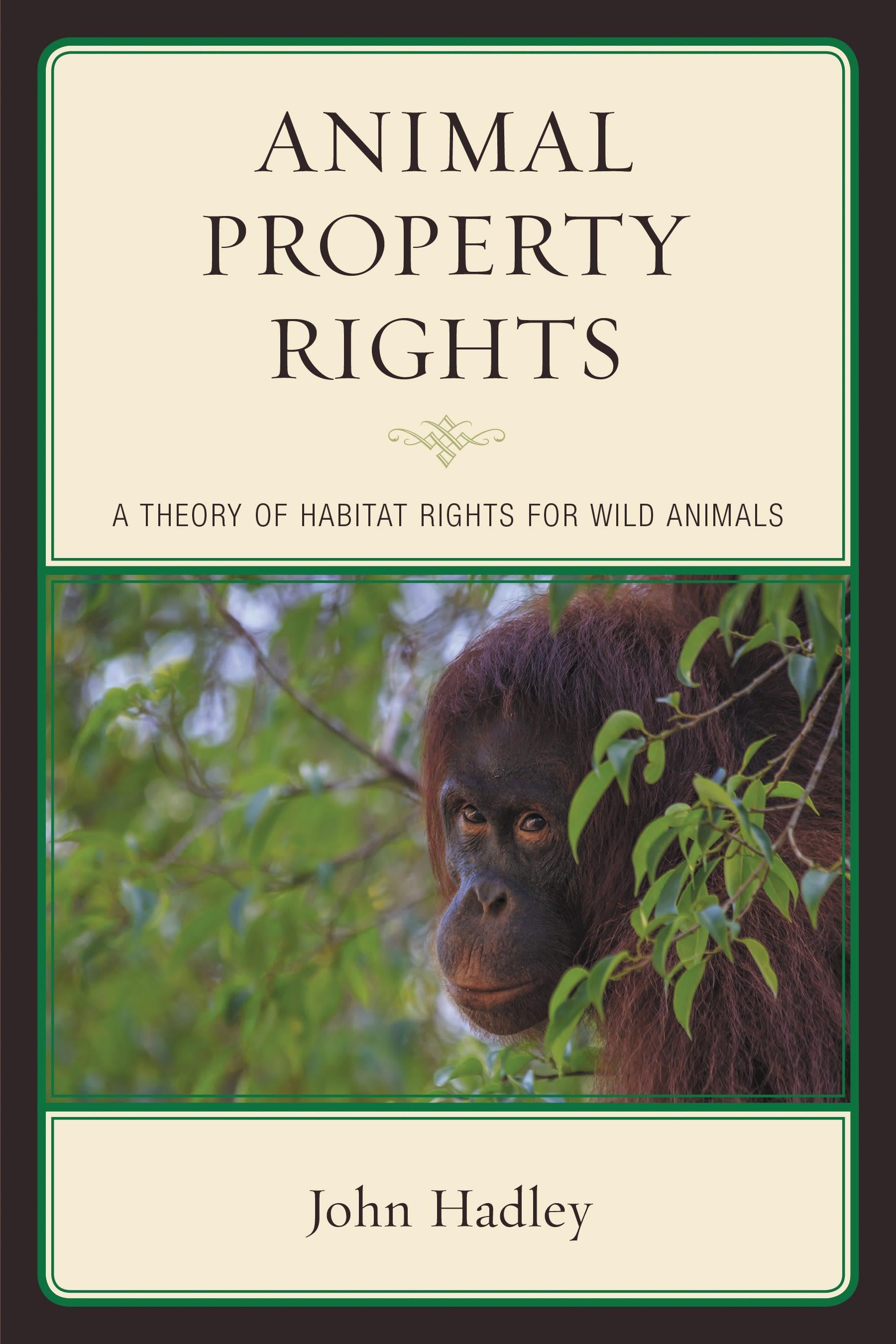
Animal Property Rights: A Theory of Habitat Rights for Wild Animals represents the first attempt to extend liberal property rights theory across the species barrier to animals. It broadens the traditional focus of animal rights beyond basic rights to life and bodily integrity to rights to the natural areas in which animal reside. John Hadley argues that both proponents of animal rights and environmentalists ought to support animal property rights because protecting habitat promotes ecological values and helps to ensure animals live free from human interference.
Hadley’s focus is pragmatist – he locates animal property rights within the institution of property as it exists today in liberal democracies. He argues that attempts to justify animal property rights on labor and first occupancy grounds will likely fail; instead, he grounds animal property rights upon the importance of habitat for the satisfaction of animals’ basic needs.
The potential of animal property rights as a way of reinvigorating existing public policy responses to the problem of biodiversity loss due to habitat destruction is thoroughly explored. Using the concept of guardianship for cognitively impaired human beings, Hadley translates habitat rights as a right to negotiate – human guardians ought to be allowed to negotiate, on behalf of wild animals, with human landholders whose development activities put animals at risk.
In addition to a theory of animal property rights, Animal Property Rights affords a critique of Donaldson and Kymlicka’s wild animal sovereignty theory, a defence of indirect approaches to animal rights, an extensive discussion of euthanasia as a ‘therapeutic hunting’ tool, and the first discussion of Locke’s theory of original acquisition in animal rights literature.
Hadley’s focus is pragmatist – he locates animal property rights within the institution of property as it exists today in liberal democracies. He argues that attempts to justify animal property rights on labor and first occupancy grounds will likely fail; instead, he grounds animal property rights upon the importance of habitat for the satisfaction of animals’ basic needs.
The potential of animal property rights as a way of reinvigorating existing public policy responses to the problem of biodiversity loss due to habitat destruction is thoroughly explored. Using the concept of guardianship for cognitively impaired human beings, Hadley translates habitat rights as a right to negotiate – human guardians ought to be allowed to negotiate, on behalf of wild animals, with human landholders whose development activities put animals at risk.
In addition to a theory of animal property rights, Animal Property Rights affords a critique of Donaldson and Kymlicka’s wild animal sovereignty theory, a defence of indirect approaches to animal rights, an extensive discussion of euthanasia as a ‘therapeutic hunting’ tool, and the first discussion of Locke’s theory of original acquisition in animal rights literature.
Betal nemt med kort, Klarna, Apple Pay eller Google Pay. Ikke tilfreds? Du har altid 14 dages fortrydelsesret. Læs mere i vores vilkår. Har du spørgsmål, så send os en mail på hello@memmo.org.
Memmo gør det nemmere at studere – uanset hvor du er i verden. Hos os samler du dine kursusbøger og smarte studieværktøjer ét sted: resuméer, quizzer, podcasts og flashcards. Og så er der Ted, din studieven, der svarer på alt, du undrer dig over. Over 50 000 studerende studerer allerede her – bygget til at hjælpe dig med at lære hurtigere og stresse mindre.