
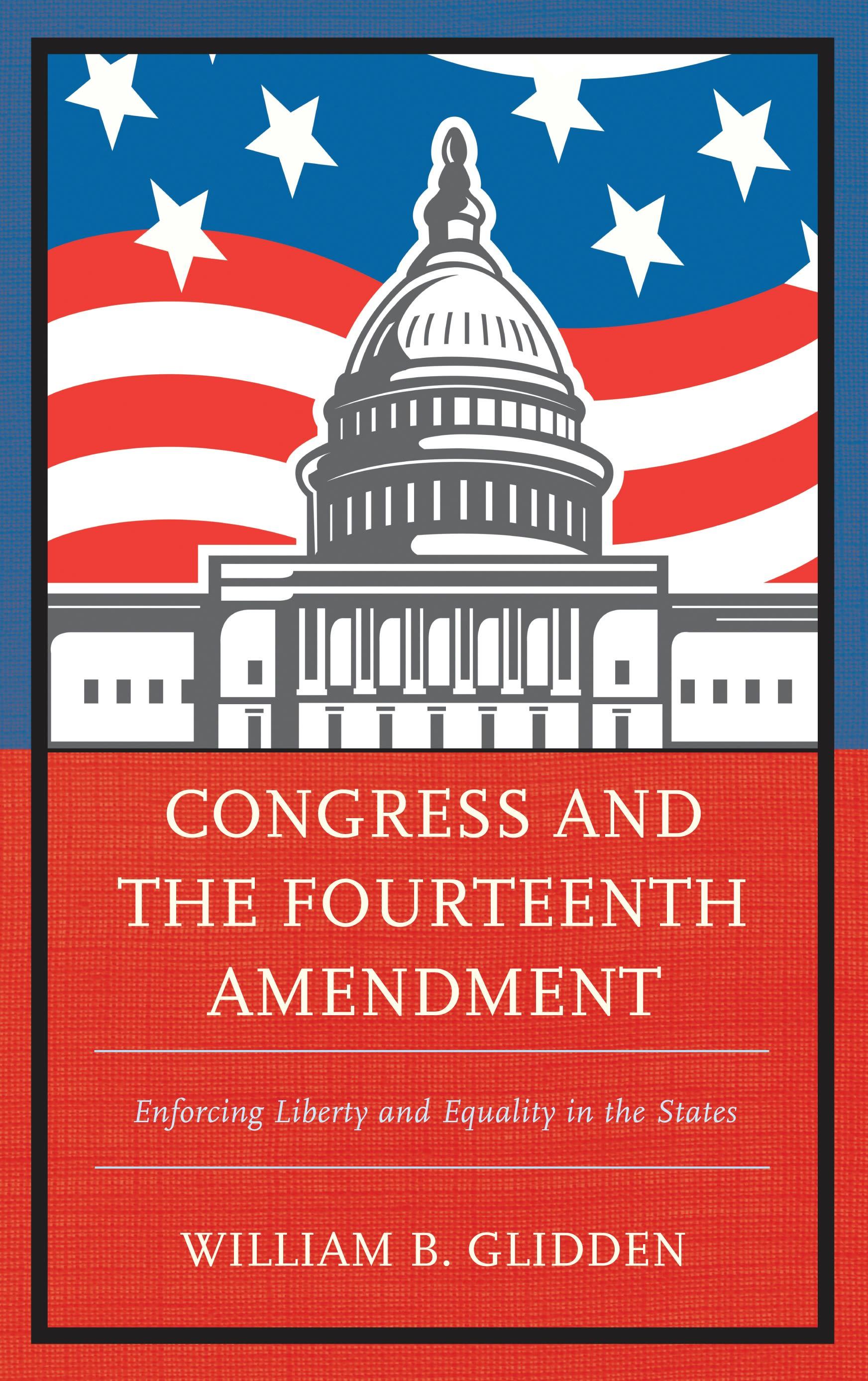
The discrepancy between the fourteenth amendment’s true meaning as originally understood, and the Supreme Court’s interpretation of its meaning over time, has been dramatic and unfortunate. The amendment was intended to be a constitutional rule for the promotion and protection of people’s rights, administered by the states as front-line regulators of life, liberty, and property, to be overseen by Congress and supported by federal legislation as necessary. In this book, William B. Glidden makes the case that instead, the amendment has operated as a judge-dominated, negative rights-against-government regime, supervised by the Supreme Court. Whenever Congress has enacted legislation to protect life, liberty, or property rights of people in the states, the laws were often overturned, narrowly construed, or forced to rely on the power of Congress to regulate interstate commerce, under the Supreme Court’s constraining interpretations. Glidden proposes that Congress must recover for itself or be restored to its proper role as the designated federal enforcement agency for the fourteenth amendment.
Sider: 206
Kategori: Statsvetenskap & Politik
e-ISBN: 9780739185742
Forsendelsesvægt: 1.2 kg
Sendes inden for: 1-2 dage
Betal nemt med kort, Klarna, Apple Pay eller Google Pay. Ikke tilfreds? Du har altid 14 dages fortrydelsesret. Læs mere i vores vilkår. Har du spørgsmål, så send os en mail på hello@memmo.org.
Memmo gør det nemmere at studere – uanset hvor du er i verden. Hos os samler du dine kursusbøger og smarte studieværktøjer ét sted: resuméer, quizzer, podcasts og flashcards. Og så er der Ted, din studieven, der svarer på alt, du undrer dig over. Over 50 000 studerende studerer allerede her – bygget til at hjælpe dig med at lære hurtigere og stresse mindre.