
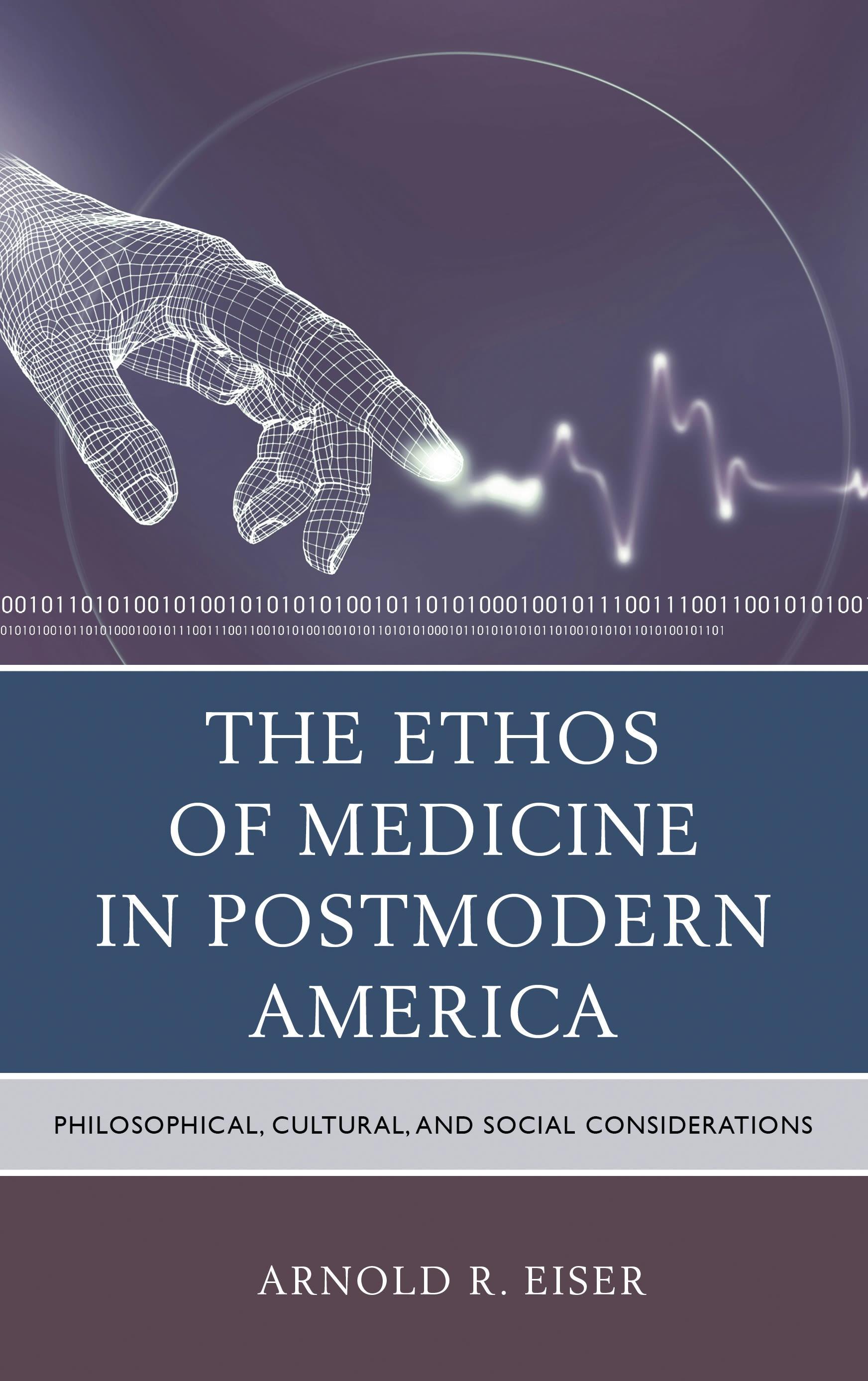
Has postmodern American culture so altered the terrain of medical care that moral confusion and deflated morale multiply faster than both technological advancements and ethical resolutions? The Ethos of Medicine in Postmodern America is an attempt to examine this question with reference to the cultural touchstones of our postmodern era: consumerism, computerization, corporatization, and destruction of meta-narratives. The cultural insights of postmodern thinkers—such as such as Foucault, Deleuze and Guattari, Lyotard, Baudrillard, Bauman, and Levinas—help elucidate the changes in healthcare delivery that are occurring early in the twenty-first century. Although only Foucault among this group actually focused his critique on medical care itself, their combined analysis provides a valuable perspective for gaining understanding of contemporary changes in healthcare delivery. It is often difficult to envision what is happening in the psychosocial, cultural dynamic of an epoch as you experience it. Therefore it is useful to have a technique for refracting those observations through the lens of another system of thought. The prism of postmodern thought offers such a device with which to “view the eclipse” of changing medical practice.
Any professional practice is always thoroughly embedded in the social and cultural matrix of its society, and the medical profession in America is no exception. In drawing upon of the insights of key Continental thinkers such and American scholars, this book does not necessarily endorse the views of postmodernism but trusts that much can be learned from their insight. Furthermore, its analysis is informed by empirical information from health services research and the sociology of medicine. Arnold R. Eiser develops a new understanding of healthcare delivery in the twenty-first century and suggests positive developments that might be nurtured to avoid the barren “Silicon Cage” of corporate, bureaucratized medical practice.
Central to this analysis are current healthcare issues such as the patient-centered medical home, clinical practice guidelines, and electronic health records. This interdisciplinary examination reveals insights valuable to anyone working in postmodern thought, medical sociology, bioethics, or health services research.
Any professional practice is always thoroughly embedded in the social and cultural matrix of its society, and the medical profession in America is no exception. In drawing upon of the insights of key Continental thinkers such and American scholars, this book does not necessarily endorse the views of postmodernism but trusts that much can be learned from their insight. Furthermore, its analysis is informed by empirical information from health services research and the sociology of medicine. Arnold R. Eiser develops a new understanding of healthcare delivery in the twenty-first century and suggests positive developments that might be nurtured to avoid the barren “Silicon Cage” of corporate, bureaucratized medical practice.
Central to this analysis are current healthcare issues such as the patient-centered medical home, clinical practice guidelines, and electronic health records. This interdisciplinary examination reveals insights valuable to anyone working in postmodern thought, medical sociology, bioethics, or health services research.
Betal nemt med kort, Klarna, Apple Pay eller Google Pay. Ikke tilfreds? Du har altid 14 dages fortrydelsesret. Læs mere i vores vilkår. Har du spørgsmål, så send os en mail på hello@memmo.org.
Memmo gør det nemmere at studere – uanset hvor du er i verden. Hos os samler du dine kursusbøger og smarte studieværktøjer ét sted: resuméer, quizzer, podcasts og flashcards. Og så er der Ted, din studieven, der svarer på alt, du undrer dig over. Over 50 000 studerende studerer allerede her – bygget til at hjælpe dig med at lære hurtigere og stresse mindre.