
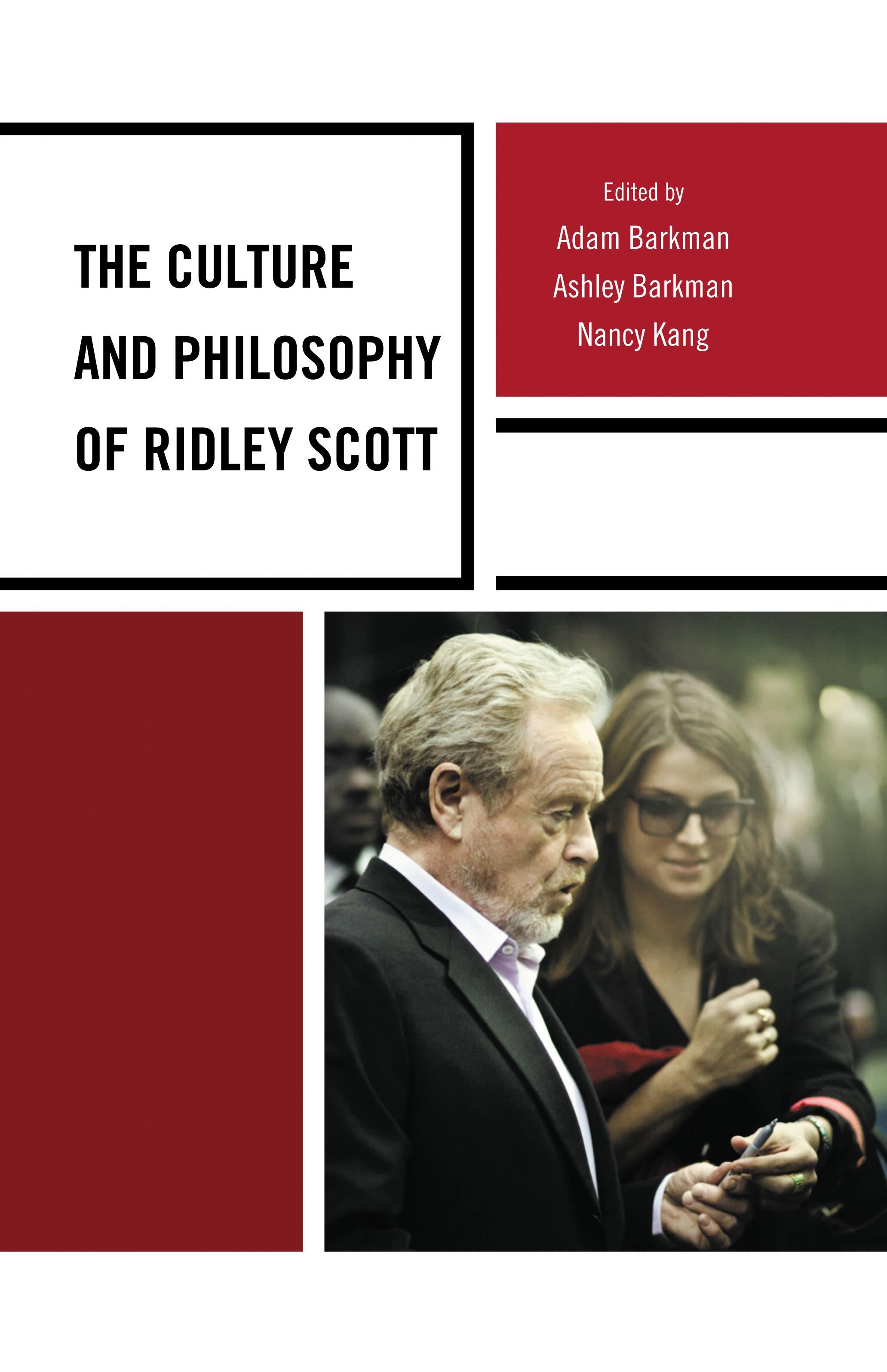
The Culture and Philosophy of Ridley Scott, edited by Adam Barkman, Ashley Barkman, and Nancy Kang, brings together eighteen critical essays that illuminate a nearly comprehensive selection of the director’s feature films from cutting-edge multidisciplinary and comparative perspectives. Chapters examine such signature works as Alien (1979), Blade Runner (1982), Thelma and Louise (1991), Gladiator (2000), Hannibal (2001), Black Hawk Down (2001), and American Gangster (2007).
This volume divides the chapters into three major thematic groups: responsibility, remembering, and revision; real, alienated, and ideal lives; and gender, identity, and selfhood. Each section features six discrete essays, each of which forwards an original thesis about the film or films chosen for analysis. Each chapter features close readings of scenes as well as broader discussions that will interest academics, non-specialists, as well as educated readers with an interest in films as visual texts. While recognizing Scott’s undeniable contributions to contemporary popular cinema, the volume does not shy away from honest and well-evidenced critique.
Each chapter’s approach correlates with philosophical, literary, or cultural studies perspectives. Using both combined and single-film discussions, the contributors examine such topics as gender roles and feminist theory; philosophical abstractions like ethics, honor, and personal responsibility; historical memory and the challenges of accurately rendering historical events on screen; literary archetypes and generic conventions; race relations and the effect of class difference on character construction; how religion shapes personal and collective values; the role of a constantly changing technological universe; and the schism between individual and group-based power structures.
The Culture and Philosophy of Ridley Scott assembles the critical essays of scholars working in the fields of philosophy, literary studies, and cultural studies. An international group, they are based in the United States, Canada, Argentina, Italy, Greece, Korea, the United Kingdom, and New Zealand. The guiding assumption on the part of all the writers is that the filmmaker is the leading determiner of a motion picture’s ethos, artistic vision, and potential for audience engagement. While not discounting the production team (including screenwriters, actors, and cinematographers, among others), auteur theory recognizes the seminal role of the director as the nucleus of the meaning-making process. With Scott an active and prolific presence in the entertainment industry today, the timeliness of this volume is optimal.
This volume divides the chapters into three major thematic groups: responsibility, remembering, and revision; real, alienated, and ideal lives; and gender, identity, and selfhood. Each section features six discrete essays, each of which forwards an original thesis about the film or films chosen for analysis. Each chapter features close readings of scenes as well as broader discussions that will interest academics, non-specialists, as well as educated readers with an interest in films as visual texts. While recognizing Scott’s undeniable contributions to contemporary popular cinema, the volume does not shy away from honest and well-evidenced critique.
Each chapter’s approach correlates with philosophical, literary, or cultural studies perspectives. Using both combined and single-film discussions, the contributors examine such topics as gender roles and feminist theory; philosophical abstractions like ethics, honor, and personal responsibility; historical memory and the challenges of accurately rendering historical events on screen; literary archetypes and generic conventions; race relations and the effect of class difference on character construction; how religion shapes personal and collective values; the role of a constantly changing technological universe; and the schism between individual and group-based power structures.
The Culture and Philosophy of Ridley Scott assembles the critical essays of scholars working in the fields of philosophy, literary studies, and cultural studies. An international group, they are based in the United States, Canada, Argentina, Italy, Greece, Korea, the United Kingdom, and New Zealand. The guiding assumption on the part of all the writers is that the filmmaker is the leading determiner of a motion picture’s ethos, artistic vision, and potential for audience engagement. While not discounting the production team (including screenwriters, actors, and cinematographers, among others), auteur theory recognizes the seminal role of the director as the nucleus of the meaning-making process. With Scott an active and prolific presence in the entertainment industry today, the timeliness of this volume is optimal.
Betal nemt med kort, Klarna, Apple Pay eller Google Pay. Ikke tilfreds? Du har altid 14 dages fortrydelsesret. Læs mere i vores vilkår. Har du spørgsmål, så send os en mail på hello@memmo.org.
Memmo gør det nemmere at studere – uanset hvor du er i verden. Hos os samler du dine kursusbøger og smarte studieværktøjer ét sted: resuméer, quizzer, podcasts og flashcards. Og så er der Ted, din studieven, der svarer på alt, du undrer dig over. Over 50 000 studerende studerer allerede her – bygget til at hjælpe dig med at lære hurtigere og stresse mindre.