
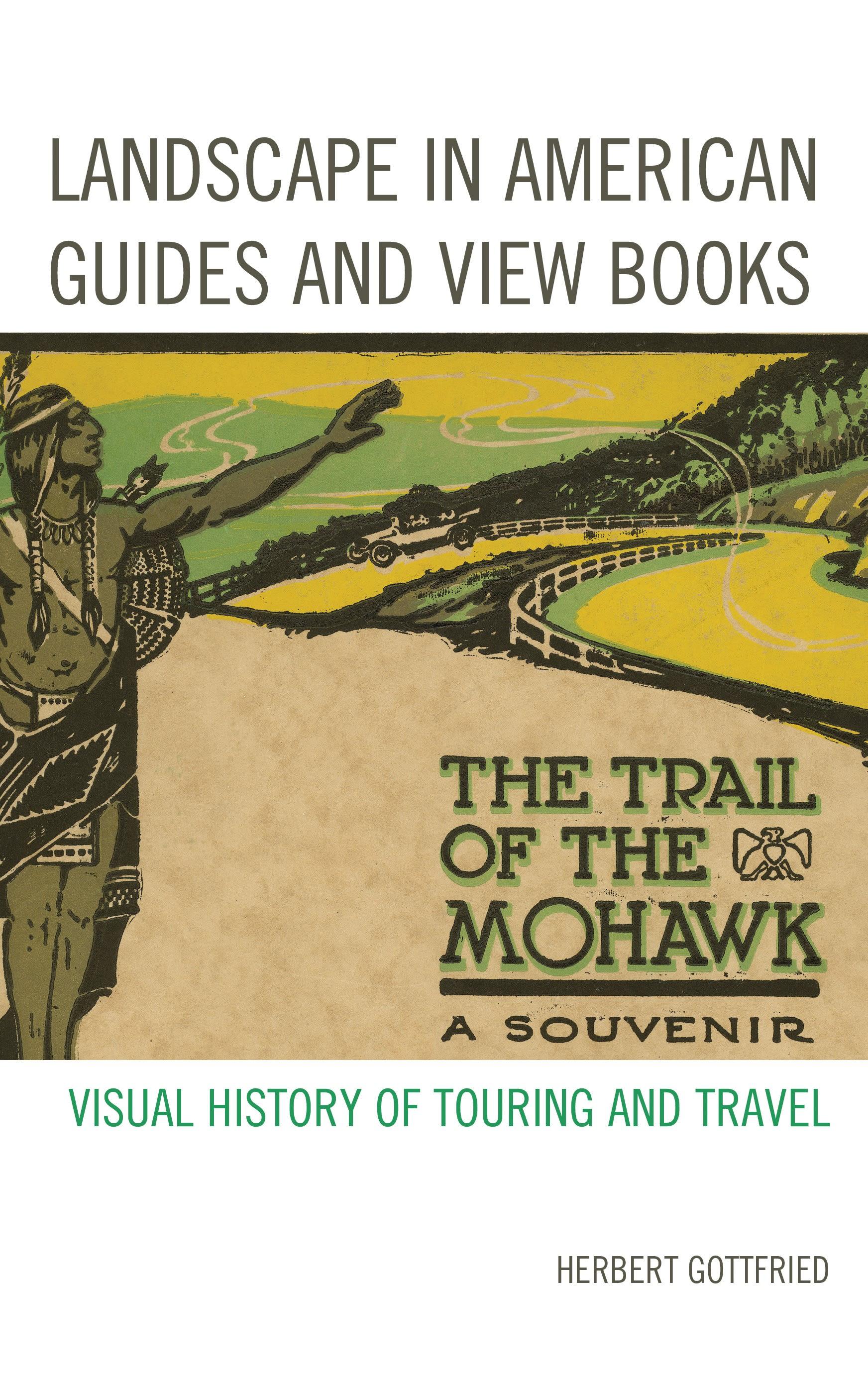
Landscape in American Guides and View Books: Visual History of Touring and Travel is vested in the American relationship to landscape and the role guidebooks and view books played in touring and travel experiences, including immigration. Early in the history of the republic, the relationship to landscape turns visual, that is, landscapes inspire artistic responses in the form of written descriptions and visual representations. The predominant element is the scene. From the 1820s on scenic thinking, within an emerging industrial economy, characterizes a major cultural and social development. As immigration increases, within the country and from abroad, publishers and trade groups create souvenir guidebooks and view books to facilitate the movement of people, and to encourage economic expansion and tourism.
Guide and view book analysis centers on pictures of landscape transformations and includes the cultural basis of scenes changing from pastoral and picturesque expressions to the documentation of managed views. The general acceptance of managed views as replacements for romantic ones illustrates a commitment to landscapes that denote utility and the influence of commercial and industrial urban centers on American life. Guidebook and view book imagery, composed of durable schemas, promotes visual thinking across social classes and time. The primary medium for souvenirs is the photograph, which printing methods, like photolithography, transform into printed products.
The visual history of touring and travel is part of America’s first visual culture, as well as the social formation of landscape, the emergence of a collective vision among souvenir producers and consumers, and the role visual information plays in landscape commentary, which is the literary context for printed souvenirs.
Guide and view book analysis centers on pictures of landscape transformations and includes the cultural basis of scenes changing from pastoral and picturesque expressions to the documentation of managed views. The general acceptance of managed views as replacements for romantic ones illustrates a commitment to landscapes that denote utility and the influence of commercial and industrial urban centers on American life. Guidebook and view book imagery, composed of durable schemas, promotes visual thinking across social classes and time. The primary medium for souvenirs is the photograph, which printing methods, like photolithography, transform into printed products.
The visual history of touring and travel is part of America’s first visual culture, as well as the social formation of landscape, the emergence of a collective vision among souvenir producers and consumers, and the role visual information plays in landscape commentary, which is the literary context for printed souvenirs.
Betal nemt med kort, Klarna, Apple Pay eller Google Pay. Ikke tilfreds? Du har altid 14 dages fortrydelsesret. Læs mere i vores vilkår. Har du spørgsmål, så send os en mail på hello@memmo.org.
Memmo gør det nemmere at studere – uanset hvor du er i verden. Hos os samler du dine kursusbøger og smarte studieværktøjer ét sted: resuméer, quizzer, podcasts og flashcards. Og så er der Ted, din studieven, der svarer på alt, du undrer dig over. Over 50 000 studerende studerer allerede her – bygget til at hjælpe dig med at lære hurtigere og stresse mindre.