
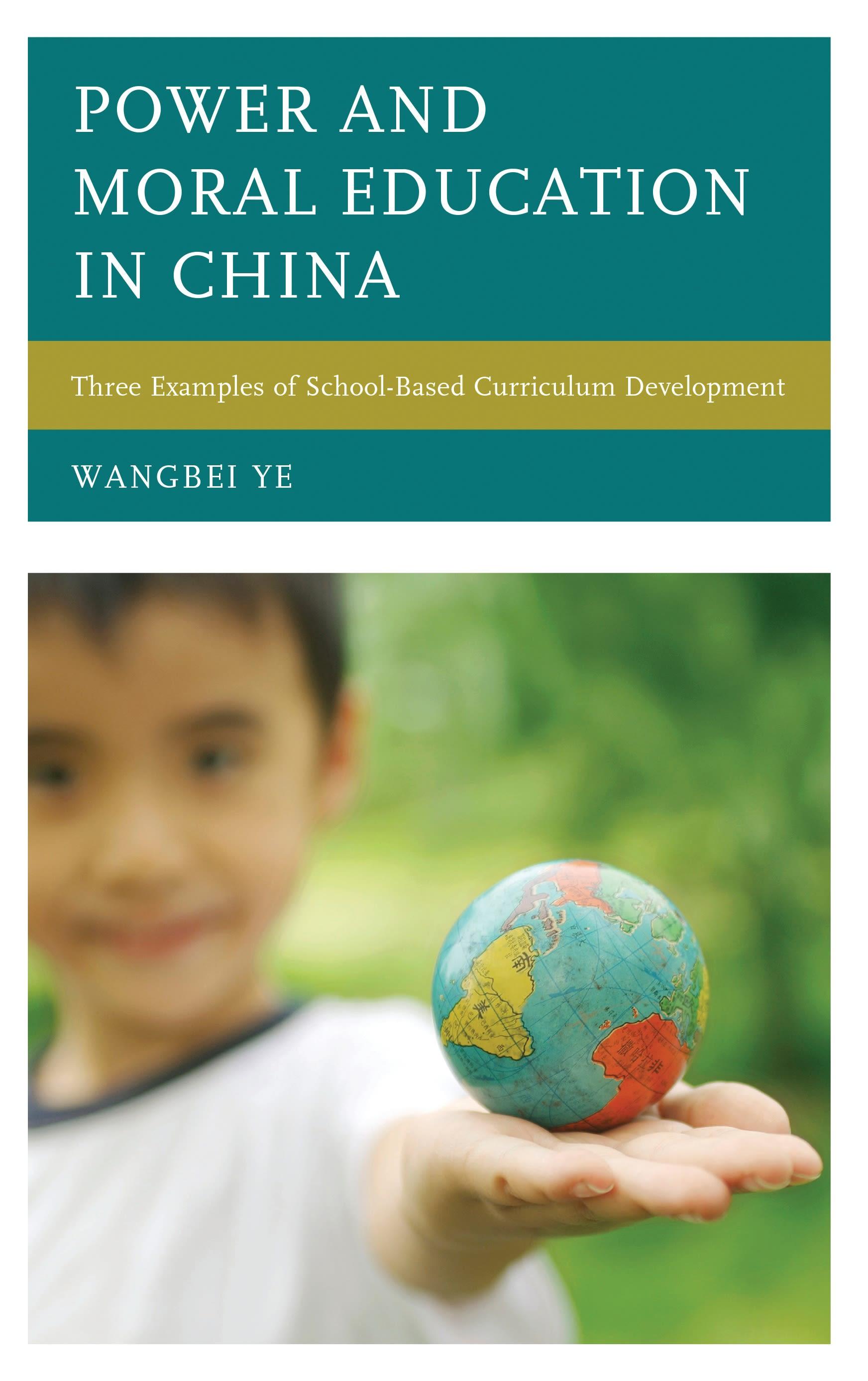
Chinese moral education reform in the last three decades represents the most significant decentralization of decision-making power since the foundation of People’s Republic of China in 1949. On one hand, it shows how de-politicized China’s moral education curriculum has become following the introduction of China’s “Open-door” policy and economic reforms and the resultant social transformations. On the other hand, it reveals persistent problems in moral education caused by political stresses and tight state control.
To explain these tensions, Power and Moral Education in China analyzes the characteristics of power relationships in school moral education curriculum goal-setting, content and pedagogy selection, and implementation. The ultimate purpose is to identify not only what factors impact Chinese moral education curriculum decision-making at the school level, but also how and why.
Through a multiple case study conducted during 2008 in three schools in Shenzhen City, and based on four major data collection instruments (observation, interview, questionnaire, and document review), Wangbei Ye analyzes how power relationships have evolved in school moral education, and how and why school power affects school moral education.
Contrary to the common belief that Chinese schools are passively impacted by external forces in moral education curriculum development, this book suggests that school power is a “semi-emancipatory relationship” that acts as a major force shaping moral education. This means that although both the Chinese Communist Party and the state are positioned to control schools and moral education, schools nonetheless have the power to either negotiate for more influence, or partly emancipate themselves by collaborating with other external forces, responding to grass-root needs, empowering school teachers and adjusting internal school management style. This helps to explain the influence of Chinese schools in moral education and suggests a broader theory of power relationships in curriculum.
To explain these tensions, Power and Moral Education in China analyzes the characteristics of power relationships in school moral education curriculum goal-setting, content and pedagogy selection, and implementation. The ultimate purpose is to identify not only what factors impact Chinese moral education curriculum decision-making at the school level, but also how and why.
Through a multiple case study conducted during 2008 in three schools in Shenzhen City, and based on four major data collection instruments (observation, interview, questionnaire, and document review), Wangbei Ye analyzes how power relationships have evolved in school moral education, and how and why school power affects school moral education.
Contrary to the common belief that Chinese schools are passively impacted by external forces in moral education curriculum development, this book suggests that school power is a “semi-emancipatory relationship” that acts as a major force shaping moral education. This means that although both the Chinese Communist Party and the state are positioned to control schools and moral education, schools nonetheless have the power to either negotiate for more influence, or partly emancipate themselves by collaborating with other external forces, responding to grass-root needs, empowering school teachers and adjusting internal school management style. This helps to explain the influence of Chinese schools in moral education and suggests a broader theory of power relationships in curriculum.
Sider: 220
Kategori: Utbildning & lärande
e-ISBN: 9780739175484
Forsendelsesvægt: 1.2 kg
Sendes inden for: 1-2 dage
Betal nemt med kort, Klarna, Apple Pay eller Google Pay. Ikke tilfreds? Du har altid 14 dages fortrydelsesret. Læs mere i vores vilkår. Har du spørgsmål, så send os en mail på hello@memmo.org.
Memmo gør det nemmere at studere – uanset hvor du er i verden. Hos os samler du dine kursusbøger og smarte studieværktøjer ét sted: resuméer, quizzer, podcasts og flashcards. Og så er der Ted, din studieven, der svarer på alt, du undrer dig over. Over 50 000 studerende studerer allerede her – bygget til at hjælpe dig med at lære hurtigere og stresse mindre.