
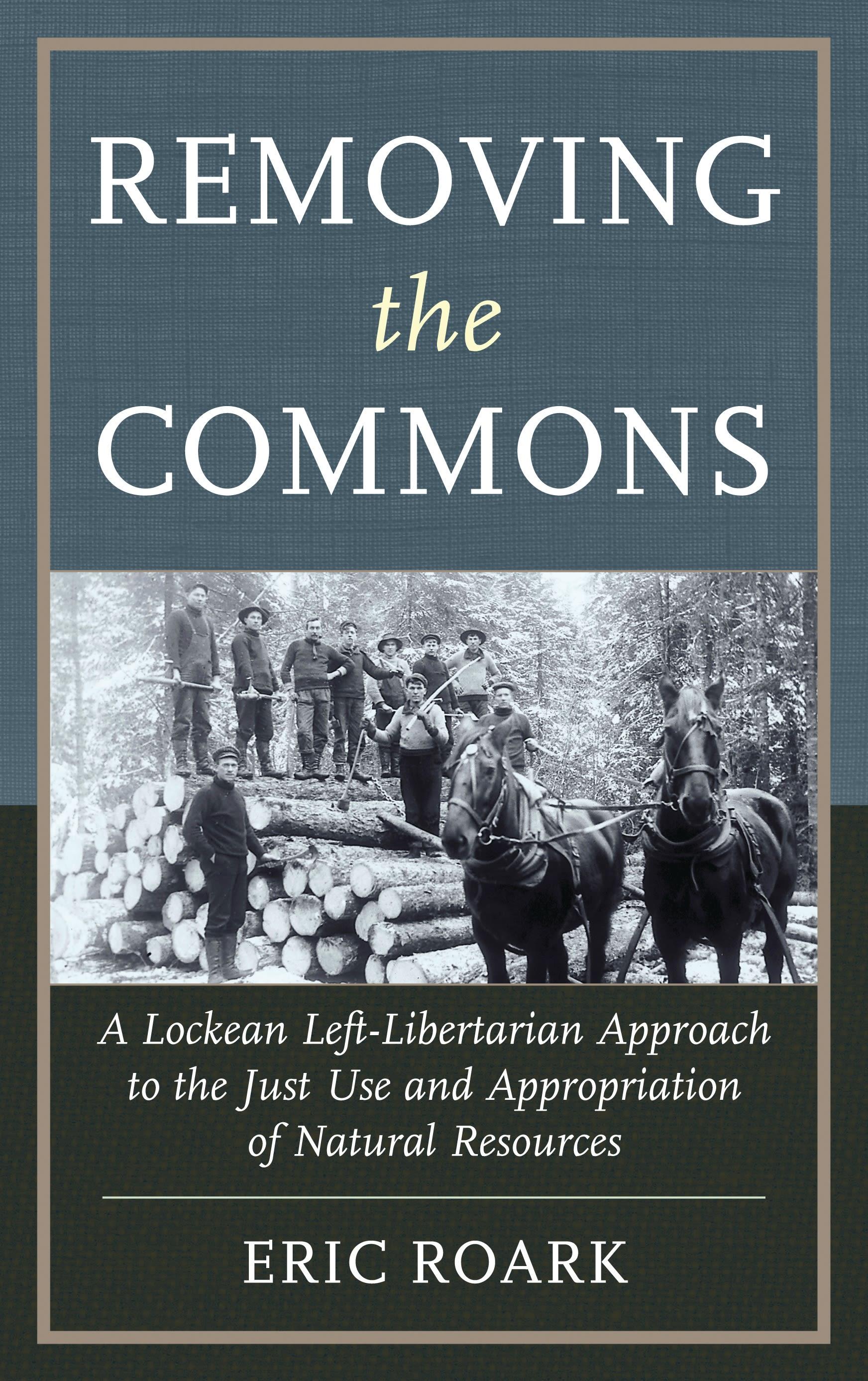
Removing the Commons examines the moral condition in which people can remove--through either use or appropriation--natural resources from the commons. This task begins with a robust defense of the view that natural resources initially belong to all people. Granting that natural resources initially belong to all people, it follows that all people have a claim that limits the way in which others may go about taking or removing natural resources from the commons. In assessing these limitations, Eric Roark argues for a Lockean left-libertarian theory of justice in which all people have the right of self-ownership and may only remove natural resources from the commons if they adhere to the Lockean Proviso by leaving “enough and as good” for others. Roark’s account goes beyond existing treatments of the Lockean Proviso by insisting that the duty to leave enough and as good for others applies not merely to those who appropriate natural resources from the commons, but also to those who use natural resources within the commons. Removing the Commons defends a Georgist interpretation of the Lockean Proviso in which those who remove natural resources from the commons must pay the competitive rent of their removal in a fashion that best promotes equal opportunity for welfare. Finally, Roark gives extended consideration to the implications that the developed Lockean Left-Libertarian account of removing natural resources from the commons poses toward both global poverty and environmental degradation.
Betal nemt med kort, Klarna, Apple Pay eller Google Pay. Ikke tilfreds? Du har altid 14 dages fortrydelsesret. Læs mere i vores vilkår. Har du spørgsmål, så send os en mail på hello@memmo.org.
Memmo gør det nemmere at studere – uanset hvor du er i verden. Hos os samler du dine kursusbøger og smarte studieværktøjer ét sted: resuméer, quizzer, podcasts og flashcards. Og så er der Ted, din studieven, der svarer på alt, du undrer dig over. Over 50 000 studerende studerer allerede her – bygget til at hjælpe dig med at lære hurtigere og stresse mindre.