
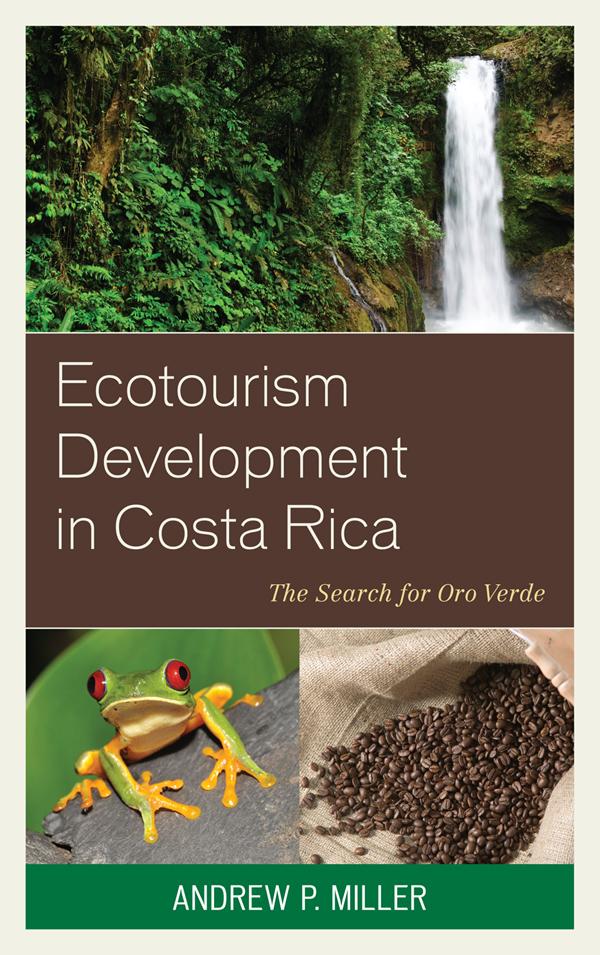
Ecotourism Development in Costa Rica: The Search for Oro Verde, by Andrew P. Miller, examines the use of ecotourism as a development strategy in Costa Rica and its applicability to other Central American states. Ecotourism provides an important environmental check on industry, giving the environment a voice by making its preservation an economic necessity due to the number of people who derive their income from it. The move away from agriculture to ecotourism is a natural fit because many of those who are engaged in agriculture have extensive knowledge of plants and animals that can be utilized by the ecotourism industry.
The use of ecotourism as a development strategy is distinctive. For ecotourism to succeed, it must preserve the natural environment, but it must do so in a way that does not preclude growth in other sectors of the economy. Miller shows how the successful pursuit of foreign direct investment coupled with Costa Rica’s immense biodiversity and its attractiveness to tourists is key to understanding the success of the Costa Rican economy. Many of the preferences that ecotourists have for a vacation destination also help create an amenable atmosphere for business. These factors include: political and social stability, high quality of life, low levels of corruption, economic freedom, high levels of education, and a suitable infrastructure. The most important part of this research is its development of strategies based upon the Costa Rican model that would be useful for other states in the region. When looking at whether states can replicate the development strategy of Costa Rica, environmental sustainability is an important concern. Ecotourism Development in Costa Rica is an essential text for students and scholars interested in Latin American politics and history, development studies, and environmental sustainability.
The use of ecotourism as a development strategy is distinctive. For ecotourism to succeed, it must preserve the natural environment, but it must do so in a way that does not preclude growth in other sectors of the economy. Miller shows how the successful pursuit of foreign direct investment coupled with Costa Rica’s immense biodiversity and its attractiveness to tourists is key to understanding the success of the Costa Rican economy. Many of the preferences that ecotourists have for a vacation destination also help create an amenable atmosphere for business. These factors include: political and social stability, high quality of life, low levels of corruption, economic freedom, high levels of education, and a suitable infrastructure. The most important part of this research is its development of strategies based upon the Costa Rican model that would be useful for other states in the region. When looking at whether states can replicate the development strategy of Costa Rica, environmental sustainability is an important concern. Ecotourism Development in Costa Rica is an essential text for students and scholars interested in Latin American politics and history, development studies, and environmental sustainability.
Betal nemt med kort, Klarna, Apple Pay eller Google Pay. Ikke tilfreds? Du har altid 14 dages fortrydelsesret. Læs mere i vores vilkår. Har du spørgsmål, så send os en mail på hello@memmo.org.
Memmo gør det nemmere at studere – uanset hvor du er i verden. Hos os samler du dine kursusbøger og smarte studieværktøjer ét sted: resuméer, quizzer, podcasts og flashcards. Og så er der Ted, din studieven, der svarer på alt, du undrer dig over. Over 50 000 studerende studerer allerede her – bygget til at hjælpe dig med at lære hurtigere og stresse mindre.