
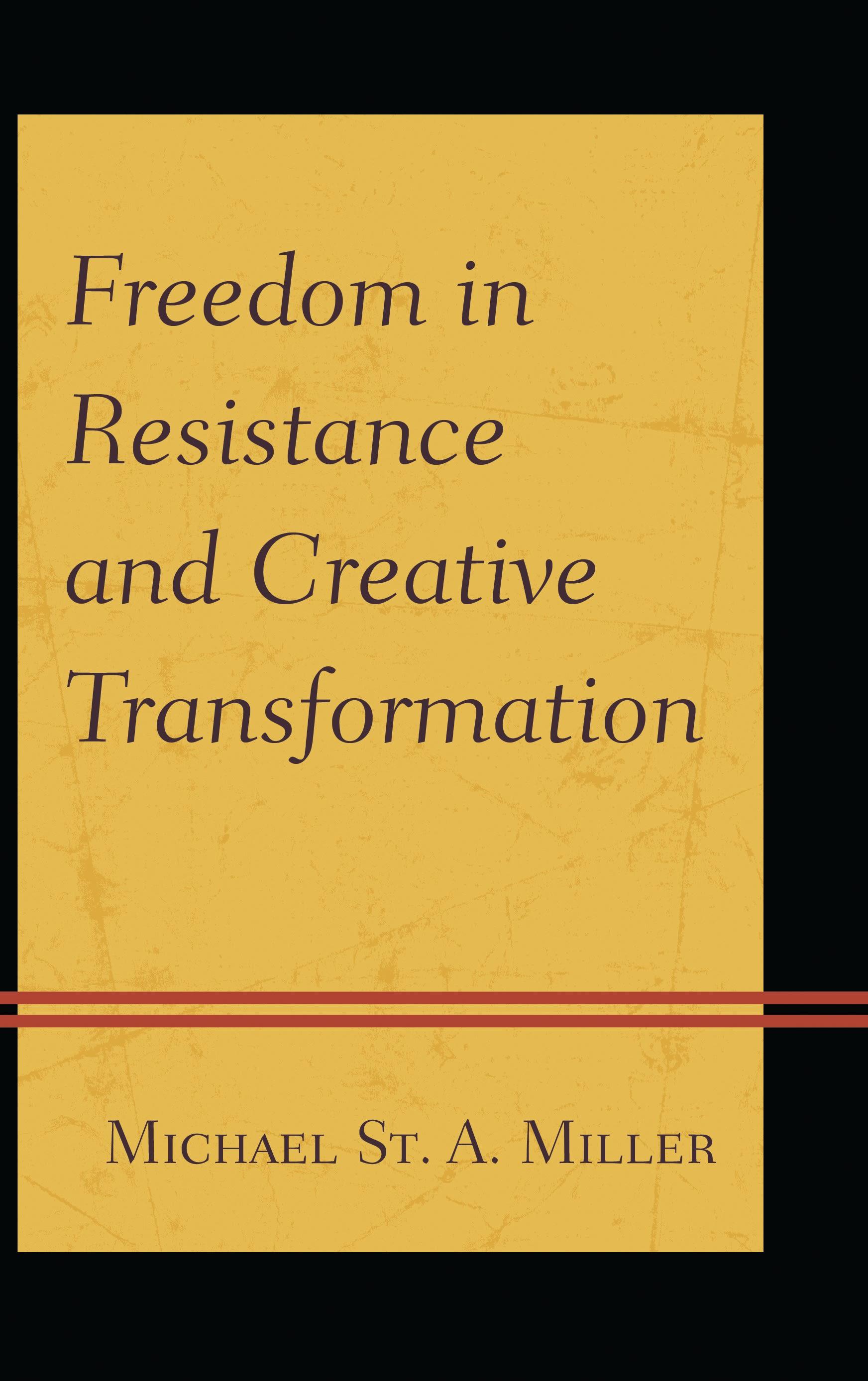
In Freedom in Resistance and Creative Transformation, Michael Miller addresses the concept of freedom that is central to the grammar of Christian faith and important in a wide range of religious and nonreligious settings across the globe. He confronts the fact that despite the claimed importance of freedom there continues to be interpersonal, socio-political, and religious power hierarchies that keep some people dominant and others subjugated.
The book suggests that often these hierarchies are informed by Christian teachings that deny freedom to human beings on the basis of their humanity per se. Having classified humanity as fallen, we are instructed that freedom is experienced by disparaging our humanity as we actually experience it, seeing ourselves as our own worst enemies and accepting bondage to God—the bondage reflected in the character of relations with those seen as God’s special representatives in the world.
Miller presents a case against this understanding of the human situation, and in the process he critically engages the Old and New Testaments along with ideas of significant representatives of Christian orthodoxy. As an alternative he promotes freedom that is finite, realistically libertarian, and relational as most compatible with the character of human beings that are partially self-creating and self-determining. Contributing to this position is the view that an infinitely temporal God, by character and desire, participates in human life in a way that ensures the requisite space for authentic decision making, from which emerges genuinely novel possibilities for human life. This dynamic has implications for the continued development of the human species and the quality of life in the cosmos as a whole.
The book suggests that often these hierarchies are informed by Christian teachings that deny freedom to human beings on the basis of their humanity per se. Having classified humanity as fallen, we are instructed that freedom is experienced by disparaging our humanity as we actually experience it, seeing ourselves as our own worst enemies and accepting bondage to God—the bondage reflected in the character of relations with those seen as God’s special representatives in the world.
Miller presents a case against this understanding of the human situation, and in the process he critically engages the Old and New Testaments along with ideas of significant representatives of Christian orthodoxy. As an alternative he promotes freedom that is finite, realistically libertarian, and relational as most compatible with the character of human beings that are partially self-creating and self-determining. Contributing to this position is the view that an infinitely temporal God, by character and desire, participates in human life in a way that ensures the requisite space for authentic decision making, from which emerges genuinely novel possibilities for human life. This dynamic has implications for the continued development of the human species and the quality of life in the cosmos as a whole.
Betal nemt med kort, Klarna, Apple Pay eller Google Pay. Ikke tilfreds? Du har altid 14 dages fortrydelsesret. Læs mere i vores vilkår. Har du spørgsmål, så send os en mail på hello@memmo.org.
Memmo gør det nemmere at studere – uanset hvor du er i verden. Hos os samler du dine kursusbøger og smarte studieværktøjer ét sted: resuméer, quizzer, podcasts og flashcards. Og så er der Ted, din studieven, der svarer på alt, du undrer dig over. Over 50 000 studerende studerer allerede her – bygget til at hjælpe dig med at lære hurtigere og stresse mindre.