
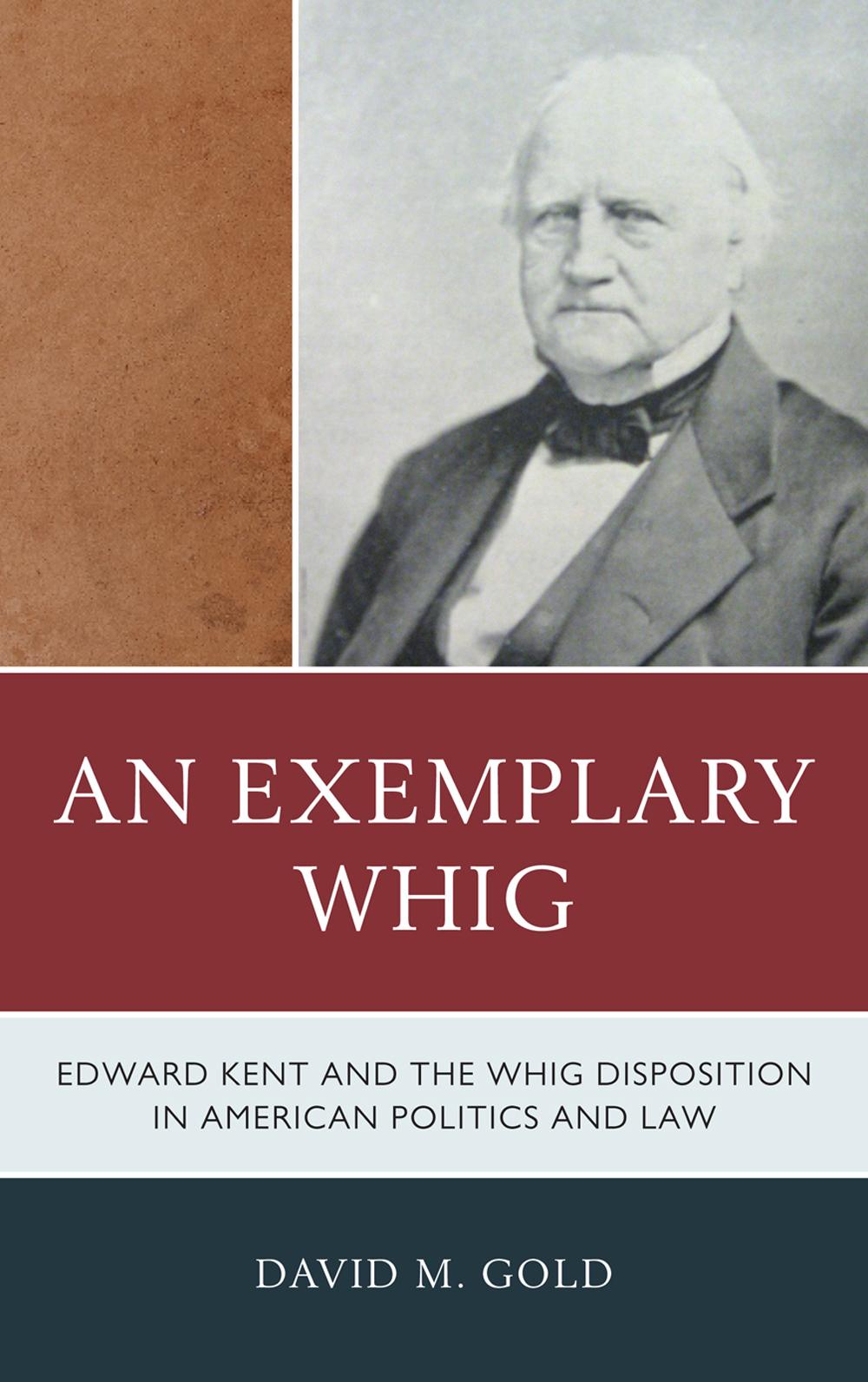
Historians have paid surprisingly little attention to state-level political leaders and judges. Edward Kent (1802–77) was both. He served three terms as a state legislator, two as mayor of Bangor, two as governor, and two as a judge of the state supreme court. He represented Maine in the negotiations that resolved the long-running northeastern border dispute between the United States and Great Britain and served for four years as the American consul in Rio de Janeiro. The foremost Whig in Maine state politics and later a Republican judge, Kent articulated classic Whig political views and carried them forward into his Whig-Republican jurisprudence.
In examining Kent's career as Maine's quintessential Whig, An Exemplary Whig reveals his characteristically conservative Whig outlook, including an aversion toward disorder and a deep respect for law, for existing institutions, and for the wisdom of experience. Kent brought his conservative disposition into the Republican Party. He had no use for radical abolitionism, preferring moderation and compromise to measures that endangered social order or the integrity of the Union. Kent saw the "slave power," not abolitionism, as the disrupter of the Union, and he urged the “fusion” of all antislavery elements into a new Republican party.
In 1859, Maine's Republican governor appointed Kent to the state supreme court. During his fourteen-year tenure, Kent adopted a Whiggish jurisprudence, pragmatic and commonsensical, and displayed a reverence for the common law and a distrust of “theoretic speculation.” After his retirement, he chaired a constitutional revision commission, admonishing his fellow commissioners to bear in mind the “practical wisdom” that kept dangerous innovation in check.
As a politician during the Jacksonian era, Kent exemplified Whig leadership at the local and state levels. In his jurisprudence, he carried the Whig persuasion into the Republican ascendancy and the beginnings of the Gilded Age.
In examining Kent's career as Maine's quintessential Whig, An Exemplary Whig reveals his characteristically conservative Whig outlook, including an aversion toward disorder and a deep respect for law, for existing institutions, and for the wisdom of experience. Kent brought his conservative disposition into the Republican Party. He had no use for radical abolitionism, preferring moderation and compromise to measures that endangered social order or the integrity of the Union. Kent saw the "slave power," not abolitionism, as the disrupter of the Union, and he urged the “fusion” of all antislavery elements into a new Republican party.
In 1859, Maine's Republican governor appointed Kent to the state supreme court. During his fourteen-year tenure, Kent adopted a Whiggish jurisprudence, pragmatic and commonsensical, and displayed a reverence for the common law and a distrust of “theoretic speculation.” After his retirement, he chaired a constitutional revision commission, admonishing his fellow commissioners to bear in mind the “practical wisdom” that kept dangerous innovation in check.
As a politician during the Jacksonian era, Kent exemplified Whig leadership at the local and state levels. In his jurisprudence, he carried the Whig persuasion into the Republican ascendancy and the beginnings of the Gilded Age.
Betal nemt med kort, Klarna, Apple Pay eller Google Pay. Ikke tilfreds? Du har altid 14 dages fortrydelsesret. Læs mere i vores vilkår. Har du spørgsmål, så send os en mail på hello@memmo.org.
Memmo gør det nemmere at studere – uanset hvor du er i verden. Hos os samler du dine kursusbøger og smarte studieværktøjer ét sted: resuméer, quizzer, podcasts og flashcards. Og så er der Ted, din studieven, der svarer på alt, du undrer dig over. Over 50 000 studerende studerer allerede her – bygget til at hjælpe dig med at lære hurtigere og stresse mindre.