
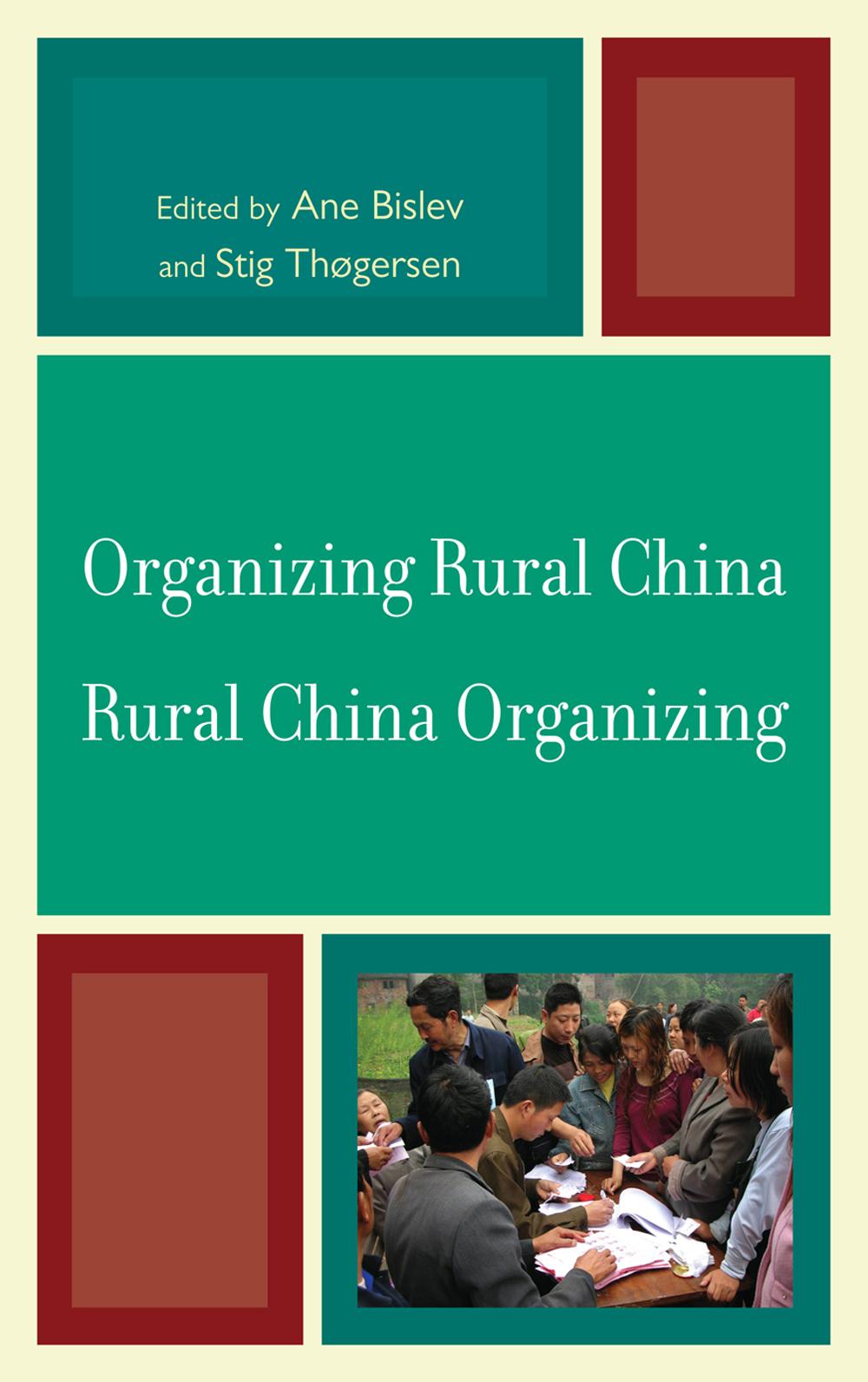
Organizing Rural China — Rural China Organizing
Forfatter: Stig Thogersen, Mikkel Bunkenborg, Mette Halskov Hansen, Marina Svensson, Jonathan Unger, Unn Målfrid H. Rolandsen, Christian Göbel, Ma Hua, Xu Yong, Liu Yiqiang, Pang Cuiming, Yang Minghong, Jørgen Delman, Vivienne Shue, Ane Bislev
Forlag: Bloomsbury Publishing
Udgave: 1
Udgivelsesdato: 2012
ISBN: 9780739170090
During the early 1980s China embarked on what can be seen as one of the world’s largest social experiments ever. Decollectivization meant much more than the reorganization of agricultural production into family based farming. It signaled significant changes to rural social relations, when privatization, marketization and increased geographical mobility started tearing apart the economic and social institutions that had structured collective village life under Mao.
The focus of this book is on how rural society has been reorganized in the 21st century. The first chapters outline the basic organizational structure of rural China and can be used as an introduction to the topic in a classroom setting. They show how the state and its social scientists draw up plans to overcome the perceived lack of rural social organization, and discuss the often problem-ridden implementation of their ideas. The second section presents case studies of institutions that organize key aspects of rural life: Boarding schools where rural children learn to accept organizational hierarchies; lineage organizations carving out new roles for themselves; “dragonhead enterprises” expected to organize agricultural production and support rural development, and several others. The book is of theoretical interest because of its focus on the re-embedding, or reintegration, of individuals into new types of collectivities, which are less predetermined by tradition and habit and more a matter of, at least perceived, individual choice. Most chapters are based on extensive fieldwork and contain vivid examples from daily life, which will make the book attractive to anyone who wants to understand how Chinese villagers experience the extraordinary social changes they are going through.
The focus of this book is on how rural society has been reorganized in the 21st century. The first chapters outline the basic organizational structure of rural China and can be used as an introduction to the topic in a classroom setting. They show how the state and its social scientists draw up plans to overcome the perceived lack of rural social organization, and discuss the often problem-ridden implementation of their ideas. The second section presents case studies of institutions that organize key aspects of rural life: Boarding schools where rural children learn to accept organizational hierarchies; lineage organizations carving out new roles for themselves; “dragonhead enterprises” expected to organize agricultural production and support rural development, and several others. The book is of theoretical interest because of its focus on the re-embedding, or reintegration, of individuals into new types of collectivities, which are less predetermined by tradition and habit and more a matter of, at least perceived, individual choice. Most chapters are based on extensive fieldwork and contain vivid examples from daily life, which will make the book attractive to anyone who wants to understand how Chinese villagers experience the extraordinary social changes they are going through.
Sider: 236
Kategori: Samhällsvetenskap
e-ISBN: 9780739170106
Forsendelsesvægt: 1.2 kg
Sendes inden for: 1-2 dage
Betal nemt med kort, Klarna, Apple Pay eller Google Pay. Ikke tilfreds? Du har altid 14 dages fortrydelsesret. Læs mere i vores vilkår. Har du spørgsmål, så send os en mail på hello@memmo.org.
Memmo gør det nemmere at studere – uanset hvor du er i verden. Hos os samler du dine kursusbøger og smarte studieværktøjer ét sted: resuméer, quizzer, podcasts og flashcards. Og så er der Ted, din studieven, der svarer på alt, du undrer dig over. Over 50 000 studerende studerer allerede her – bygget til at hjælpe dig med at lære hurtigere og stresse mindre.