
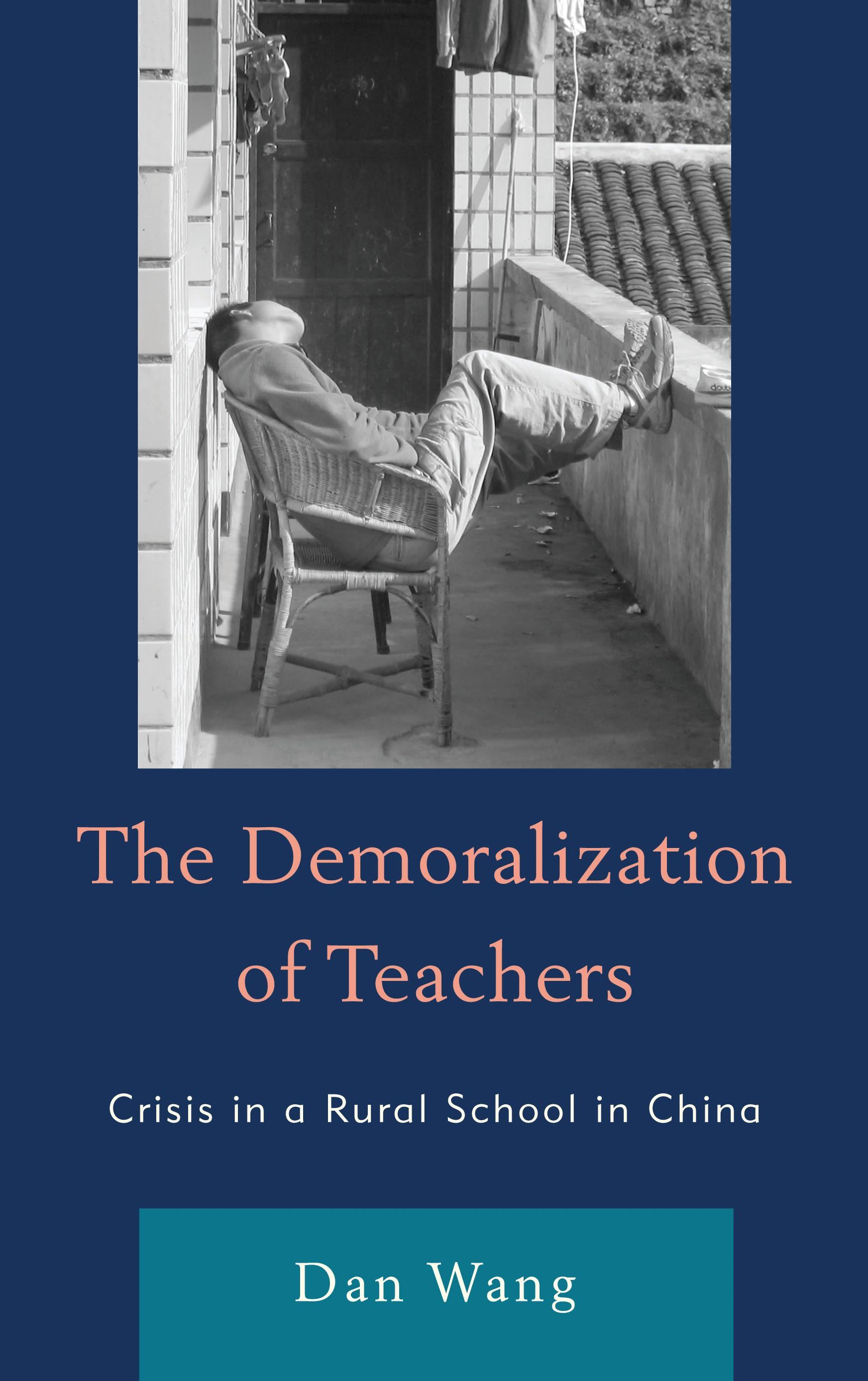
The educational system in China is marked by its dramatic inequality between rural and urban schools. The challenges facing rural schools are usually understood as disadvantages in funding, facilities, and staffing, which consequently result in undesirable student performance in general. This book, however, penetrates these phenomena on the surface and brings forth a much deeper moral crisis in rural education, a crisis that is entrenched in the complicated interlocking of formal and informal institutions within and beyond the school.
The Demoralization of Teachers describes the work and workplace in a rural school from the perspective of teachers who were working there. It faithfully depicts the lamentable state of teachers’ work morale in the school and, little by little as if a detective story, reveals the reasons for the teachers’ demoralization by vivid narratives. The book demonstrates the profound impact on the meanings of teaching exerted by the state curriculum reform, the formal and informal norms and regulations in the school, and the erosion of moral integrity in the state bureaucracy and the society at large. The crisis in the rural school stops to be a “rural” or educational problem in nature, but mirrors the societal-wide transformation in political economy as well as in ideology in the current reform China.
The sheer complexity of the moral crisis in this ethnography calls for renewed efforts to identify and investigate the educational problems in rural China from fresh theoretical perspectives that situate rural education in broader historical and social contexts and processes.
The Demoralization of Teachers describes the work and workplace in a rural school from the perspective of teachers who were working there. It faithfully depicts the lamentable state of teachers’ work morale in the school and, little by little as if a detective story, reveals the reasons for the teachers’ demoralization by vivid narratives. The book demonstrates the profound impact on the meanings of teaching exerted by the state curriculum reform, the formal and informal norms and regulations in the school, and the erosion of moral integrity in the state bureaucracy and the society at large. The crisis in the rural school stops to be a “rural” or educational problem in nature, but mirrors the societal-wide transformation in political economy as well as in ideology in the current reform China.
The sheer complexity of the moral crisis in this ethnography calls for renewed efforts to identify and investigate the educational problems in rural China from fresh theoretical perspectives that situate rural education in broader historical and social contexts and processes.
Betal nemt med kort, Klarna, Apple Pay eller Google Pay. Ikke tilfreds? Du har altid 14 dages fortrydelsesret. Læs mere i vores vilkår. Har du spørgsmål, så send os en mail på hello@memmo.org.
Memmo gør det nemmere at studere – uanset hvor du er i verden. Hos os samler du dine kursusbøger og smarte studieværktøjer ét sted: resuméer, quizzer, podcasts og flashcards. Og så er der Ted, din studieven, der svarer på alt, du undrer dig over. Over 50 000 studerende studerer allerede her – bygget til at hjælpe dig med at lære hurtigere og stresse mindre.