
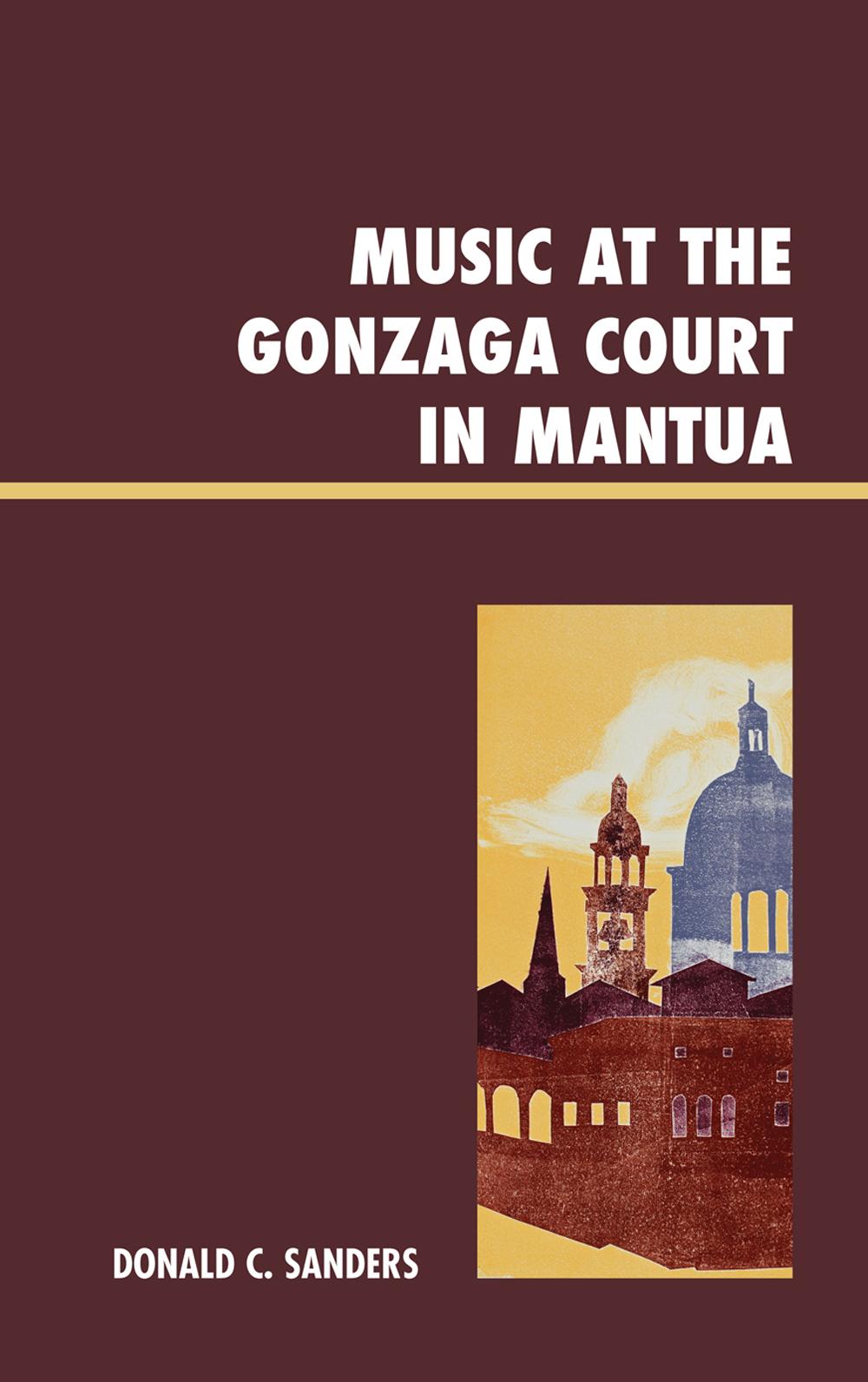
Beginning in the second half of the fifteenth century, under the patronage of the Gonzaga family, the northern Italian city of Mantua became a vibrant center for visual art, theatre, and music. The performance at the Gonzaga court of Poliziano's Fabula di Orfeo, around 1480, marked the beginning of secular music theatre. The use of musical numbers within the drama anticipated the beginnings of opera at Florence a century later, as well as the first masterpiece of the genre, Monteverdi's La favola d'Orfeo at Mantua in 1607. Mantua reached the zenith of its artistic distinction during the reign of Duke Vincenzo I, between 1587 and 1612. During this time, Wert and Gastoldi were joined at the court by the important Jewish composer Salamone Rossi and, most notably, by Monteverdi. The premieres of his Orfeo and Arisanna made the Gonzaga court, for that brief period, the most important center in the development of opera.
In Music at the Gonzaga Court in Mantua, Donald C. Sanders discusses musical composition at the court in the context of the brilliant visual art that provided such a conducive environment. Sanders also traces the history of this very colorful family and their relationships with the emperors, kings, and popes who shaped modern Europe. Part history, part musicology, Sanders' analysis spans the fifteenth century through the seventeenth century, filling informative gaps with details essential for students in courses on Renaissance or Baroque music, or in more specialized courses on madrigal, opera, or liturgical music. Music at the Gonzaga Court in Mantua is also important reading for knowledgeable musical amateurs and anyone with interest in Italian history and arts.
In Music at the Gonzaga Court in Mantua, Donald C. Sanders discusses musical composition at the court in the context of the brilliant visual art that provided such a conducive environment. Sanders also traces the history of this very colorful family and their relationships with the emperors, kings, and popes who shaped modern Europe. Part history, part musicology, Sanders' analysis spans the fifteenth century through the seventeenth century, filling informative gaps with details essential for students in courses on Renaissance or Baroque music, or in more specialized courses on madrigal, opera, or liturgical music. Music at the Gonzaga Court in Mantua is also important reading for knowledgeable musical amateurs and anyone with interest in Italian history and arts.
Sider: 200
Kategori: Musikvetenskap
e-ISBN: 9780739167274
Forsendelsesvægt: 1.2 kg
Sendes inden for: 1-2 dage
Betal nemt med kort, Klarna, Apple Pay eller Google Pay. Ikke tilfreds? Du har altid 14 dages fortrydelsesret. Læs mere i vores vilkår. Har du spørgsmål, så send os en mail på hello@memmo.org.
Memmo gør det nemmere at studere – uanset hvor du er i verden. Hos os samler du dine kursusbøger og smarte studieværktøjer ét sted: resuméer, quizzer, podcasts og flashcards. Og så er der Ted, din studieven, der svarer på alt, du undrer dig over. Over 50 000 studerende studerer allerede her – bygget til at hjælpe dig med at lære hurtigere og stresse mindre.