
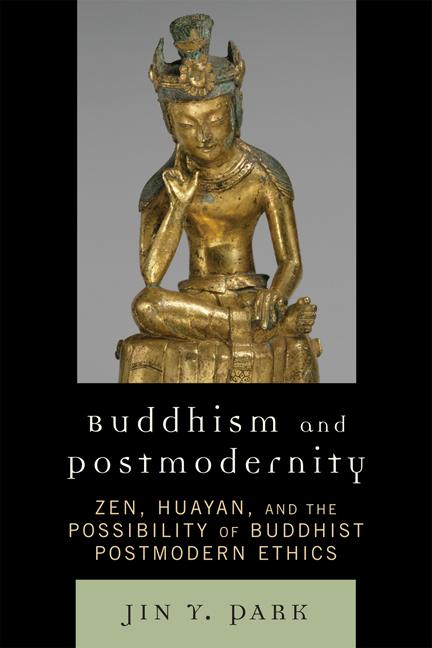
Buddhism and Postmodernity is a response to some of the questions that have emerged in the process of Buddhism's encounters with modernity and the West. Jin Y. Park broadly outlines these questions as follows: first, why are the interpretations and evaluations of Buddhism so different in Europe (in the nineteenth century), in the United States (in the twentieth century), and in traditional Asia; second, why does Zen Buddhism, which offers a radically egalitarian vision, maintain a strongly authoritarian leadership; and third, what ethical paradigm can be drawn from the Buddhist-postmodern form of philosophy?
Park argues that, as unrelated as these questions may seem, the issues that have generated them are related to perennial philosophical themes of identity, institutional power, and ethics, respectively. Each of these themes constitutes one section of Buddhism and Postmodernity. Park discusses the three issues in the book through the exploration of the Buddhist concepts of self and others, language and thinking, and universality and particularities. Most of this discussion is drawn from the East Asian Buddhist traditions of Zen and Huayan Buddhism in connection with the Continental philosophies of postmodernism, hermeneutics, and deconstruction. Self-critical from both the Buddhist and Western philosophical perspectives, Buddhism and Postmodernity points the reader toward a new understanding of Buddhist philosophy and offers a Buddhist-postmodern ethical paradigm that challenges normative ethics of metaphysical traditions.
Park argues that, as unrelated as these questions may seem, the issues that have generated them are related to perennial philosophical themes of identity, institutional power, and ethics, respectively. Each of these themes constitutes one section of Buddhism and Postmodernity. Park discusses the three issues in the book through the exploration of the Buddhist concepts of self and others, language and thinking, and universality and particularities. Most of this discussion is drawn from the East Asian Buddhist traditions of Zen and Huayan Buddhism in connection with the Continental philosophies of postmodernism, hermeneutics, and deconstruction. Self-critical from both the Buddhist and Western philosophical perspectives, Buddhism and Postmodernity points the reader toward a new understanding of Buddhist philosophy and offers a Buddhist-postmodern ethical paradigm that challenges normative ethics of metaphysical traditions.
Betal nemt med kort, Klarna, Apple Pay eller Google Pay. Ikke tilfreds? Du har altid 14 dages fortrydelsesret. Læs mere i vores vilkår. Har du spørgsmål, så send os en mail på hello@memmo.org.
Memmo gør det nemmere at studere – uanset hvor du er i verden. Hos os samler du dine kursusbøger og smarte studieværktøjer ét sted: resuméer, quizzer, podcasts og flashcards. Og så er der Ted, din studieven, der svarer på alt, du undrer dig over. Over 50 000 studerende studerer allerede her – bygget til at hjælpe dig med at lære hurtigere og stresse mindre.