
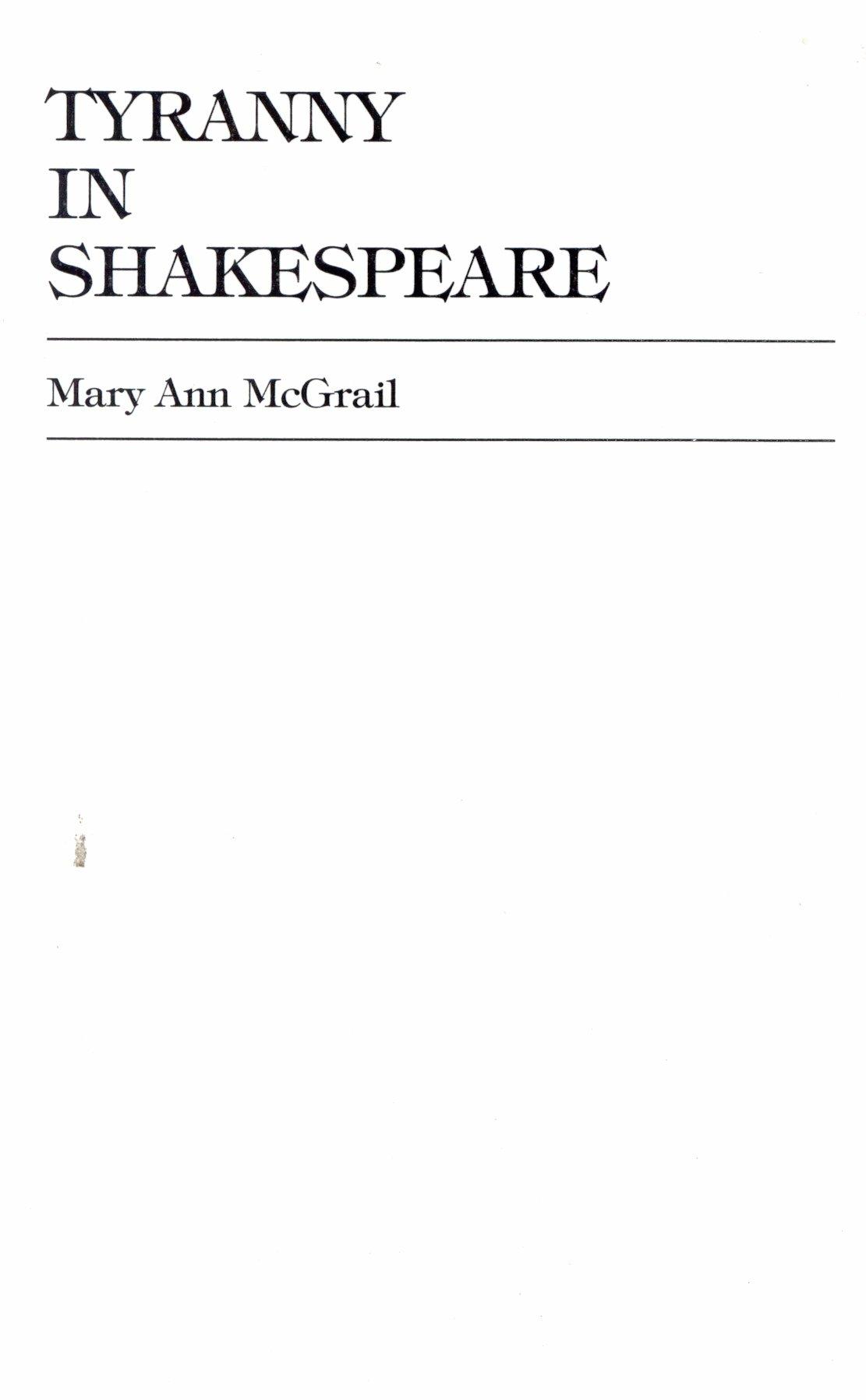
Even the most explicitly political contemporary approaches to Shakespeare have been uninterested by his tyrants as such. But for Shakespeare, rather than a historical curiosity or psychological aberration, tyranny is a perpetual political and human problem. Mary Ann McGrail's recovery of the playwright's perspective challenges the grounds of this modern critical silence. She locates Shakespeare's expansive definition of tyranny between the definitions accepted by classical and modern political philosophy. Is tyranny always the worst of all possible political regimes, as Aristotle argues in his Politics? Or is disguised tyranny, as Machiavelli proposes, potentially the best regime possible? These competing conceptions were practiced and debated in Renaissance thought, given expression by such political actors and thinkers as Elizabeth I, James I, Henrie Bullinger, Bodin, and others. McGrail focuses on Shakespeare's exploration of the conflicting and contradictory passions that make up the tyrant and finds that Shakespeare's dramas of tyranny rest somewhere between Aristotle's reticence and Machiavelli's forthrightness. Literature and politics intersect in Tyranny in Shakespeare, which will fascinate students and scholars of both.
Sider: 208
Kategori: Litteraturvetenskap & Teori
e-ISBN: 9780739162040
Forsendelsesvægt: 1.2 kg
Sendes inden for: 1-2 dage
Betal nemt med kort, Klarna, Apple Pay eller Google Pay. Ikke tilfreds? Du har altid 14 dages fortrydelsesret. Læs mere i vores vilkår. Har du spørgsmål, så send os en mail på hello@memmo.org.
Memmo gør det nemmere at studere – uanset hvor du er i verden. Hos os samler du dine kursusbøger og smarte studieværktøjer ét sted: resuméer, quizzer, podcasts og flashcards. Og så er der Ted, din studieven, der svarer på alt, du undrer dig over. Over 50 000 studerende studerer allerede her – bygget til at hjælpe dig med at lære hurtigere og stresse mindre.