
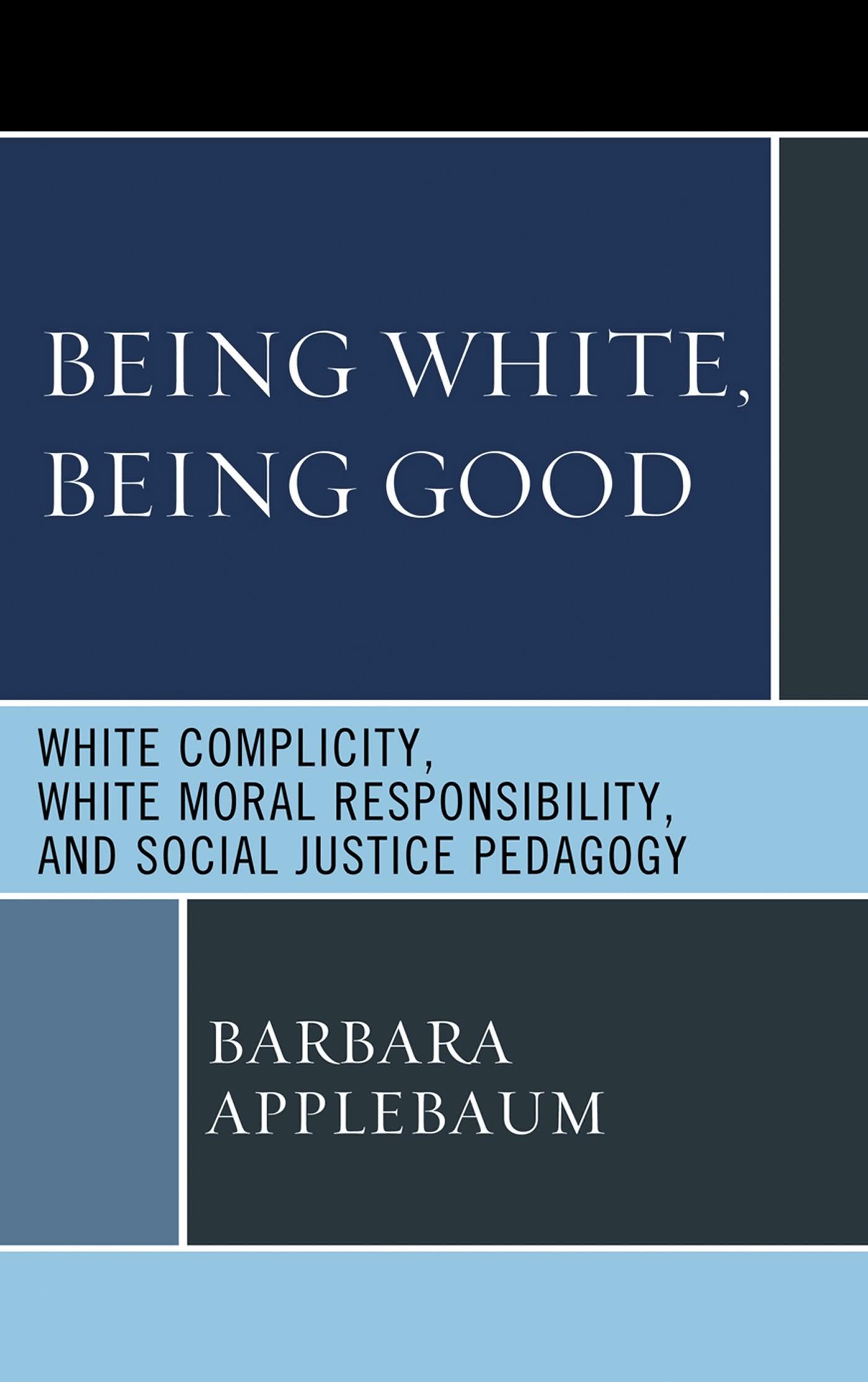
Contemporary scholars who study race and racism have emphasized that white complicity plays a role in perpetuating systemic racial injustice. Being White, Being Good seeks to explain what scholars mean by white complicity, to explore the ethical and epistemological assumptions that white complicity entails, and to offer recommendations for how white complicity can be taught. The book highlights how well-intentioned white people who might even consider themselves as paragons of antiracism might be unwittingly sustaining an unjust system that they say they want to dismantle. What could it mean for white people "to be good" when they can reproduce and maintain racist system even when, and especially when, they believe themselves to be good? In order to answer this question, Barbara Applebaum advocates a shift in our understanding of the subject, of language, and of moral responsibility. Based on these shifts a new notion of moral responsibility is articulated that is not focused on guilt and that can help white students understand and acknowledge their white complicity.
Being White, Being Good introduces an approach to social justice pedagogy called "white complicity pedagogy." The practical and pedagogical implications of this approach are fleshed out by emphasizing the role of uncertainty, vulnerability, and vigilance. White students who acknowledge their complicity have an increased potential to develop alliance identities and to engage in genuine cross-racial dialogue. White complicity pedagogy promises to facilitate the type of listening on the part of white students so that they come open and willing to learn, and "not just to say no." Applebaum also conjectures that systemically marginalized students would be more likely and willing to invest energy and time, and be more willing to engage with the systemically privileged, when the latter acknowledge rather than deny their complicity. It is a central claim of the book that acknowledging complicity encourages a willingness to listen to, rat
Being White, Being Good introduces an approach to social justice pedagogy called "white complicity pedagogy." The practical and pedagogical implications of this approach are fleshed out by emphasizing the role of uncertainty, vulnerability, and vigilance. White students who acknowledge their complicity have an increased potential to develop alliance identities and to engage in genuine cross-racial dialogue. White complicity pedagogy promises to facilitate the type of listening on the part of white students so that they come open and willing to learn, and "not just to say no." Applebaum also conjectures that systemically marginalized students would be more likely and willing to invest energy and time, and be more willing to engage with the systemically privileged, when the latter acknowledge rather than deny their complicity. It is a central claim of the book that acknowledging complicity encourages a willingness to listen to, rat
Betal nemt med kort, Klarna, Apple Pay eller Google Pay. Ikke tilfreds? Du har altid 14 dages fortrydelsesret. Læs mere i vores vilkår. Har du spørgsmål, så send os en mail på hello@memmo.org.
Memmo gør det nemmere at studere – uanset hvor du er i verden. Hos os samler du dine kursusbøger og smarte studieværktøjer ét sted: resuméer, quizzer, podcasts og flashcards. Og så er der Ted, din studieven, der svarer på alt, du undrer dig over. Over 50 000 studerende studerer allerede her – bygget til at hjælpe dig med at lære hurtigere og stresse mindre.