
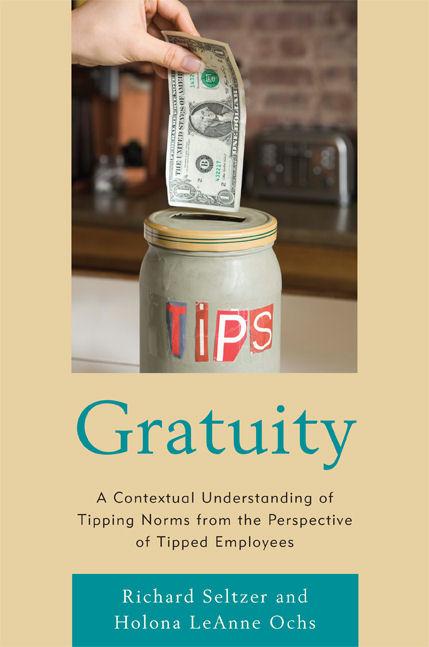
Gratuity is based on interviews with 425 people in more than 50 occupational categories. The respondents from across the U.S. reflect the diversity of the population but have one thing in common: they earn tips. A tip is a price set almost entirely by a customer, less connected to demand than to social code. In the U.S., tipping remains one of our most controversial, confusing, and highly variable norms.
In their own words, respondents present their perspectives regarding their compensation as well as what they like and dislike about work. Understanding what people think about tipping and how tipped employees experience their work provides an understanding of tipping norms that has never been addressed. The evidence in this study indicates that tips do not appear to increase in accordance with inequality, and tips do not alleviate the discomfort of inequality from the perspective of the tipped employee when they are given to demonstrate status over another. Tips may in some cases serve a redistributive function, but they are not consistent with regard to social status. The evidence in this study also indicates that tips are a weak signal of quality and are not likely to serve as an effective monitoring mechanism. People appear to conform to tipping norms for social and emotional rather than strictly rational reasons. Furthermore, conformity to tipping norms is likewise inconsistent across work contexts. One of the principal mechanisms for fostering conformity lies within the organizational hierarchy, and management plays a critical role.
The definitive difference between those who like their job and those who do not is the experience with people, particularly management. Every person who interacts with the public encounters people who are rude or disrespectful. The critical lesson for management is that the emotional costs of these interactions can be mitigated by managers who extend trust and support to employees. The absence of trust in the workplace contributes to a work environment that impose
In their own words, respondents present their perspectives regarding their compensation as well as what they like and dislike about work. Understanding what people think about tipping and how tipped employees experience their work provides an understanding of tipping norms that has never been addressed. The evidence in this study indicates that tips do not appear to increase in accordance with inequality, and tips do not alleviate the discomfort of inequality from the perspective of the tipped employee when they are given to demonstrate status over another. Tips may in some cases serve a redistributive function, but they are not consistent with regard to social status. The evidence in this study also indicates that tips are a weak signal of quality and are not likely to serve as an effective monitoring mechanism. People appear to conform to tipping norms for social and emotional rather than strictly rational reasons. Furthermore, conformity to tipping norms is likewise inconsistent across work contexts. One of the principal mechanisms for fostering conformity lies within the organizational hierarchy, and management plays a critical role.
The definitive difference between those who like their job and those who do not is the experience with people, particularly management. Every person who interacts with the public encounters people who are rude or disrespectful. The critical lesson for management is that the emotional costs of these interactions can be mitigated by managers who extend trust and support to employees. The absence of trust in the workplace contributes to a work environment that impose
Sider: 310
Kategori: Samhällsvetenskap
e-ISBN: 9780739144244
Forsendelsesvægt: 1.2 kg
Sendes inden for: 1-2 dage
Betal nemt med kort, Klarna, Apple Pay eller Google Pay. Ikke tilfreds? Du har altid 14 dages fortrydelsesret. Læs mere i vores vilkår. Har du spørgsmål, så send os en mail på hello@memmo.org.
Memmo gør det nemmere at studere – uanset hvor du er i verden. Hos os samler du dine kursusbøger og smarte studieværktøjer ét sted: resuméer, quizzer, podcasts og flashcards. Og så er der Ted, din studieven, der svarer på alt, du undrer dig over. Over 50 000 studerende studerer allerede her – bygget til at hjælpe dig med at lære hurtigere og stresse mindre.