
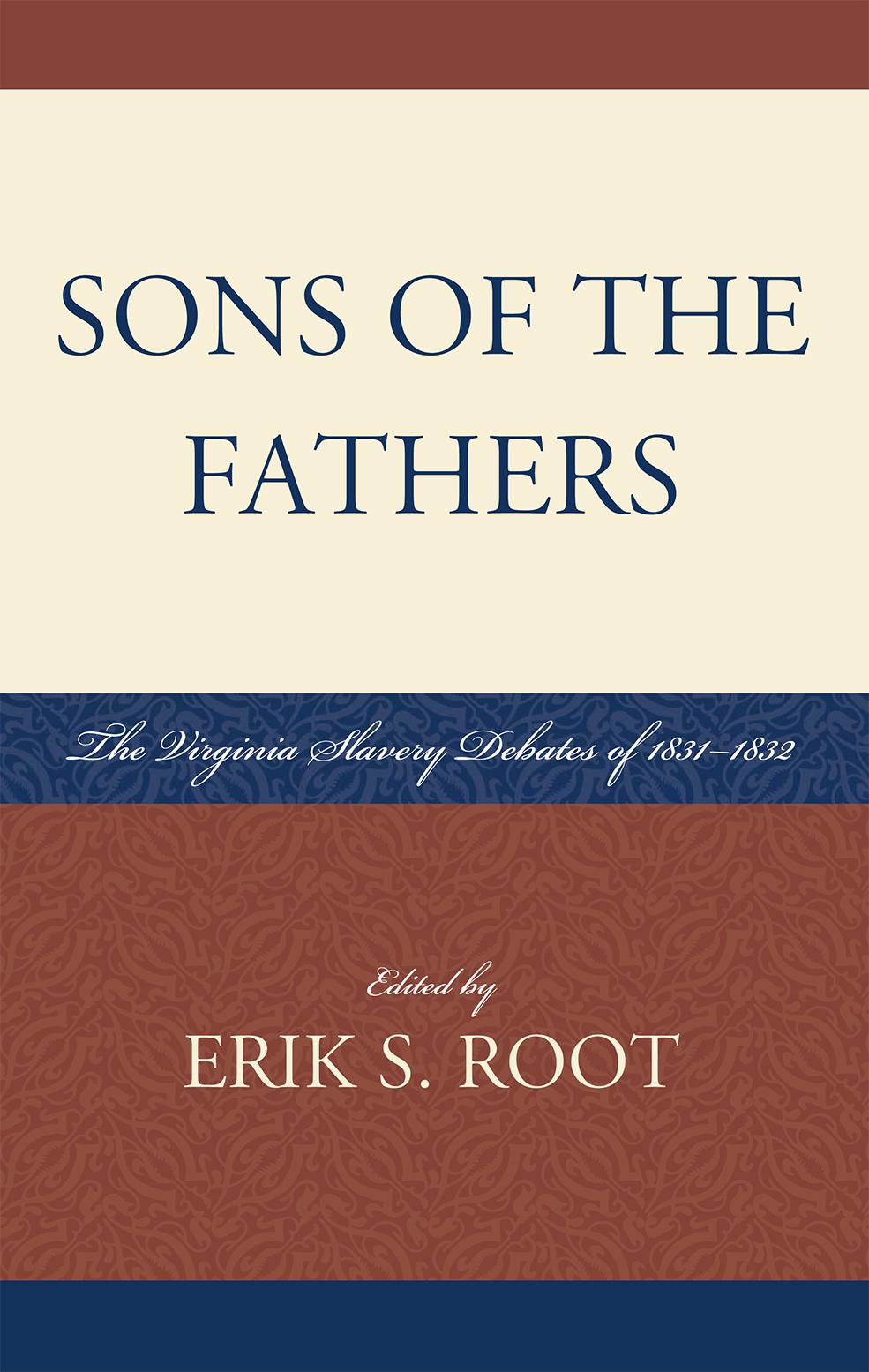
Erik Root's book, Sons of the Fathers explores the Virginia Slavery Debate of 1831–1832, conducted in the House of Delegates. This is possibly the greatest debate to have occurred in any southern state before the Civil War. The speeches in this book provide, for the first time ever, an unedited version of that debate where many of the sons of America's Founders deliberated over the necessity of emancipating the slaves in Old Dominion.
In August 1831, Nat Turner led the most successful slave rebellion in America's history, killing some 60 men, women, and children. This insurrection provided the historical backdrop to the proposal for a gradual emancipation plan. The forces for emancipation, led by Thomas Jefferson's grandson, Thomas Jefferson Randolph, were defeated in the course of the debate as the members of the House of Delegates rejected that it was a necessity to free the slaves. As a result, rift between what is now Virginia and Western Virginia developed, never to heal. Some in the debates believed slaves had the same rights as every human being. Those who balked at emancipation diminished slavery as an "evil" and came closer to the view that the slaves were mere property. They affirmed that the slave was property and rejected the natural rights grounding of the Founding. In this collection of primary source material-which consists of the speeches made public to the press and the people-the reader will be able to decide just how close the emancipation forces attached themselves to the "laws of Nature and Nature's God." The reader will also be able to decipher how far many Virginians departed from not only the Declaration of Independence, but the Virginia Declaration of Rights.
In August 1831, Nat Turner led the most successful slave rebellion in America's history, killing some 60 men, women, and children. This insurrection provided the historical backdrop to the proposal for a gradual emancipation plan. The forces for emancipation, led by Thomas Jefferson's grandson, Thomas Jefferson Randolph, were defeated in the course of the debate as the members of the House of Delegates rejected that it was a necessity to free the slaves. As a result, rift between what is now Virginia and Western Virginia developed, never to heal. Some in the debates believed slaves had the same rights as every human being. Those who balked at emancipation diminished slavery as an "evil" and came closer to the view that the slaves were mere property. They affirmed that the slave was property and rejected the natural rights grounding of the Founding. In this collection of primary source material-which consists of the speeches made public to the press and the people-the reader will be able to decide just how close the emancipation forces attached themselves to the "laws of Nature and Nature's God." The reader will also be able to decipher how far many Virginians departed from not only the Declaration of Independence, but the Virginia Declaration of Rights.
Sider: 352
Kategori: Statsvetenskap & Politik
e-ISBN: 9780739141731
Forsendelsesvægt: 1.2 kg
Sendes inden for: 1-2 dage
Betal nemt med kort, Klarna, Apple Pay eller Google Pay. Ikke tilfreds? Du har altid 14 dages fortrydelsesret. Læs mere i vores vilkår. Har du spørgsmål, så send os en mail på hello@memmo.org.
Memmo gør det nemmere at studere – uanset hvor du er i verden. Hos os samler du dine kursusbøger og smarte studieværktøjer ét sted: resuméer, quizzer, podcasts og flashcards. Og så er der Ted, din studieven, der svarer på alt, du undrer dig over. Over 50 000 studerende studerer allerede her – bygget til at hjælpe dig med at lære hurtigere og stresse mindre.