
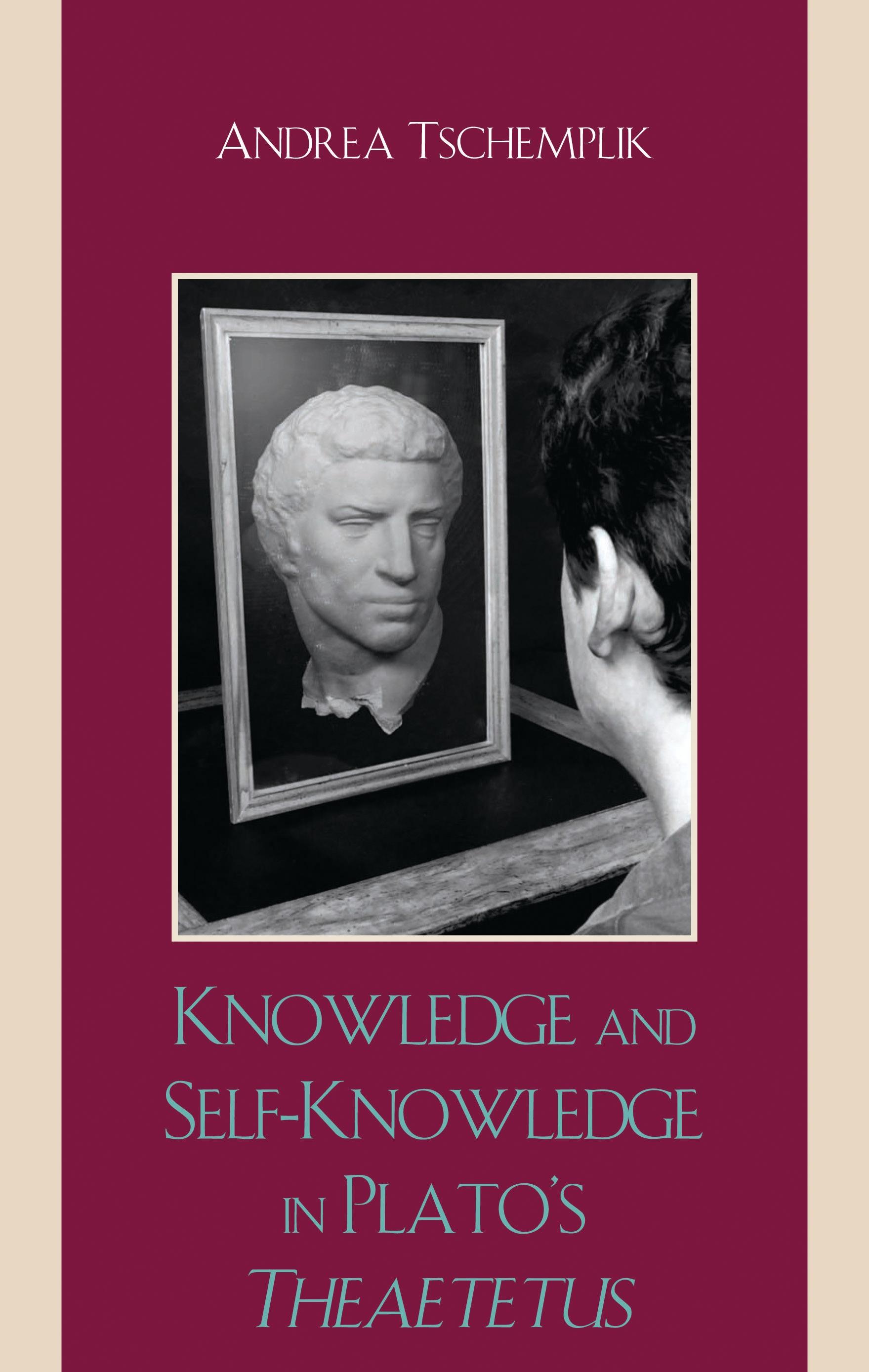
Knowledge and Self-Knowledge in Plato's Theaetetus advances a new explanation for the apparent failure of the Theaetetus to come to a satisfactory conclusion about the definition of knowledge. Tschemplik argues that understanding this aporetic dialogue in light of the fact that it was conducted with two noted mathematicians shows that for Plato, mathematics was not the paradigm for philosophy. She points out that, although mathematics is clearly an important part of the philosopher's training, as the educational outline of the Republic makes clear, the point on which the mathematician falls short is the central role that self-knowledge plays in philosophical investigation. Theaetetus betrays this deficiency and is led by Socrates to an understanding of the benefits of self-knowledge understood as the knowledge of ignorance. Tschemplik concludes that it is the absence of self-knowledge in the Theaetetus which leads to its closing impasse regarding knowledge.
This book will be of interest to scholars and graduate students in the history of philosophy with a special interest in ancient philosophy, and will also be accessible to upper-level undergraduates in ancient philosophy.
This book will be of interest to scholars and graduate students in the history of philosophy with a special interest in ancient philosophy, and will also be accessible to upper-level undergraduates in ancient philosophy.
Betal nemt med kort, Klarna, Apple Pay eller Google Pay. Ikke tilfreds? Du har altid 14 dages fortrydelsesret. Læs mere i vores vilkår. Har du spørgsmål, så send os en mail på hello@memmo.org.
Memmo gør det nemmere at studere – uanset hvor du er i verden. Hos os samler du dine kursusbøger og smarte studieværktøjer ét sted: resuméer, quizzer, podcasts og flashcards. Og så er der Ted, din studieven, der svarer på alt, du undrer dig over. Over 50 000 studerende studerer allerede her – bygget til at hjælpe dig med at lære hurtigere og stresse mindre.