
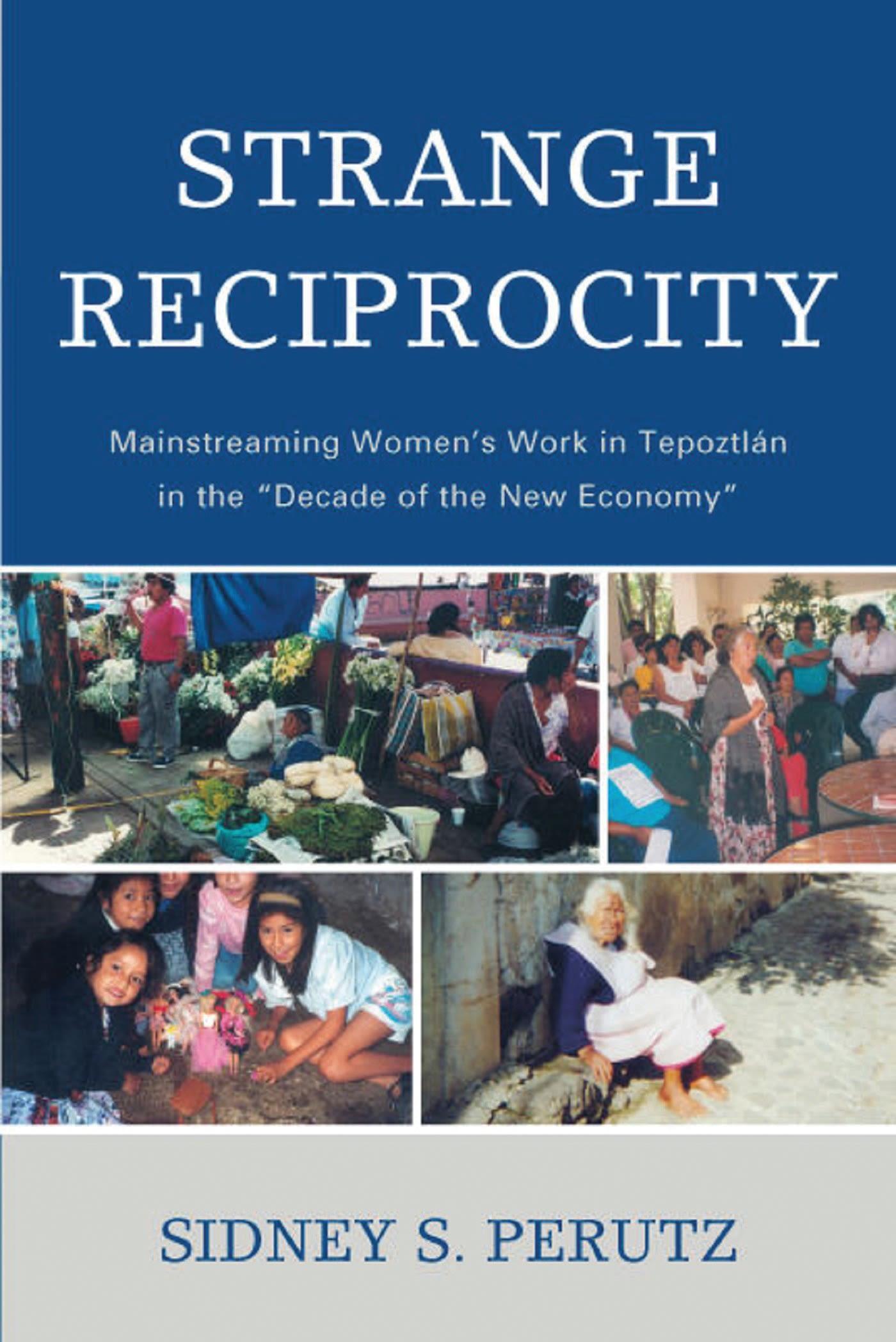
"This time show us like we really are!" This mandate from Doña Clara, homemaker-market merchant in the community of Tepoztlán, makes explicit the dimensions of this concertedly empirical, multidisciplinary study of women's ways of using a neoliberal development model that systematically disadvantages them to create value and values. Members of one of the first New World populations to have their labor globally feminized, into the twenty-first century, Tepoztecas have continuously contrived to adjust organizationally to production-reproduction systems that use gender inequalities to be global.
The many faceted work experiences and broad academic interests of the anthropologist/author uniquely equip her to demystify and give a history to women's work during the period of 1990 to 2000, a time of great transformation for Tepoztecas on the frontlines of massive economic, social, and political challenges for stakeholders. The "strange reciprocity" disaggregated as worksite exchanges of valued things is women's ways of turning to their advantage the very ideologies and technologies that simultaneously make them central to Free Market capitalism while constraining their access to resources that can be exchanged at prices set by and for awesomely powerful interests-or not. Nevertheless, Strange Reciprocity qualitatively and quantitatively confirms that as Tepoztecas construct small economies against the grain of what take over agendas seem to have in mind for them, they are structurally adjusting the big economies of the winners.
The many faceted work experiences and broad academic interests of the anthropologist/author uniquely equip her to demystify and give a history to women's work during the period of 1990 to 2000, a time of great transformation for Tepoztecas on the frontlines of massive economic, social, and political challenges for stakeholders. The "strange reciprocity" disaggregated as worksite exchanges of valued things is women's ways of turning to their advantage the very ideologies and technologies that simultaneously make them central to Free Market capitalism while constraining their access to resources that can be exchanged at prices set by and for awesomely powerful interests-or not. Nevertheless, Strange Reciprocity qualitatively and quantitatively confirms that as Tepoztecas construct small economies against the grain of what take over agendas seem to have in mind for them, they are structurally adjusting the big economies of the winners.
Betal nemt med kort, Klarna, Apple Pay eller Google Pay. Ikke tilfreds? Du har altid 14 dages fortrydelsesret. Læs mere i vores vilkår. Har du spørgsmål, så send os en mail på hello@memmo.org.
Memmo gør det nemmere at studere – uanset hvor du er i verden. Hos os samler du dine kursusbøger og smarte studieværktøjer ét sted: resuméer, quizzer, podcasts og flashcards. Og så er der Ted, din studieven, der svarer på alt, du undrer dig over. Over 50 000 studerende studerer allerede her – bygget til at hjælpe dig med at lære hurtigere og stresse mindre.