
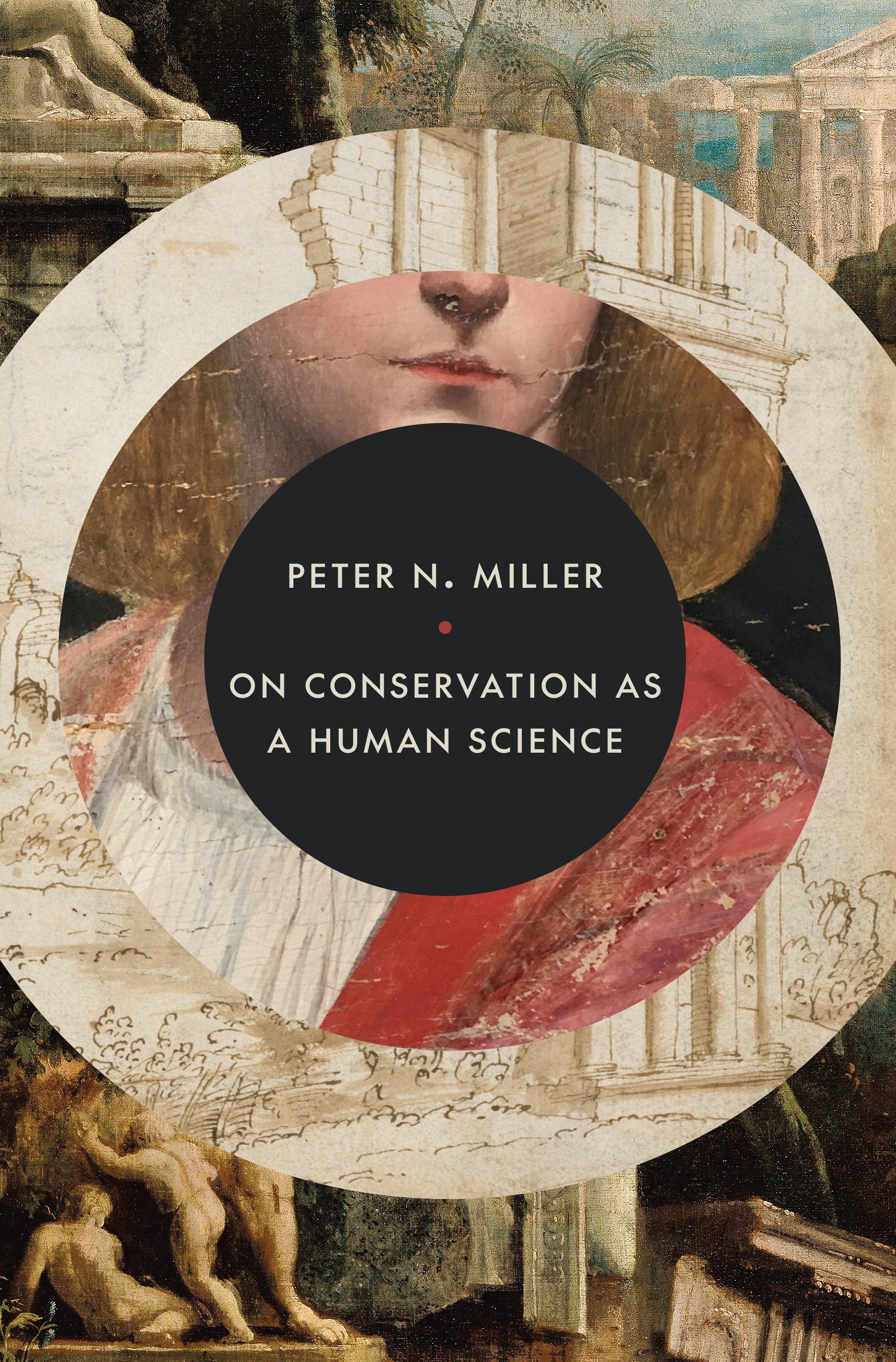
Conservators as first responders in a world where our cultural heritage is increasingly at risk
Conservation can be understood as a form of knowing; conservators extract meaning about the past from what remains, while noting what is missing and sometimes repairing it. In this erudite and virtuosic book, the historian Peter N. Miller imagines the outlines of a new, expansive notion of conservation that links the world around us—natural and man-made—to the world inside us—our genome, our memories. Putting the work of conservation into conversation with history, philosophy, and literature yields a shift in perspective. It raises questions central to the work of the humanities: What does time mean? How do we write about knowledge? How does care connect humans not just with the world but also with each other? And where does freedom exist in a world of things?
Miller casts conservators as first responders in a world as fragile as the things they work on. He argues that a broader conception of conservation can provide the necessary intellectual resources for grappling with the scale of the enormous challenges ahead. Offering a kind of sketch of a curriculum for that future, Miller suggests that shaping the person of the conservator is as important as shaping the field. For only those trained to think about change through the painstaking labor of preserving and restoring will be able to do the work of policy and advocacy required by our uncertain future.
Betal nemt med kort, Klarna, Apple Pay eller Google Pay. Ikke tilfreds? Du har altid 14 dages fortrydelsesret. Læs mere i vores vilkår. Har du spørgsmål, så send os en mail på hello@memmo.org.
Memmo gør det nemmere at studere – uanset hvor du er i verden. Hos os samler du dine kursusbøger og smarte studieværktøjer ét sted: resuméer, quizzer, podcasts og flashcards. Og så er der Ted, din studieven, der svarer på alt, du undrer dig over. Over 50 000 studerende studerer allerede her – bygget til at hjælpe dig med at lære hurtigere og stresse mindre.