
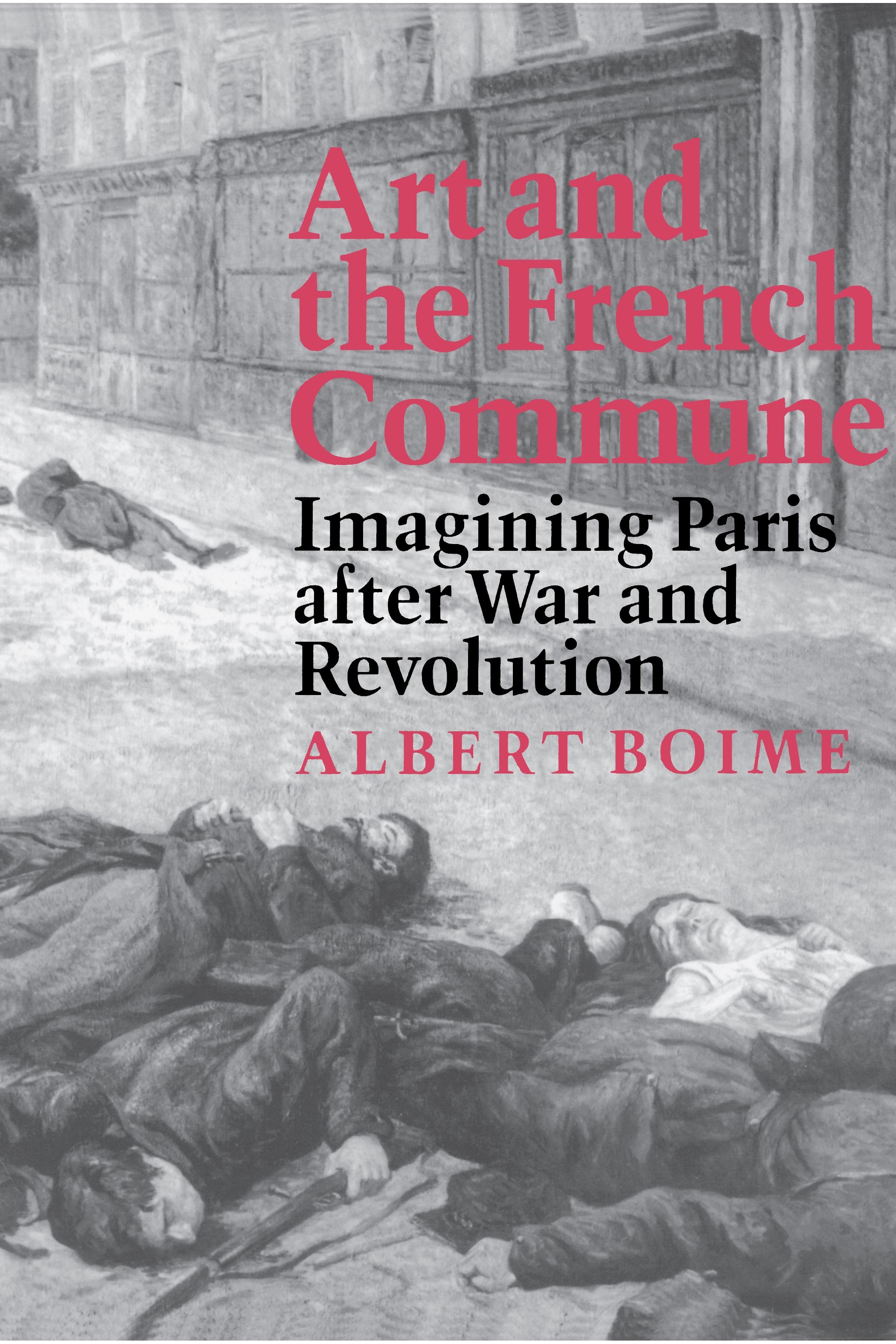
In this bold exploration of the political forces that shaped Impressionism, Albert Boime proposes that at the heart of the modern is a "guilty secret"--the need of the dominant, mainly bourgeois, classes in Paris to expunge from historical memory the haunting nightmare of the Commune and its socialist ideology. The Commune of 1871 emerged after the Prussian war when the Paris militia chased the central government to Versailles, enabling the working class and its allies to seize control of the capital. Eventually violence engulfed the city as traditional liberals and moderates joined forces with reactionaries to restore Paris to "order"--the bourgeois order. Here Boime examines the rise of Impressionism in relation to the efforts of the reinstated conservative government to "rebuild" Paris, to return it to its Haussmannian appearance and erase all reminders of socialist threat.
Boime contends that an organized Impressionist movement owed its initiating impulse to its complicity with the state's program. The exuberant street scenes, spaces of leisure and entertainment, sunlit parks and gardens, the entire concourse of movement as filtered through an atmosphere of scintillating light and color all constitute an effort to reclaim Paris visually and symbolically for the bourgeoisie. Amply documented, richly illustrated, and compellingly argued, Boime's thesis serves as a challenge to all cultural historians interested in the rise of modernism.
Betal nemt med kort, Klarna, Apple Pay eller Google Pay. Ikke tilfreds? Du har altid 14 dages fortrydelsesret. Læs mere i vores vilkår. Har du spørgsmål, så send os en mail på hello@memmo.org.
Memmo gør det nemmere at studere – uanset hvor du er i verden. Hos os samler du dine kursusbøger og smarte studieværktøjer ét sted: resuméer, quizzer, podcasts og flashcards. Og så er der Ted, din studieven, der svarer på alt, du undrer dig over. Over 50 000 studerende studerer allerede her – bygget til at hjælpe dig med at lære hurtigere og stresse mindre.