
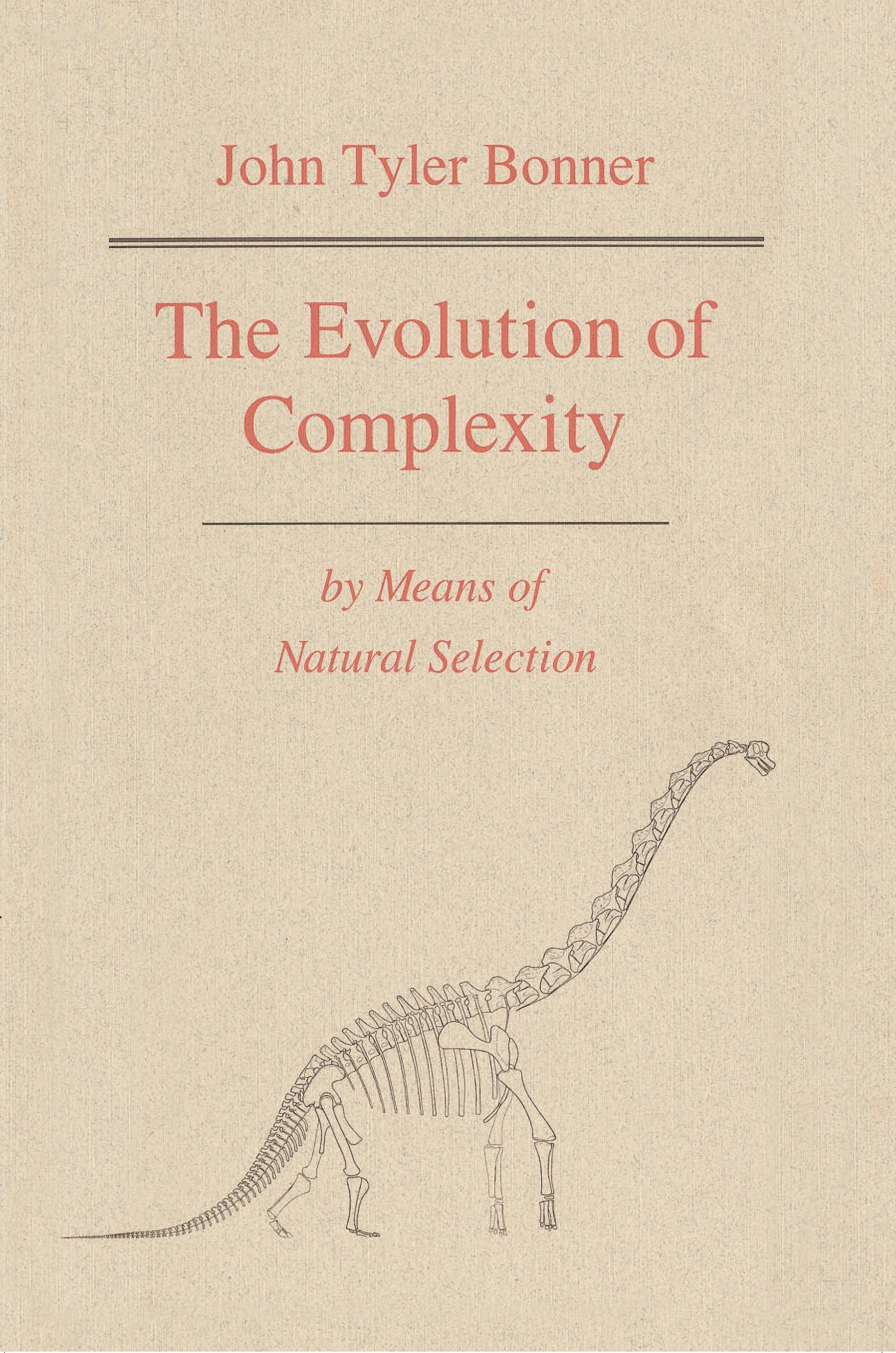
John Tyler Bonner makes a new attack on an old problem: the question of how progressive increase in the size and complexity of animals and plants has occurred. "How is it," he inquires, "that an egg turns into an elaborate adult? How is it that a bacterium, given many millions of years, could have evolved into an elephant?" The author argues that we can understand this progression in terms of natural selection, but that in order to do so we must consider the role of development--or more precisely the role of life cycles--in evolutionary change. In a lively writing style that will be familiar to readers of his work The Evolution of Culture in Animals (Princeton, 1980), Bonner addresses a general audience interested in biology, as well as specialists in all areas of evolutionary biology.
What is novel in the approach used here is the comparison of complexity inside the organism (especially cell differentiation) with the complexity outside (that is, within an ecological community). Matters of size at both these levels are closely related to complexity. The book shows how an understanding of the grand course of evolution can come from combining our knowledge of genetics, development, ecology, and even behavior.
Betal nemt med kort, Klarna, Apple Pay eller Google Pay. Ikke tilfreds? Du har altid 14 dages fortrydelsesret. Læs mere i vores vilkår. Har du spørgsmål, så send os en mail på hello@memmo.org.
Memmo gør det nemmere at studere – uanset hvor du er i verden. Hos os samler du dine kursusbøger og smarte studieværktøjer ét sted: resuméer, quizzer, podcasts og flashcards. Og så er der Ted, din studieven, der svarer på alt, du undrer dig over. Over 50 000 studerende studerer allerede her – bygget til at hjælpe dig med at lære hurtigere og stresse mindre.