
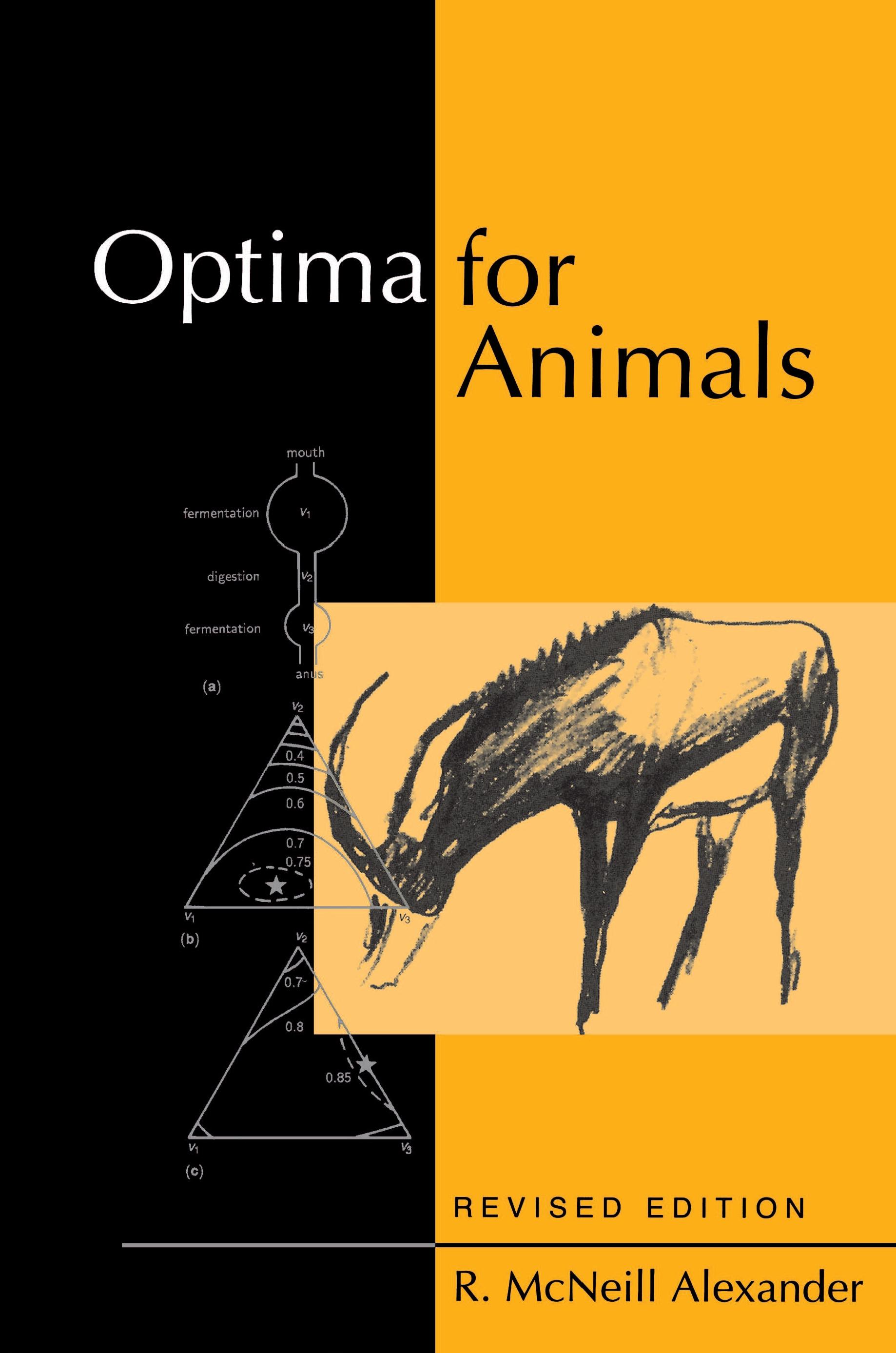
Optimization theory is designed to find the best ways of doing things. The structures of animals, their movements, their behavior, and their life histories have all been shaped by the optimizing processes of evolution or of learning by trial and error. In this revised edition of R. McNeill Alexander's widely acclaimed Optima for Animals, we see how extraordinarily diverse branches of biology are illuminated by the powerful methods of optimization theory.
What is the best strength for a bone? Too weak a bone will probably break but an excessively stout one will be cumbersome. At what speed should humans change from walking to running? Should a bird take only big juicy worms or should it eat every worm it finds, and do birds make the best choices? Why do the males of some species of fishes and the females of others look after the young, while the young of others are looked after by both parents or neither? Is it possible that all these policies can be optimal, in different circumstances? This book shows how these and many other questions can be answered. The mathematics involved is explained very simply, with biology students in mind, but the book is not just for them. It is also for professionals, ranging from teachers to researchers.
Betal nemt med kort, Klarna, Apple Pay eller Google Pay. Ikke tilfreds? Du har altid 14 dages fortrydelsesret. Læs mere i vores vilkår. Har du spørgsmål, så send os en mail på hello@memmo.org.
Memmo gør det nemmere at studere – uanset hvor du er i verden. Hos os samler du dine kursusbøger og smarte studieværktøjer ét sted: resuméer, quizzer, podcasts og flashcards. Og så er der Ted, din studieven, der svarer på alt, du undrer dig over. Over 50 000 studerende studerer allerede her – bygget til at hjælpe dig med at lære hurtigere og stresse mindre.