
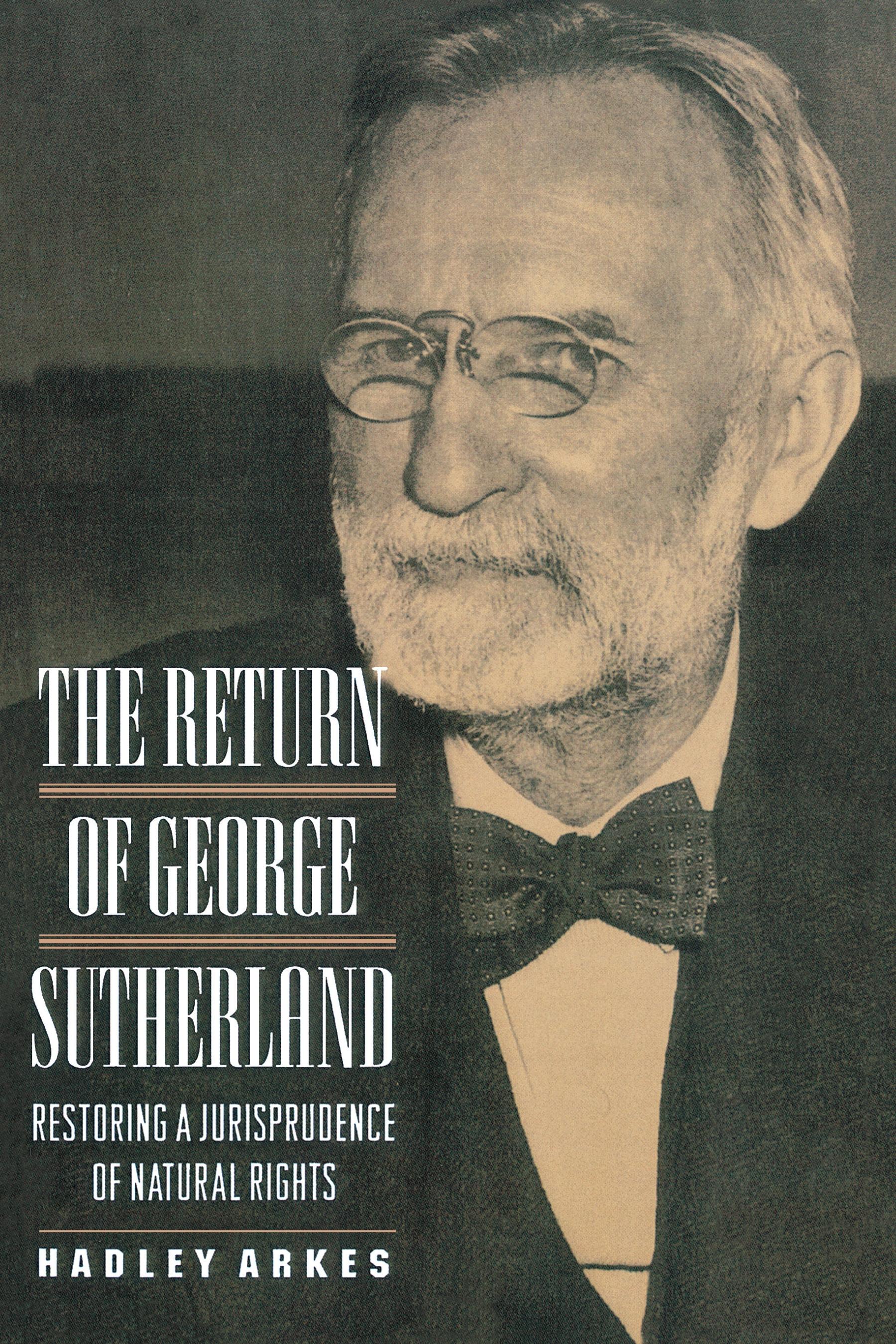
In this book, Hadley Arkes seeks to restore, for a new generation, the jurisprudence of the late Justice of the Supreme Court George Sutherland--a jurisprudence anchored in the understanding of natural rights. The doctrine of natural rights has become controversial in our own time, while Sutherland has been widely maligned and screened from our historical memory. He is remembered today as one of the "four horsemen" who resisted Roosevelt and the New Deal; but we have forgotten his leadership in the cause of voting rights for women. Both liberal and conservative jurists now deride Sutherland, yet both groups continue to draw upon his writings. Liberals look to Sutherland for a jurisprudence that protects "privacy" against the rule of majorities, as in matters concerning abortion or gay rights. Conservatives will appeal to his defense of freedom in the economy.
However, both liberals and conservatives deny the premises of natural rights that provided the ground, and coherence, of Sutherland's teaching. Arkes contends that Sutherland can supply what is missing in both conservative and liberal jurisprudence. He argues that if a new generation can look again, with unclouded eyes, at the writings of Sutherland, both liberals and conservatives can be led back to the moral ground of their jurisprudence. This compelling intellectual biography introduces readers to an urbane man, and a steely judge, who has been made a stranger to them.
Betal nemt med kort, Klarna, Apple Pay eller Google Pay. Ikke tilfreds? Du har altid 14 dages fortrydelsesret. Læs mere i vores vilkår. Har du spørgsmål, så send os en mail på hello@memmo.org.
Memmo gør det nemmere at studere – uanset hvor du er i verden. Hos os samler du dine kursusbøger og smarte studieværktøjer ét sted: resuméer, quizzer, podcasts og flashcards. Og så er der Ted, din studieven, der svarer på alt, du undrer dig over. Over 50 000 studerende studerer allerede her – bygget til at hjælpe dig med at lære hurtigere og stresse mindre.