
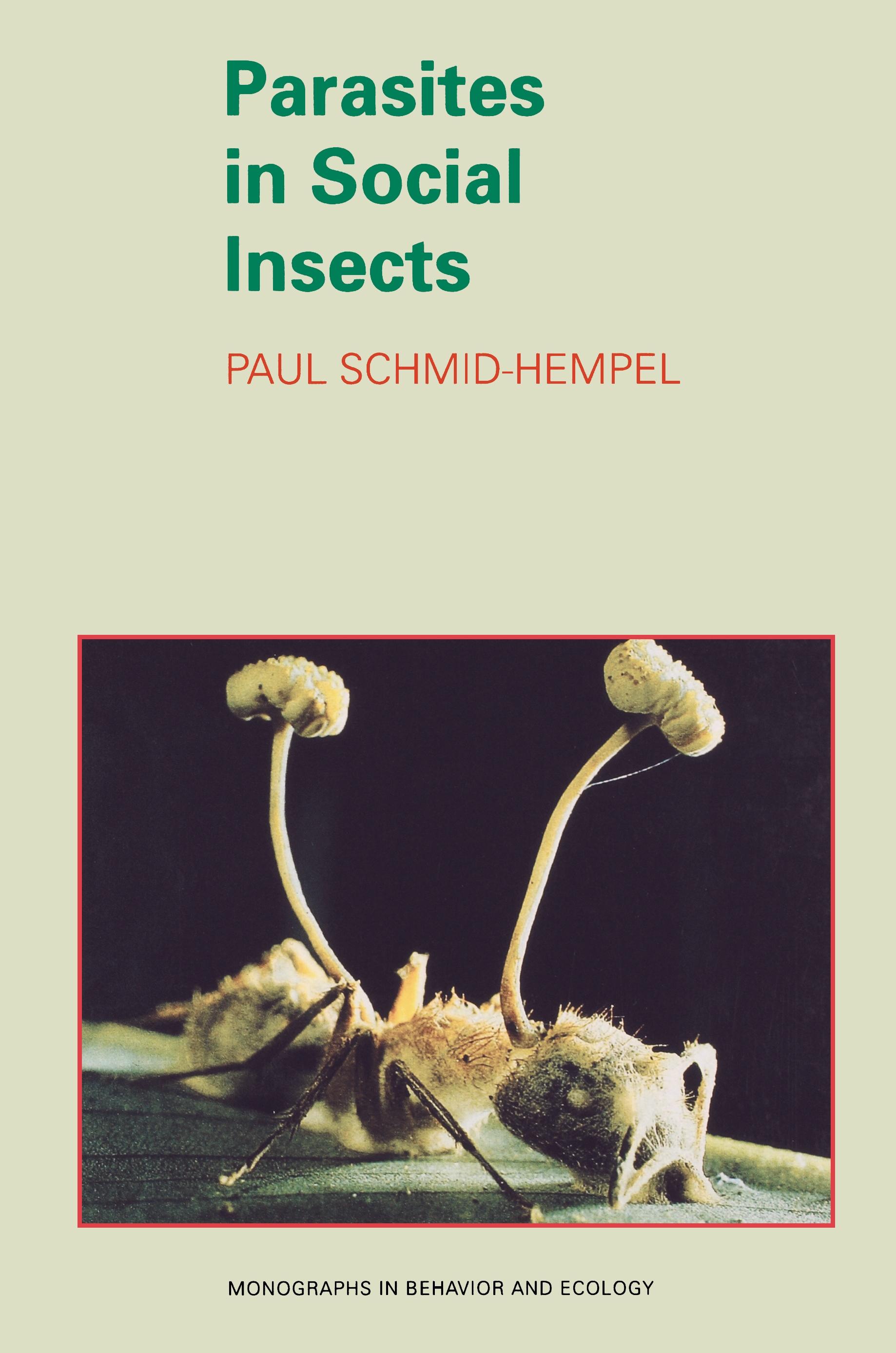
This book analyzes for the first time how parasites shape the biology of social insects: the ants, wasps, bees, and termites. Paul Schmid-Hempel provides an overview of the existing knowledge of parasites in social insects. Current ideas are evaluated using a broad database, and the role of parasites for the evolution and maintenance of the social organization and biology of insects is carefully scrutinized. In addition, the author develops new insights, especially in his examination of the intricate relationships between parasites and their social hosts through the rigorous use of evolutionary and ecological concepts.
Schmid-Hempel identifies gaps in our knowledge about parasites in social insects and uses models to develop new questions for future research. In addition, issues that are usually considered separately--such as division of labor, genetics, immunology, and epidemiology--are placed in a common framework to analyze two of the most successful adaptations of life: parasitism and sociality. This work will appeal not only to practitioners in the fields of behavioral ecology and sociobiology, but also to others interested in host-parasite relationships or in social organisms, such as apiculturists struggling to overcome the problems arising from mite infestations of honeybee colonies.
Betal nemt med kort, Klarna, Apple Pay eller Google Pay. Ikke tilfreds? Du har altid 14 dages fortrydelsesret. Læs mere i vores vilkår. Har du spørgsmål, så send os en mail på hello@memmo.org.
Memmo gør det nemmere at studere – uanset hvor du er i verden. Hos os samler du dine kursusbøger og smarte studieværktøjer ét sted: resuméer, quizzer, podcasts og flashcards. Og så er der Ted, din studieven, der svarer på alt, du undrer dig over. Over 50 000 studerende studerer allerede her – bygget til at hjælpe dig med at lære hurtigere og stresse mindre.