
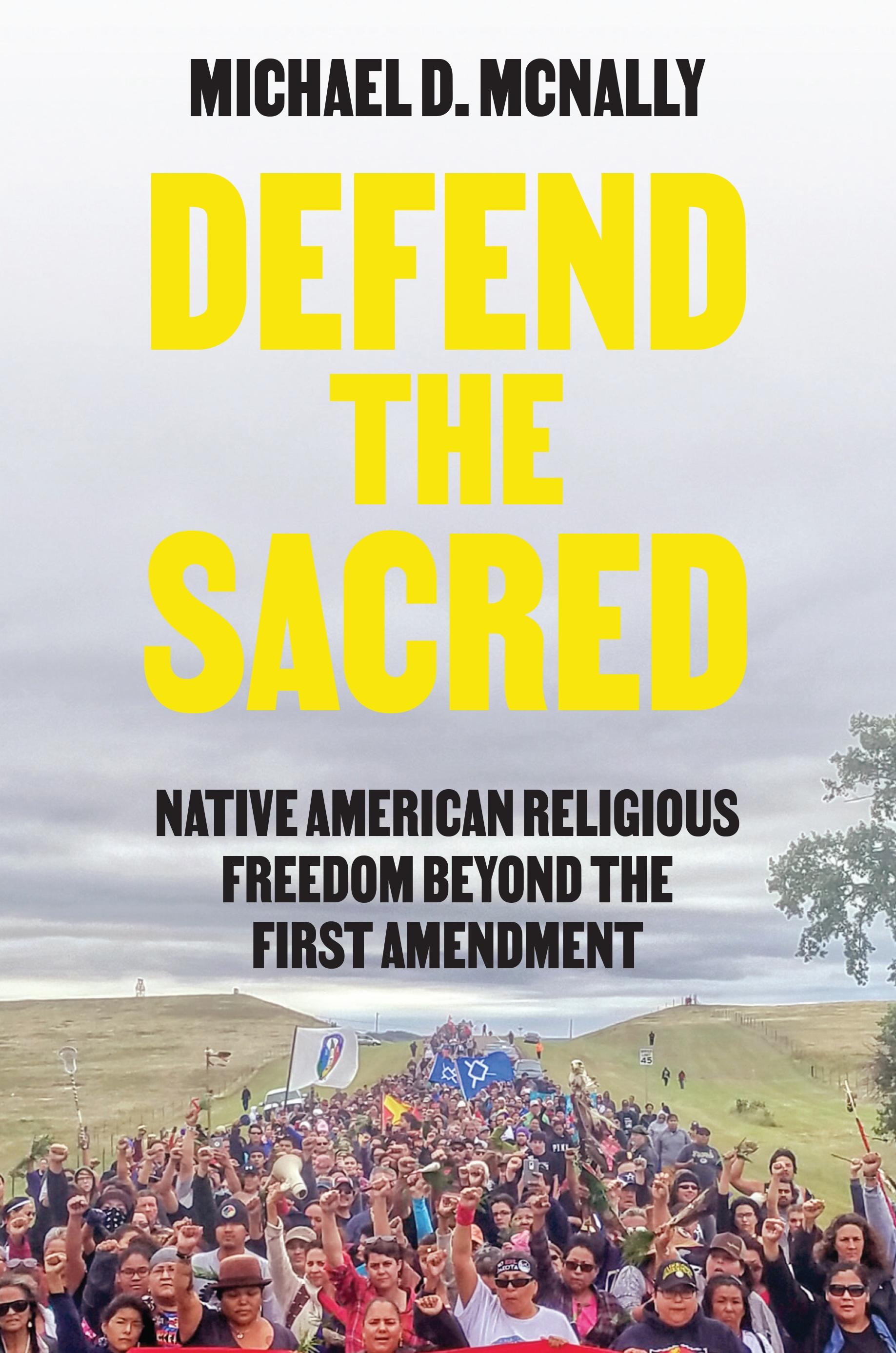
The remarkable story of the innovative legal strategies Native Americans have used to protect their religious rights
From North Dakota's Standing Rock encampments to Arizona's San Francisco Peaks, Native Americans have repeatedly asserted legal rights to religious freedom to protect their sacred places, practices, objects, knowledge, and ancestral remains. But these claims have met with little success in court because Native American communal traditions don't fit easily into modern Western definitions of religion. In Defend the Sacred, Michael McNally explores how, in response to this situation, Native peoples have creatively turned to other legal means to safeguard what matters to them.
To articulate their claims, Native peoples have resourcefully used the languages of cultural resources under environmental and historic preservation law; of sovereignty under treaty-based federal Indian law; and, increasingly, of Indigenous rights under international human rights law. Along the way, Native nations still draw on the rhetorical power of religious freedom to gain legislative and regulatory successes beyond the First Amendment.
The story of Native American advocates and their struggle to protect their liberties, Defend the Sacred casts new light on discussions of religious freedom, cultural resource management, and the vitality of Indigenous religions today.
Betal nemt med kort, Klarna, Apple Pay eller Google Pay. Ikke tilfreds? Du har altid 14 dages fortrydelsesret. Læs mere i vores vilkår. Har du spørgsmål, så send os en mail på hello@memmo.org.
Memmo gør det nemmere at studere – uanset hvor du er i verden. Hos os samler du dine kursusbøger og smarte studieværktøjer ét sted: resuméer, quizzer, podcasts og flashcards. Og så er der Ted, din studieven, der svarer på alt, du undrer dig over. Over 50 000 studerende studerer allerede her – bygget til at hjælpe dig med at lære hurtigere og stresse mindre.