
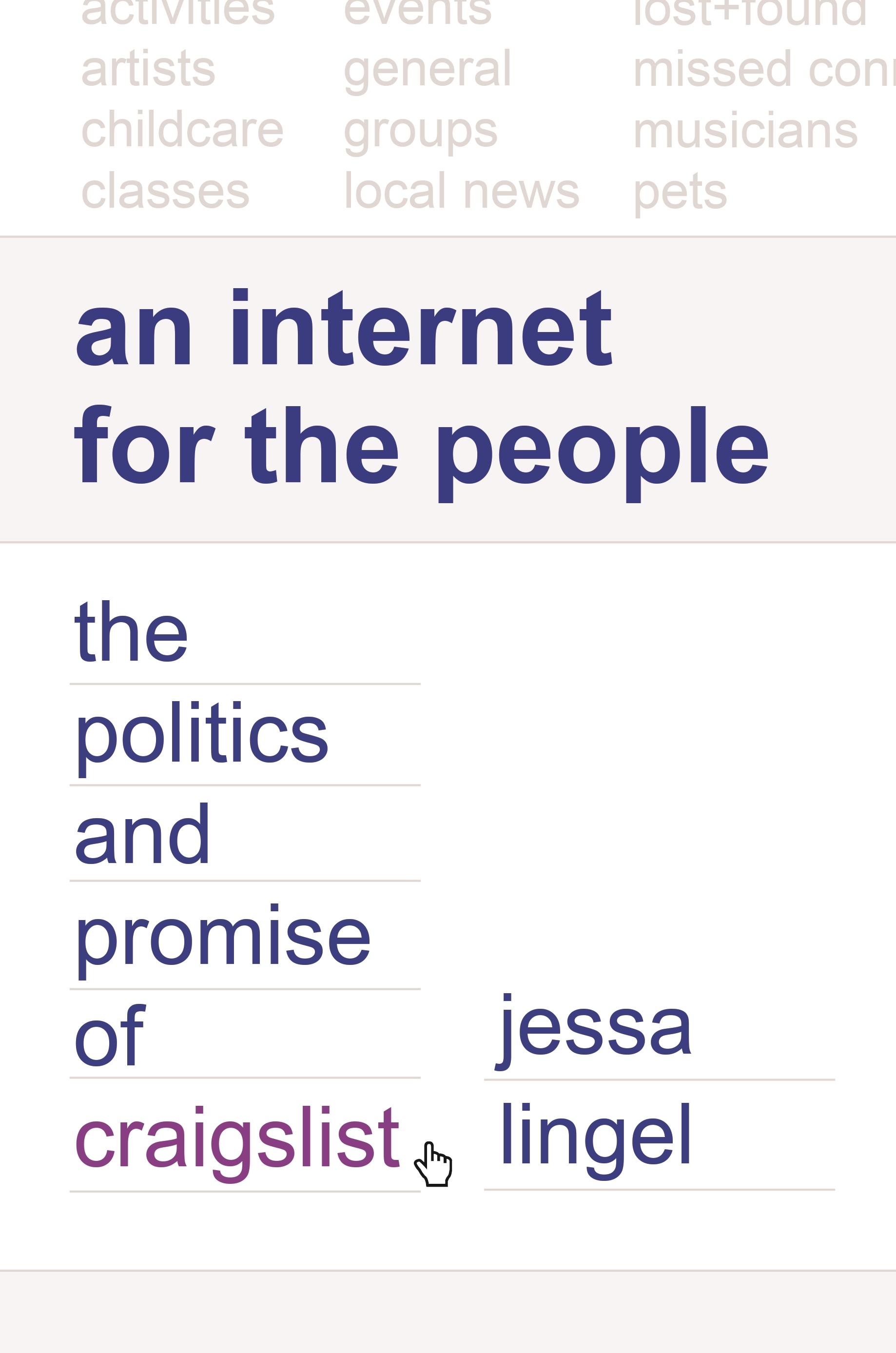
How craigslist champions openness, democracy, and other vanishing principles of the early web
Begun by Craig Newmark as an e-mail to some friends about cool events happening around San Francisco, craigslist is now the leading classifieds service on the planet. It is also a throwback to the early internet. The website has barely seen an upgrade since it launched in 1996. There are no banner ads. The company doesn't profit off your data. An Internet for the People explores how people use craigslist to buy and sell, find work, and find love—and reveals why craigslist is becoming a lonely outpost in an increasingly corporatized web.
Drawing on interviews with craigslist insiders and ordinary users, Jessa Lingel looks at the site's history and values, showing how it has mostly stayed the same while the web around it has become more commercial and far less open. She examines craigslist's legal history, describing the company's courtroom battles over issues of freedom of expression and data privacy, and explains the importance of locality in the social relationships fostered by the site. More than an online garage sale, job board, or dating site, craigslist holds vital lessons for the rest of the web. It is a website that values user privacy over profits, ease of use over slick design, and an ethos of the early web that might just hold the key to a more open, transparent, and democratic internet.
Betal nemt med kort, Klarna, Apple Pay eller Google Pay. Ikke tilfreds? Du har altid 14 dages fortrydelsesret. Læs mere i vores vilkår. Har du spørgsmål, så send os en mail på hello@memmo.org.
Memmo gør det nemmere at studere – uanset hvor du er i verden. Hos os samler du dine kursusbøger og smarte studieværktøjer ét sted: resuméer, quizzer, podcasts og flashcards. Og så er der Ted, din studieven, der svarer på alt, du undrer dig over. Over 50 000 studerende studerer allerede her – bygget til at hjælpe dig med at lære hurtigere og stresse mindre.