
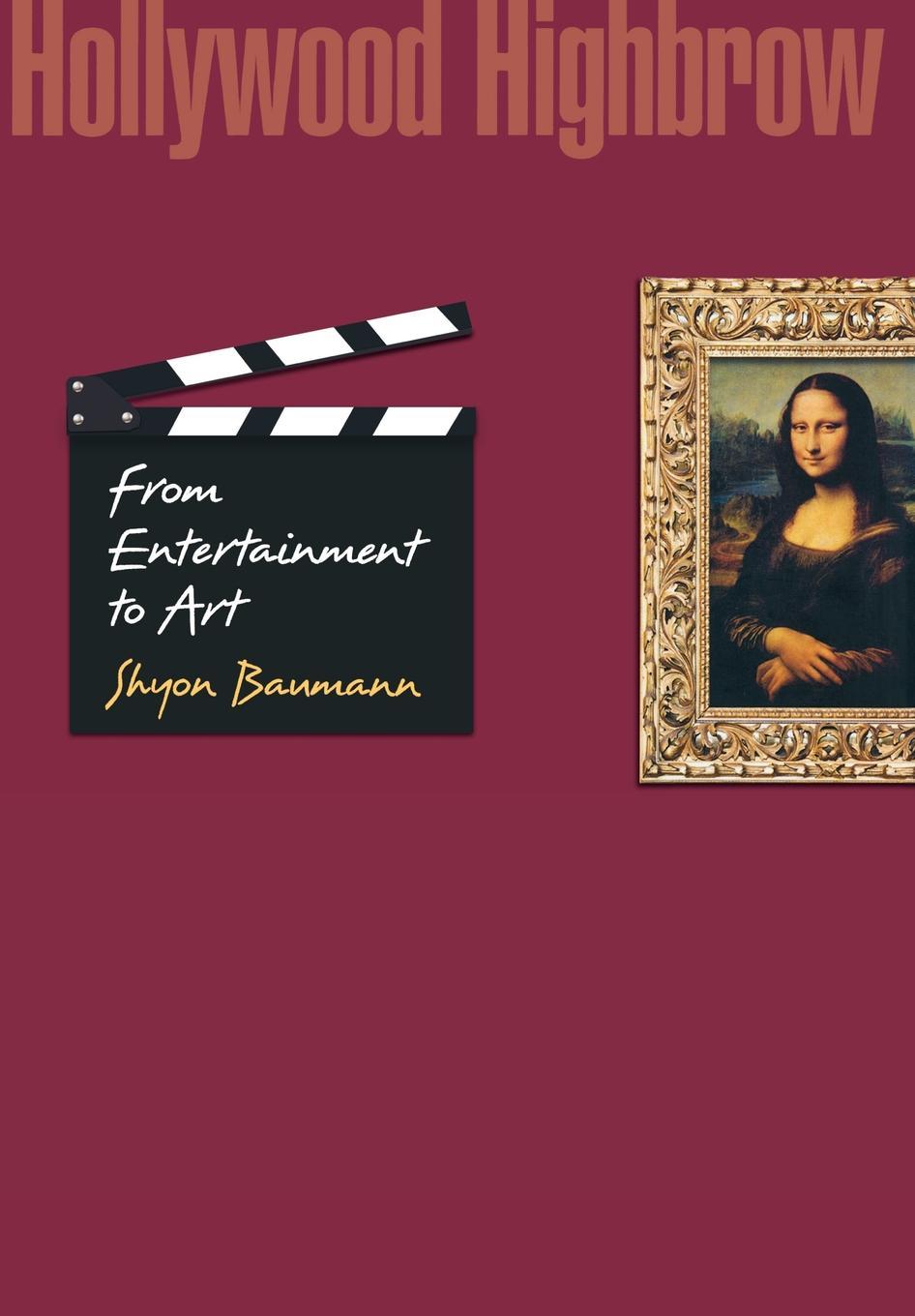
Today's moviegoers and critics generally consider some Hollywood products--even some blockbusters--to be legitimate works of art. But during the first half century of motion pictures very few Americans would have thought to call an American movie "art." Up through the 1950s, American movies were regarded as a form of popular, even lower-class, entertainment. By the 1960s and 1970s, however, viewers were regularly judging Hollywood films by artistic criteria previously applied only to high art forms. In Hollywood Highbrow, Shyon Baumann for the first time tells how social and cultural forces radically changed the public's perceptions of American movies just as those forces were radically changing the movies themselves.
The development in the United States of an appreciation of film as an art was, Baumann shows, the product of large changes in Hollywood and American society as a whole. With the postwar rise of television, American movie audiences shrank dramatically and Hollywood responded by appealing to richer and more educated viewers. Around the same time, European ideas about the director as artist, an easing of censorship, and the development of art-house cinemas, film festivals, and the academic field of film studies encouraged the idea that some American movies--and not just European ones--deserved to be considered art.
Betal nemt med kort, Klarna, Apple Pay eller Google Pay. Ikke tilfreds? Du har altid 14 dages fortrydelsesret. Læs mere i vores vilkår. Har du spørgsmål, så send os en mail på hello@memmo.org.
Memmo gør det nemmere at studere – uanset hvor du er i verden. Hos os samler du dine kursusbøger og smarte studieværktøjer ét sted: resuméer, quizzer, podcasts og flashcards. Og så er der Ted, din studieven, der svarer på alt, du undrer dig over. Over 50 000 studerende studerer allerede her – bygget til at hjælpe dig med at lære hurtigere og stresse mindre.