
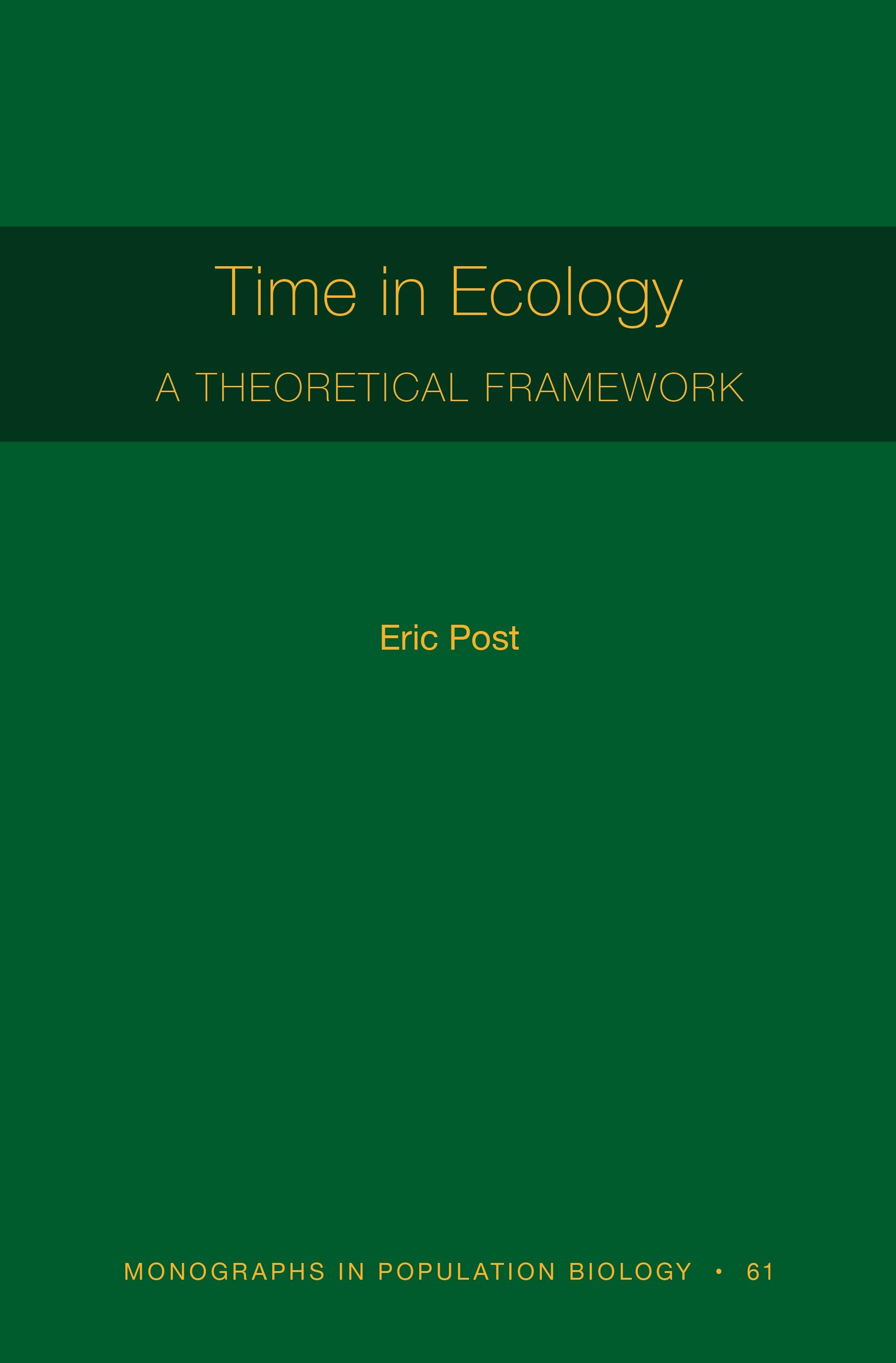
Ecologists traditionally regard time as part of the background against which ecological interactions play out. In this book, Eric Post argues that time should be treated as a resource used by organisms for growth, maintenance, and offspring production.
Post uses insights from phenology—the study of the timing of life-cycle events—to present a theoretical framework of time in ecology that casts long-standing observations in the field in an entirely new light. Combining conceptual models with field data, he demonstrates how phenological advances, delays, and stasis, documented in an array of taxa, can all be viewed as adaptive components of an organism’s strategic use of time. Post shows how the allocation of time by individual organisms to critical life history stages is not only a response to environmental cues but also an important driver of interactions at the population, species, and community levels.
To demonstrate the applications of this exciting new conceptual framework, Time in Ecology uses meta-analyses of previous studies as well as Post’s original data on the phenological dynamics of plants, caribou, and muskoxen in Greenland.
Betal nemt med kort, Klarna, Apple Pay eller Google Pay. Ikke tilfreds? Du har altid 14 dages fortrydelsesret. Læs mere i vores vilkår. Har du spørgsmål, så send os en mail på hello@memmo.org.
Memmo gør det nemmere at studere – uanset hvor du er i verden. Hos os samler du dine kursusbøger og smarte studieværktøjer ét sted: resuméer, quizzer, podcasts og flashcards. Og så er der Ted, din studieven, der svarer på alt, du undrer dig over. Over 50 000 studerende studerer allerede her – bygget til at hjælpe dig med at lære hurtigere og stresse mindre.