
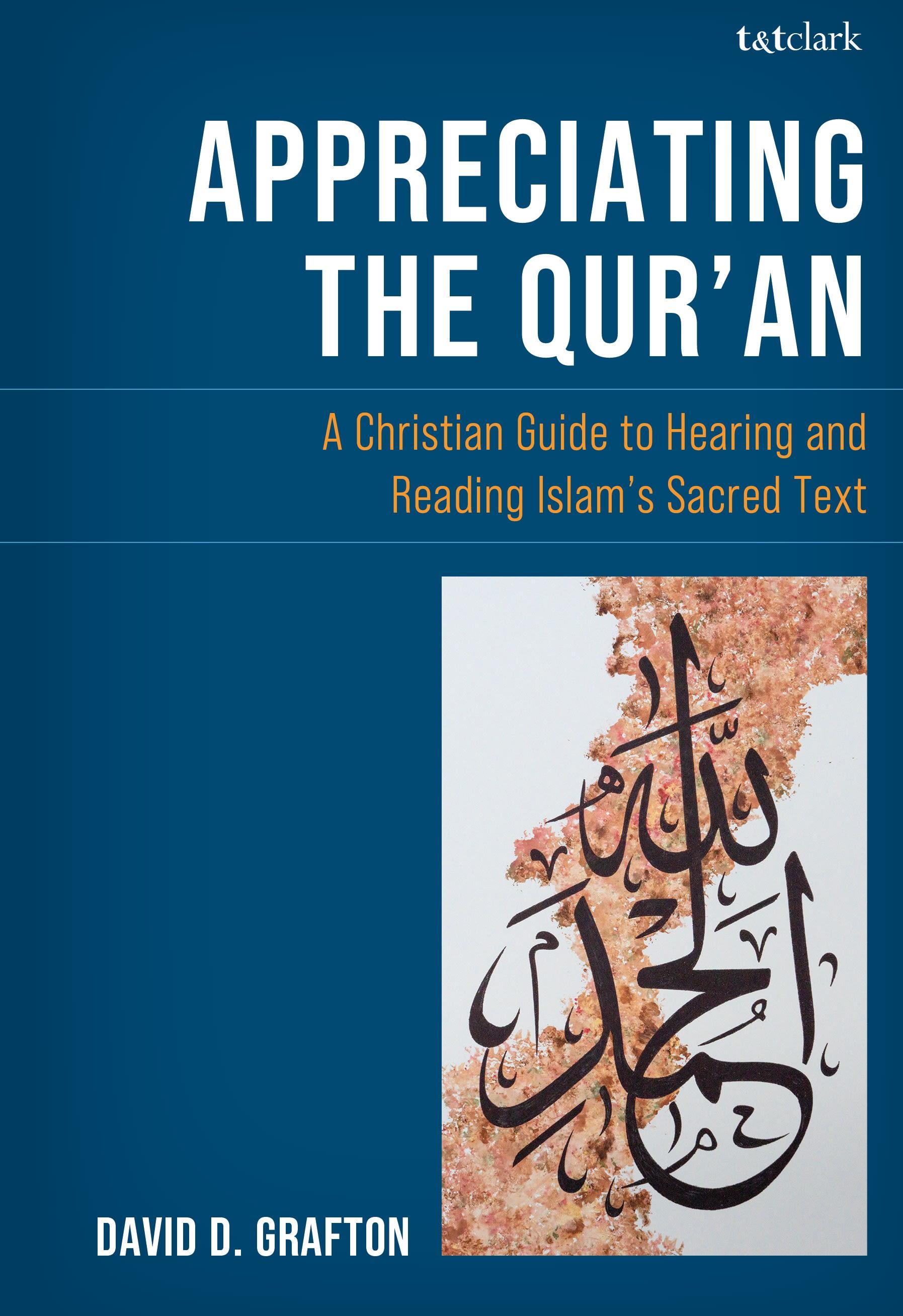
How should people of other faiths approach Islam's sacred text? For many, it remains unfamiliar, filtered through soundbites, polemics, or narrow assumptions. David Grafton offers a fresh method for engaging with the text Muslims regard as divine revelation. His “appreciative reading” approach encourages readers to encounter the scripture of Islam on its own terms, listen carefully to its message, and use that engagement as an opportunity for deeper self-reflection.
Grafton begins with a survey of how the text has been read by outsiders throughout history, noting how inherited assumptions often limit understanding or lead to misinterpretation. He then introduces readers to its distinctive structure and arrangement, so unlike the narrative arc of the Bible, and explores the beauty and complexity of its Arabic style-features that resist perfect translation yet are central to Muslim devotion.
Through close readings of key passages, including the opening prayer, the Garden narrative, and depictions of Jesus ('Isa), Grafton demonstrates how these selections can challenge stereotypes, expand theological horizons, and invite honest dialogue. Along the way, he highlights the parallels between translation issues in Islam's scripture and those in the Bible, underscoring the value of thoughtful interpretation.
With clarity, humility, and a deep respect for both traditions, Grafton provides scholars, clergy, students, and interested readers with the tools to engage Islam's revelation in a way that fosters understanding rather than division. Complete with a glossary of Arabic terms and recommended resources from Muslim scholars, this book is an indispensable guide for anyone committed to building bridges across religious boundaries.
Grafton begins with a survey of how the text has been read by outsiders throughout history, noting how inherited assumptions often limit understanding or lead to misinterpretation. He then introduces readers to its distinctive structure and arrangement, so unlike the narrative arc of the Bible, and explores the beauty and complexity of its Arabic style-features that resist perfect translation yet are central to Muslim devotion.
Through close readings of key passages, including the opening prayer, the Garden narrative, and depictions of Jesus ('Isa), Grafton demonstrates how these selections can challenge stereotypes, expand theological horizons, and invite honest dialogue. Along the way, he highlights the parallels between translation issues in Islam's scripture and those in the Bible, underscoring the value of thoughtful interpretation.
With clarity, humility, and a deep respect for both traditions, Grafton provides scholars, clergy, students, and interested readers with the tools to engage Islam's revelation in a way that fosters understanding rather than division. Complete with a glossary of Arabic terms and recommended resources from Muslim scholars, this book is an indispensable guide for anyone committed to building bridges across religious boundaries.
Sider: 256
Kategori: Religion & Teologi
e-ISBN: 9780567727824
Forsendelsesvægt: 1.2 kg
Sendes inden for: 1-2 dage
Betal nemt med kort, Klarna, Apple Pay eller Google Pay. Ikke tilfreds? Du har altid 14 dages fortrydelsesret. Læs mere i vores vilkår. Har du spørgsmål, så send os en mail på hello@memmo.org.
Memmo gør det nemmere at studere – uanset hvor du er i verden. Hos os samler du dine kursusbøger og smarte studieværktøjer ét sted: resuméer, quizzer, podcasts og flashcards. Og så er der Ted, din studieven, der svarer på alt, du undrer dig over. Over 50 000 studerende studerer allerede her – bygget til at hjælpe dig med at lære hurtigere og stresse mindre.