
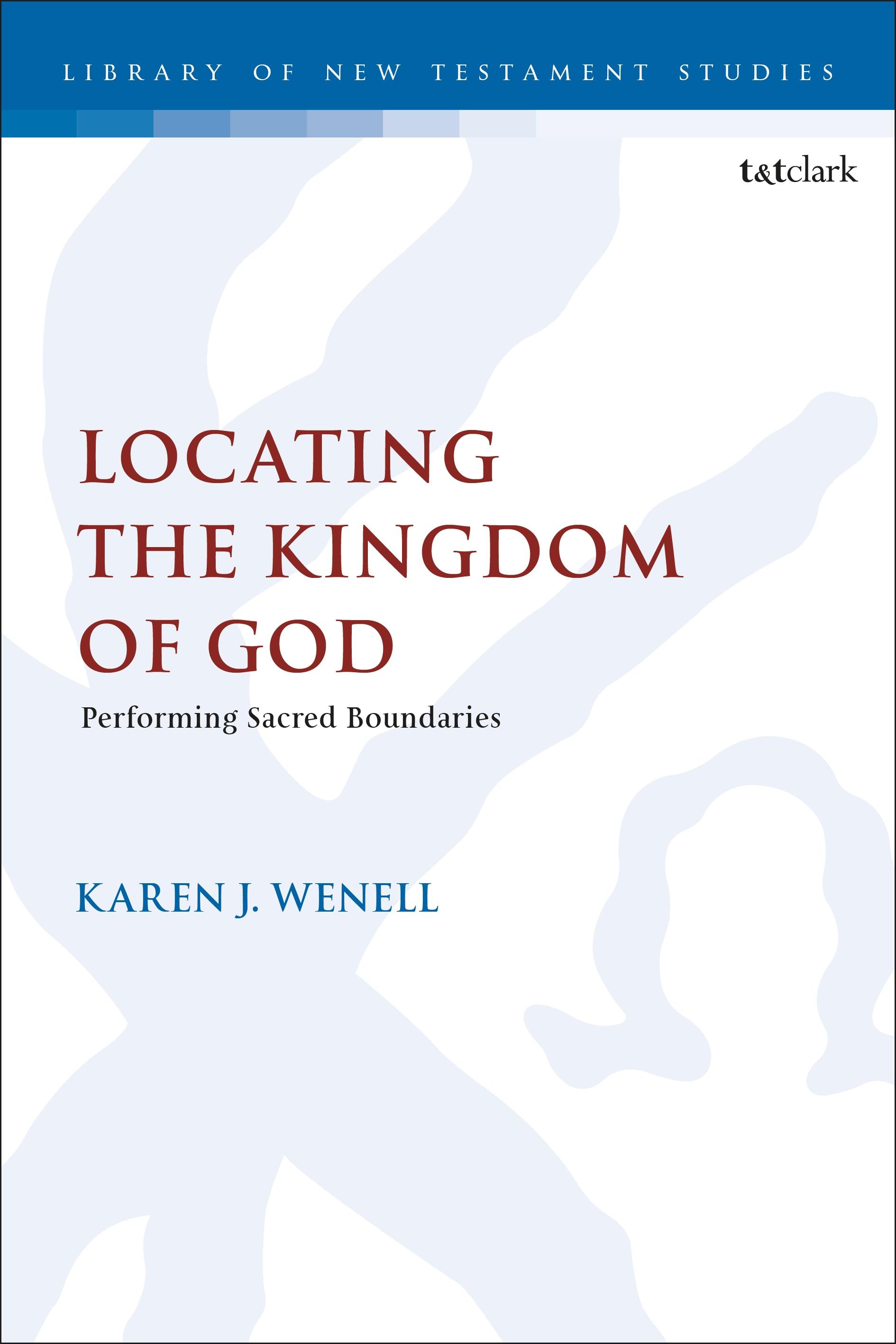
This book offers a new, multidisciplinary way of thinking about the Kingdom of God which fully recognises its sociological and spatial significance in performing boundaries of the sacred. Though spatial-critical perspectives have been increasingly recognised as important across many disciplines, the significance of non-physical religious spaces and their correspondence to boundaries of the sacred has not been explored fully, and never using the specific example of the Kingdom of God. Wenell considers the diverse and sometimes contradictory articulation of the Kingdom in the gospels as well as the ways that Kingdom language frames contemporary ethical debates. Her study of the Kingdom is located within the wider study of religion, affording the opportunity to investigate connections between space, belonging and the sacred.
Wenell structures her investigation in four key areas that engage with the Kingdom in different, but theoretically interconnected ways. She begins by setting out a theory of sacred space that is capable of including the Kingdom, and establishing key concepts such as boundary, performance, physical/non-physical spatiality, spokespersons and controversy. Wenell then focuses on the synoptic gospels and the origins of the Kingdom, noting aspects of uncertainty as well as areas of agreement and controversy over boundaries of the sacred in these uniquely interrelated texts. The third and fourth areas of investigation move into cultural reception, considering instances where the Kingdom is formative for identity and ethical relationships both in individual and wider group belonging terms. Specific reference is made to issues of ethical consuming and displacement, placing the Kingdom in dialogue with Bauman's discussion of a society of consumers, and Arendt's notion of equitable co-habitation of the earth.
Wenell structures her investigation in four key areas that engage with the Kingdom in different, but theoretically interconnected ways. She begins by setting out a theory of sacred space that is capable of including the Kingdom, and establishing key concepts such as boundary, performance, physical/non-physical spatiality, spokespersons and controversy. Wenell then focuses on the synoptic gospels and the origins of the Kingdom, noting aspects of uncertainty as well as areas of agreement and controversy over boundaries of the sacred in these uniquely interrelated texts. The third and fourth areas of investigation move into cultural reception, considering instances where the Kingdom is formative for identity and ethical relationships both in individual and wider group belonging terms. Specific reference is made to issues of ethical consuming and displacement, placing the Kingdom in dialogue with Bauman's discussion of a society of consumers, and Arendt's notion of equitable co-habitation of the earth.
Sider: 176
Kategori: Religion & Teologi
e-ISBN: 9780567711212
Forsendelsesvægt: 1.2 kg
Sendes inden for: 1-2 dage
Betal nemt med kort, Klarna, Apple Pay eller Google Pay. Ikke tilfreds? Du har altid 14 dages fortrydelsesret. Læs mere i vores vilkår. Har du spørgsmål, så send os en mail på hello@memmo.org.
Memmo gør det nemmere at studere – uanset hvor du er i verden. Hos os samler du dine kursusbøger og smarte studieværktøjer ét sted: resuméer, quizzer, podcasts og flashcards. Og så er der Ted, din studieven, der svarer på alt, du undrer dig over. Over 50 000 studerende studerer allerede her – bygget til at hjælpe dig med at lære hurtigere og stresse mindre.