
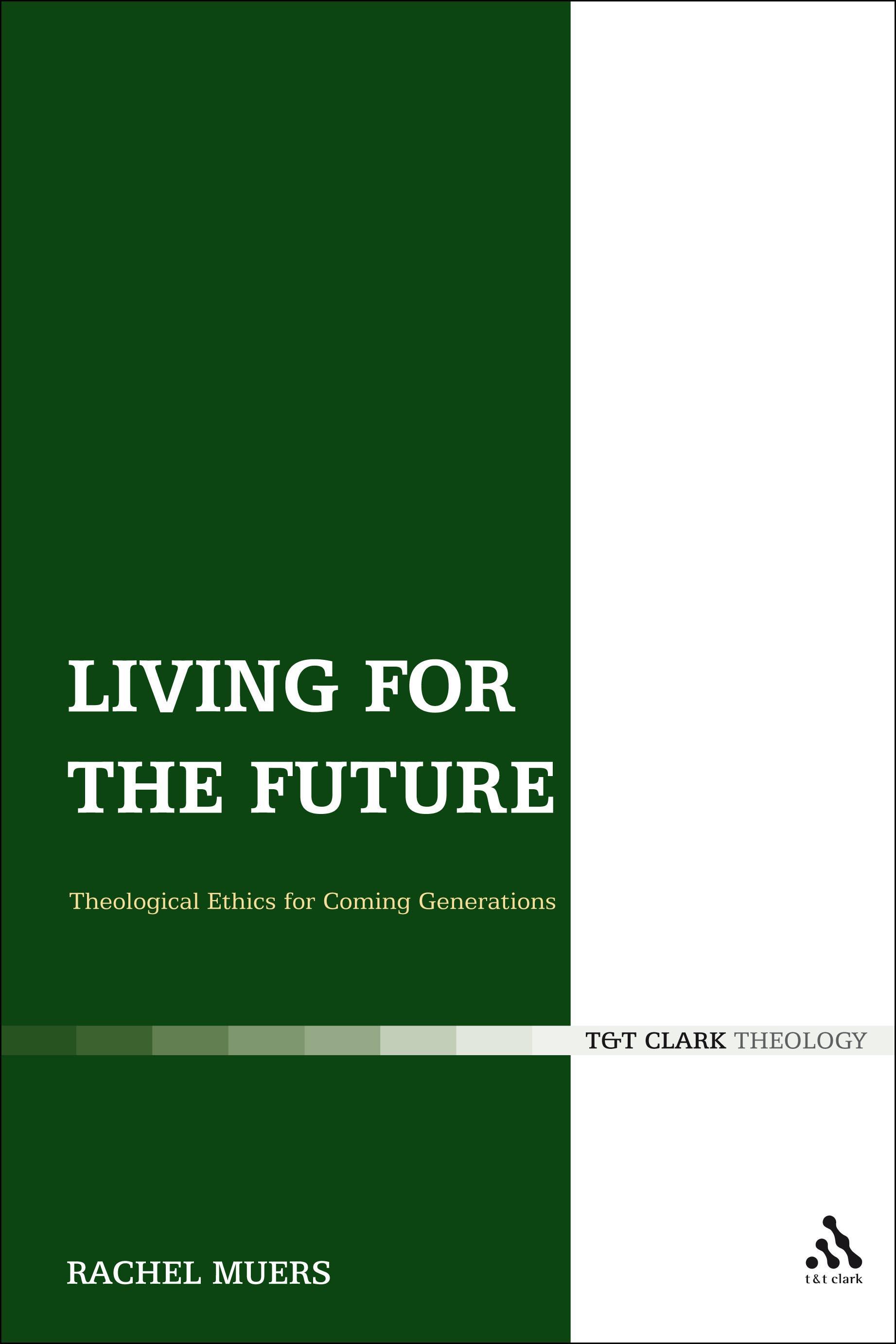
Our relationship to future generations raises fundamental issues for ethical thought, to which a Christian theological response is both possible and significant. A relationship to future generations is implicitly central to many of today's most public controversies - over environmental protection, genetic research, and the purpose of education, to name but a few; but it has received little explicit or extended consideration.
In Living for the Future Rachel Muers argues and seeks to demonstrate that to consider future generations as ethically significant is not simply to extend an existing ethical framework, but to rethink how ethics is done. Doing intergenerationally responsible theology and ethics means paying attention to how people are formed as theological and ethical reasoners (reasoners about the good), how social practices of deliberation about the good are maintained and developed, and how all of this relates to an understanding of the world as the sphere of God's transforming action. In other words, an intergenerationally responsible theological ethics will pay attention to the ethics, and the spirituality, of "ethics" itself.
Her account of the ethical relation to future generations centres on three key concepts: "choosing life" (see Deut 30:19); "keeping the sources open"; and "sustaining fruitful contexts". These concepts are developed theologically and in engagement with extra-theological conversations on intergenerational responsibility. She shows how they take up and move beyond concerns expressed in those conversations - for "survival", for the right distribution of resources, and for the maintenance of human values.
In Living for the Future Rachel Muers argues and seeks to demonstrate that to consider future generations as ethically significant is not simply to extend an existing ethical framework, but to rethink how ethics is done. Doing intergenerationally responsible theology and ethics means paying attention to how people are formed as theological and ethical reasoners (reasoners about the good), how social practices of deliberation about the good are maintained and developed, and how all of this relates to an understanding of the world as the sphere of God's transforming action. In other words, an intergenerationally responsible theological ethics will pay attention to the ethics, and the spirituality, of "ethics" itself.
Her account of the ethical relation to future generations centres on three key concepts: "choosing life" (see Deut 30:19); "keeping the sources open"; and "sustaining fruitful contexts". These concepts are developed theologically and in engagement with extra-theological conversations on intergenerational responsibility. She shows how they take up and move beyond concerns expressed in those conversations - for "survival", for the right distribution of resources, and for the maintenance of human values.
Sider: 240
Kategori: Religion & Teologi
e-ISBN: 9780567006448
Forsendelsesvægt: 1.2 kg
Sendes inden for: 1-2 dage
Betal nemt med kort, Klarna, Apple Pay eller Google Pay. Ikke tilfreds? Du har altid 14 dages fortrydelsesret. Læs mere i vores vilkår. Har du spørgsmål, så send os en mail på hello@memmo.org.
Memmo gør det nemmere at studere – uanset hvor du er i verden. Hos os samler du dine kursusbøger og smarte studieværktøjer ét sted: resuméer, quizzer, podcasts og flashcards. Og så er der Ted, din studieven, der svarer på alt, du undrer dig over. Over 50 000 studerende studerer allerede her – bygget til at hjælpe dig med at lære hurtigere og stresse mindre.