
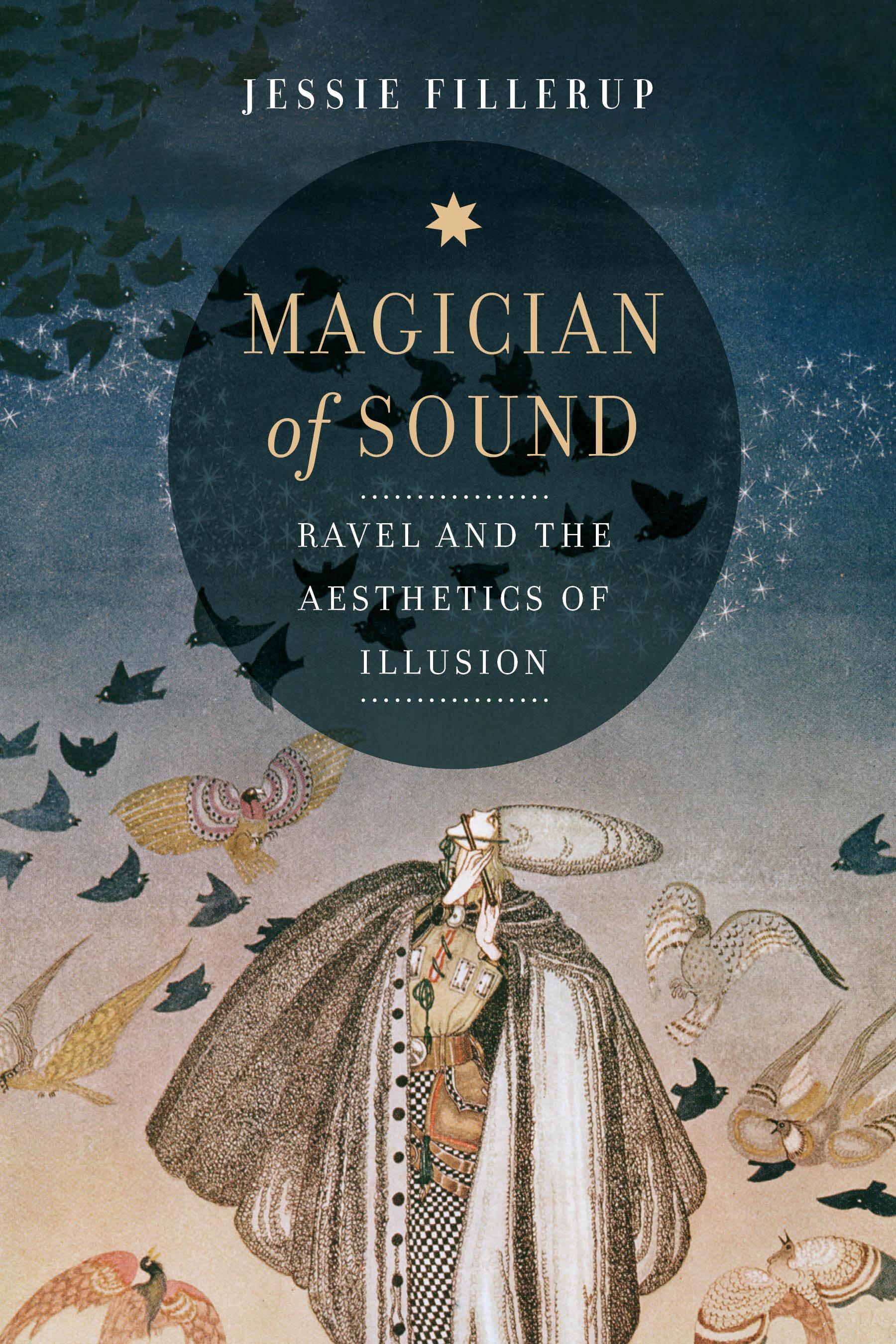
French composer Maurice Ravel was described by critics as a magician, conjurer, and illusionist. Scholars have been aware of this historical curiosity, but none so far have explained why Ravel attracted such critiques or what they might tell us about how to interpret his music. Magician of Sound examines Ravel's music through the lens of illusory experience, considering how timbre, orchestral effects, figure/ground relationships, and impressions of motion and stasis might be experienced as if they were conjuring tricks. Applying concepts from music theory, psychology, philosophy, and the history of magic, Jessie Fillerup develops an approach to musical illusion that newly illuminates Ravel's fascination with machines and creates compelling links between his music and other forms of aesthetic illusion, from painting and poetry to fiction and phantasmagoria. Fillerup analyzes scenes of enchantment and illusory effects in Ravel's most popular works, including Boléro, La Valse, Daphnis et Chloé, and Rapsodie espagnole, relating his methods and musical effects to the practice of theatrical conjurers. Drawing on a rich well of primary sources, Magician of Sound provides a new interdisciplinary framework for interpreting this enigmatic composer, linking magic and music.
Betal nemt med kort, Klarna, Apple Pay eller Google Pay. Ikke tilfreds? Du har altid 14 dages fortrydelsesret. Læs mere i vores vilkår. Har du spørgsmål, så send os en mail på hello@memmo.org.
Memmo gør det nemmere at studere – uanset hvor du er i verden. Hos os samler du dine kursusbøger og smarte studieværktøjer ét sted: resuméer, quizzer, podcasts og flashcards. Og så er der Ted, din studieven, der svarer på alt, du undrer dig over. Over 50 000 studerende studerer allerede her – bygget til at hjælpe dig med at lære hurtigere og stresse mindre.