
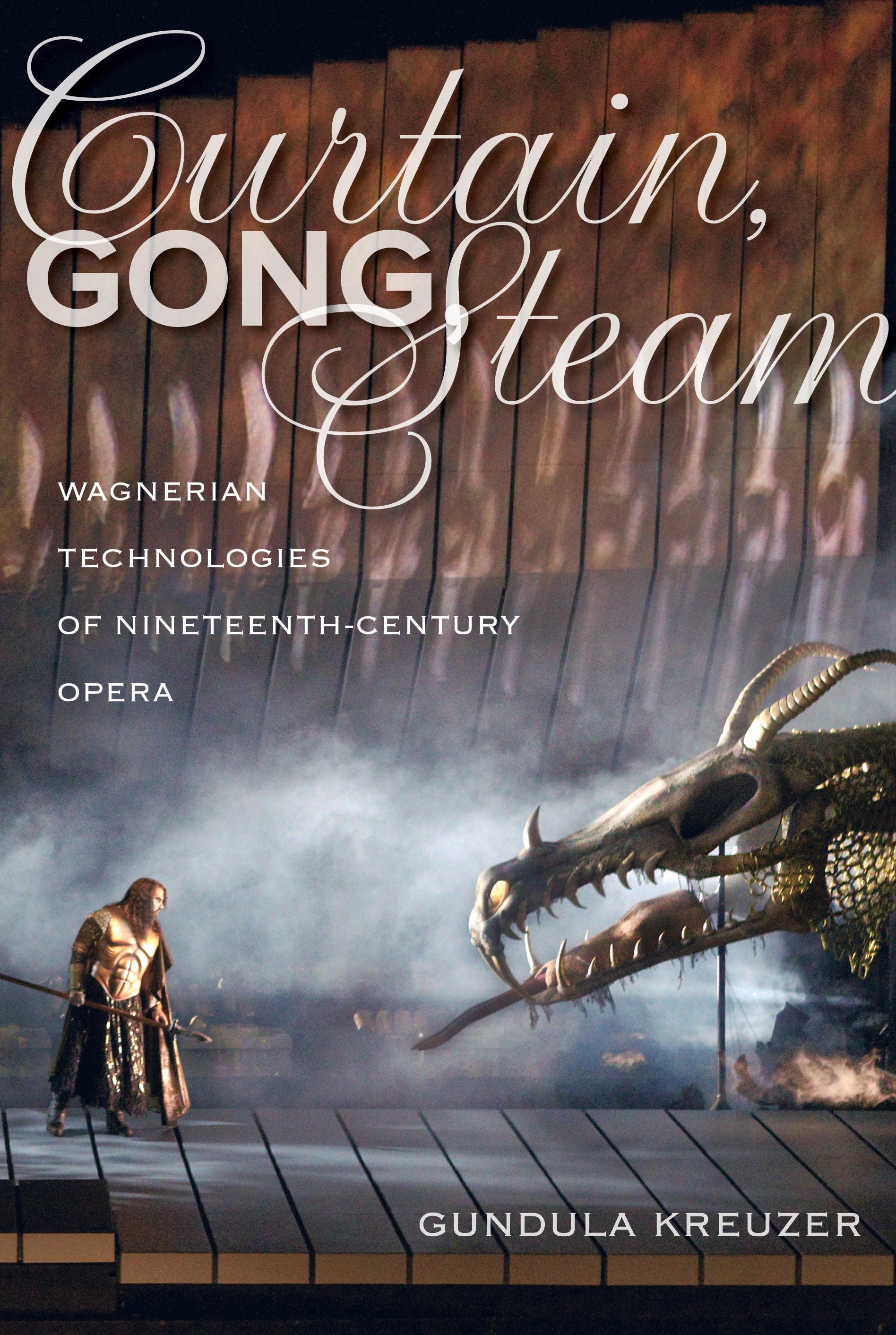
In this innovative book, Gundula Kreuzer argues for the foundational role of technologies in the conception, production, and study of nineteenth-century opera. She shows how composers increasingly incorporated novel audiovisual effects in their works and how the uses and meanings of the required apparatuses changed through the twentieth century, sometimes still resonating in stagings, performance art, and popular culture today. Focusing on devices (which she dubs “Wagnerian technologies”) intended to amalgamate opera’s various media while veiling their mechanics, Kreuzer offers a practical counternarrative to Wagner’s idealist theories of total illusionism. At the same time, Curtain, Gong, Steam’s multifaceted exploration of the three titular technologies repositions Wagner as catalyst more than inventor in the history of operatic production. With its broad chronological and geographical scope, this book deepens our understanding of the material and mechanical conditions of historical operatic practice as well as of individual works, both well known and obscure.
Betal nemt med kort, Klarna, Apple Pay eller Google Pay. Ikke tilfreds? Du har altid 14 dages fortrydelsesret. Læs mere i vores vilkår. Har du spørgsmål, så send os en mail på hello@memmo.org.
Memmo gør det nemmere at studere – uanset hvor du er i verden. Hos os samler du dine kursusbøger og smarte studieværktøjer ét sted: resuméer, quizzer, podcasts og flashcards. Og så er der Ted, din studieven, der svarer på alt, du undrer dig over. Over 50 000 studerende studerer allerede her – bygget til at hjælpe dig med at lære hurtigere og stresse mindre.
Du kan måske også lide
Køb bogen0