
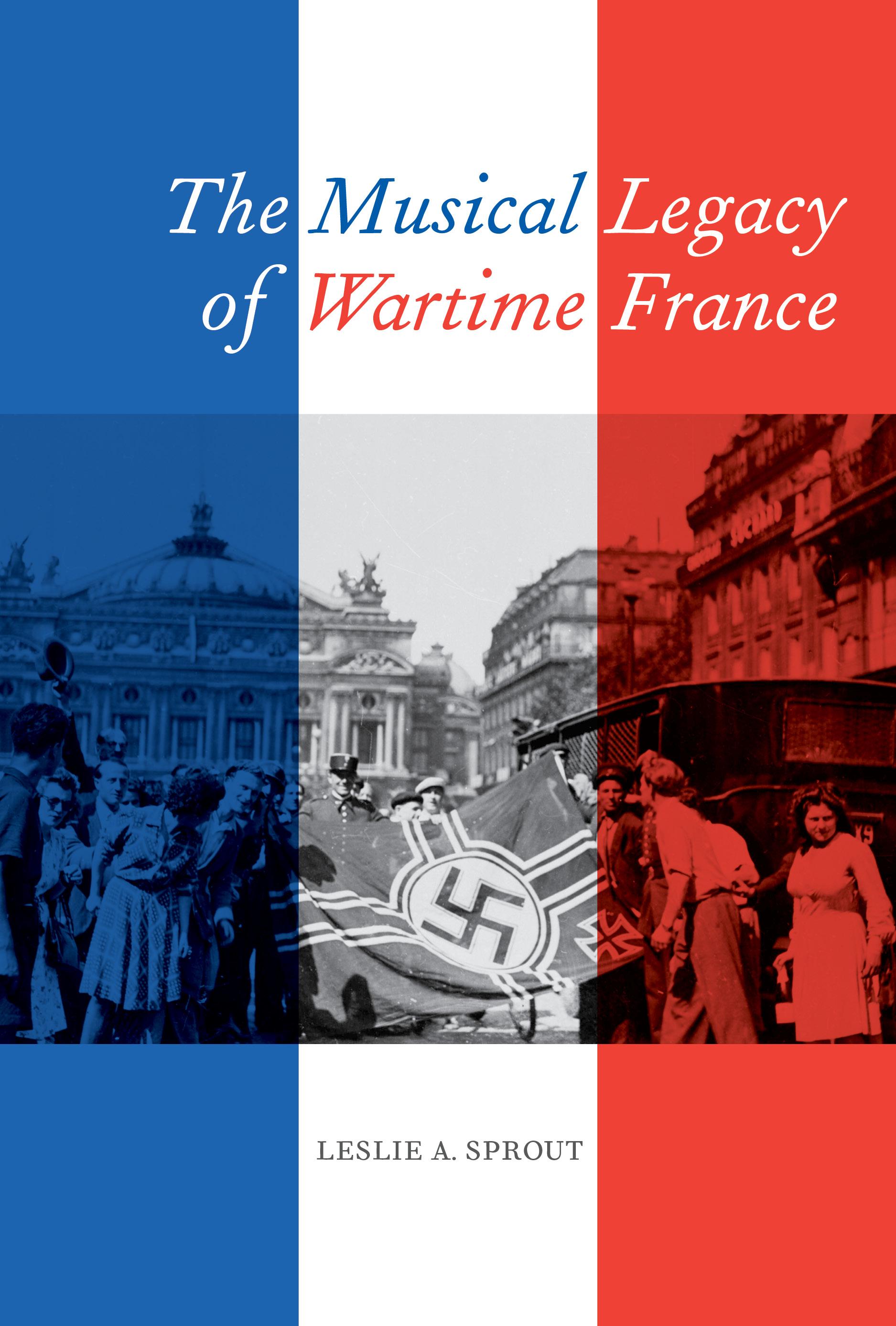
For the three forces competing for political authority in France during World War II, music became the site of a cultural battle that reflected the war itself. German occupying authorities promoted German music at the expense of French, while the Vichy administration pursued projects of national renewal through culture. Meanwhile, Resistance networks gradually formed to combat German propaganda while eyeing Vichy’s efforts with suspicion. In The Musical Legacy of Wartime France, Leslie A. Sprout explores how each of these forces influenced the composition, performance, and reception of five well-known works: the secret Resistance songs of Francis Poulenc and those of Arthur Honegger; Olivier Messiaen’s Quartet for the End of Time, composed in a German prisoner of war camp; Maurice Duruflé’s Requiem, one of sixty-five pieces commissioned by Vichy between 1940 and 1944; and Igor Stravinsky’s Danses concertantes, which was met at its 1945 Paris premiere with protests that prefigured the aesthetic debates of the early Cold War. Sprout examines not only how these pieces were created and disseminated during and just after the war, but also how and why we still associate these pieces with the stories we tell—in textbooks, program notes, liner notes, historical monographs, and biographies—about music, France, and World War II.
Betal nemt med kort, Klarna, Apple Pay eller Google Pay. Ikke tilfreds? Du har altid 14 dages fortrydelsesret. Læs mere i vores vilkår. Har du spørgsmål, så send os en mail på hello@memmo.org.
Memmo gør det nemmere at studere – uanset hvor du er i verden. Hos os samler du dine kursusbøger og smarte studieværktøjer ét sted: resuméer, quizzer, podcasts og flashcards. Og så er der Ted, din studieven, der svarer på alt, du undrer dig over. Over 50 000 studerende studerer allerede her – bygget til at hjælpe dig med at lære hurtigere og stresse mindre.
Du kan måske også lide
Køb bogen0