
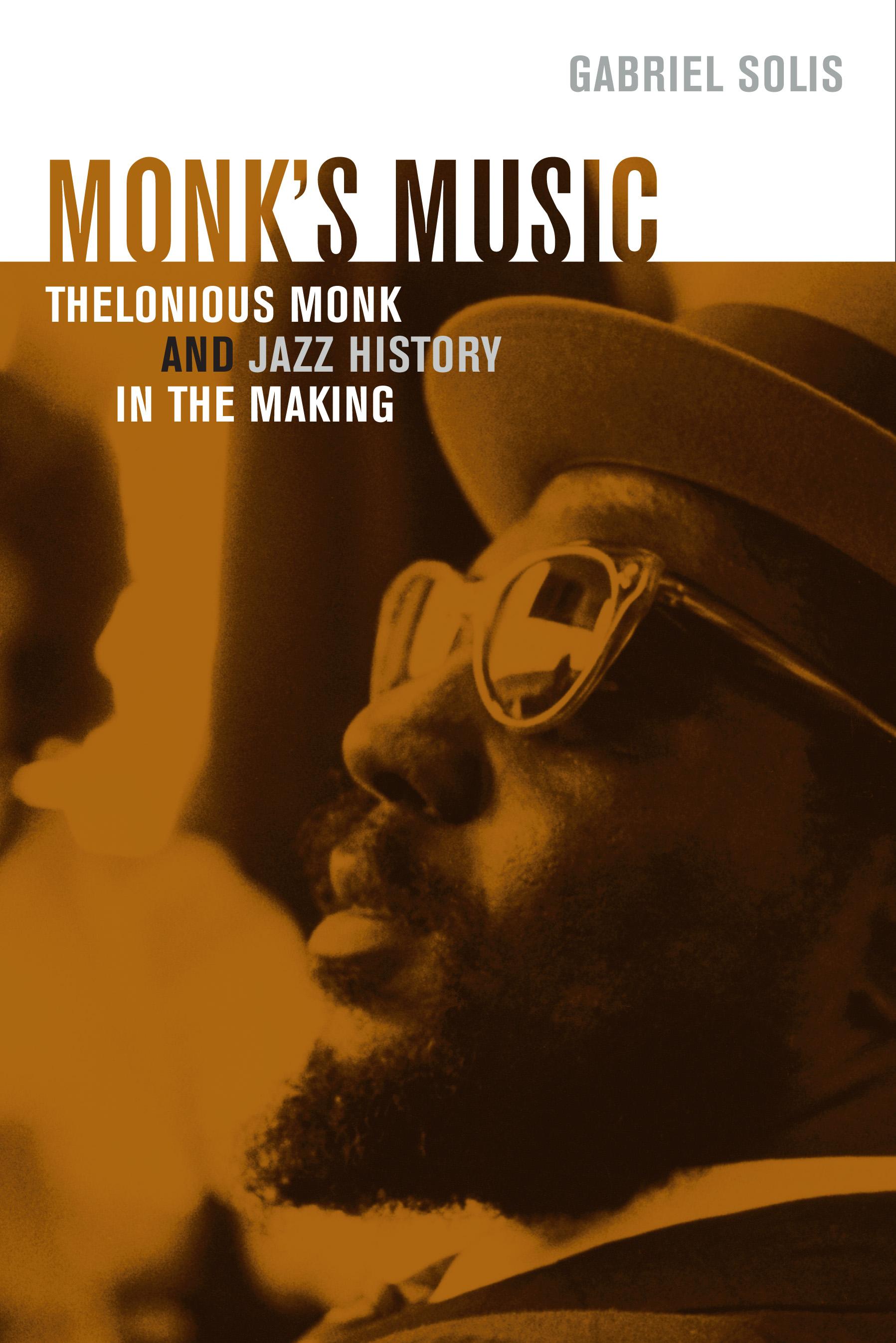
Thelonious Monk (1917-1982) was one of jazz's greatest and most enigmatic figures. As a composer, pianist, and bandleader, Monk both extended the piano tradition known as Harlem stride and was at the center of modern jazz's creation during the 1940s, setting the stage for the experimentalism of the 1960s and '70s. This pathbreaking study combines cultural theory, biography, and musical analysis to shed new light on Monk's music and on the jazz canon itself. Gabriel Solis shows how the work of this stubbornly nonconformist composer emerged from the jazz world's fringes to find a central place in its canon. Solis reaches well beyond the usual life-and-times biography to address larger issues in jazz scholarship—ethnography and the role of memory in history's construction. He considers how Monk's stature has grown, from the narrowly focused wing of the avant-garde in the 1960s and '70s to the present, where he is claimed as an influence by musicians of all kinds. He looks at the ways musical lineages are created in the jazz world and, in the process, addresses the question of how musicians use performance itself to maintain, interpret, and debate the history of the musical tradition we call jazz.
Betal nemt med kort, Klarna, Apple Pay eller Google Pay. Ikke tilfreds? Du har altid 14 dages fortrydelsesret. Læs mere i vores vilkår. Har du spørgsmål, så send os en mail på hello@memmo.org.
Memmo gør det nemmere at studere – uanset hvor du er i verden. Hos os samler du dine kursusbøger og smarte studieværktøjer ét sted: resuméer, quizzer, podcasts og flashcards. Og så er der Ted, din studieven, der svarer på alt, du undrer dig over. Over 50 000 studerende studerer allerede her – bygget til at hjælpe dig med at lære hurtigere og stresse mindre.
Du kan måske også lide
Køb bogen0