
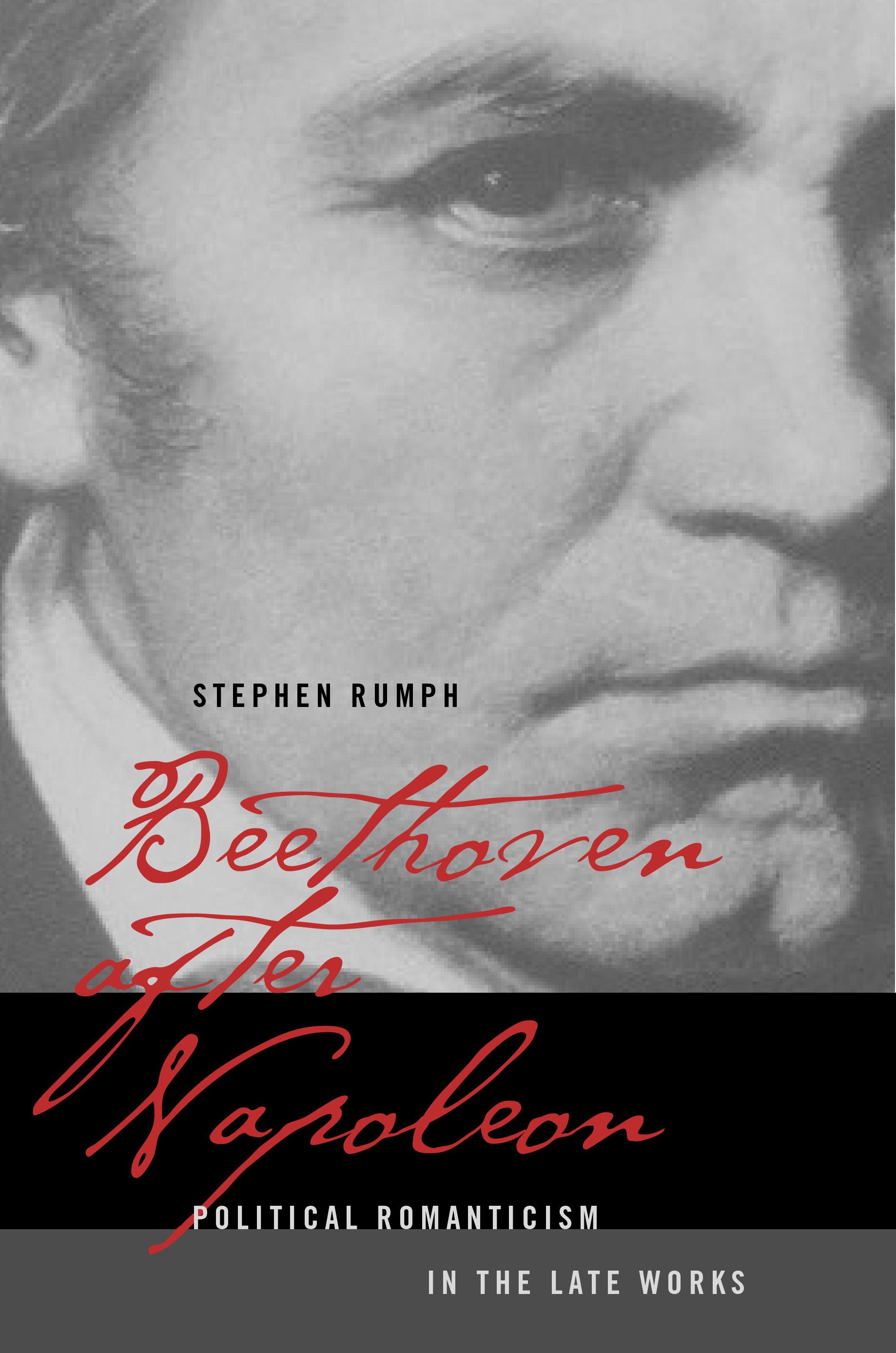
In this provocative analysis of Beethoven's late style, Stephen Rumph demonstrates how deeply political events shaped the composer's music, from his early enthusiasm for the French Revolution to his later entrenchment during the Napoleonic era. Impressive in its breadth of research as well as for its devotion to interdisciplinary work in music history, Beethoven after Napoleon challenges accepted views by illustrating the influence of German Romantic political thought in the formation of the artist's mature style. Beethoven's political views, Rumph argues, were not quite as liberal as many have assumed. While scholars agree that the works of the Napoleonic era such as the Eroica Symphony or Fidelio embody enlightened, revolutionary ideals of progress, freedom, and humanism, Beethoven's later works have attracted less political commentary. Rumph contends that the later works show clear affinities with a native German ideology that exalted history, religion, and the organic totality of state and society. He claims that as the Napoleonic Wars plunged Europe into political and economic turmoil, Beethoven's growing antipathy to the French mirrored the experience of his Romantic contemporaries. Rumph maintains that Beethoven's turn inward is no pessimistic retreat but a positive affirmation of new conservative ideals.
Betal nemt med kort, Klarna, Apple Pay eller Google Pay. Ikke tilfreds? Du har altid 14 dages fortrydelsesret. Læs mere i vores vilkår. Har du spørgsmål, så send os en mail på hello@memmo.org.
Memmo gør det nemmere at studere – uanset hvor du er i verden. Hos os samler du dine kursusbøger og smarte studieværktøjer ét sted: resuméer, quizzer, podcasts og flashcards. Og så er der Ted, din studieven, der svarer på alt, du undrer dig over. Over 50 000 studerende studerer allerede her – bygget til at hjælpe dig med at lære hurtigere og stresse mindre.
Du kan måske også lide
Køb bogen0