
Under Ptolemy II Philadelphus, who ruled Egypt in the middle of the third century B.C.E., Alexandria became the brilliant multicultural capital of the Greek world. Theocritus's poem in praise of Philadelphus—at once a Greek king and an Egyptian pharaoh—is the only extended poetic tribute to this extraordinary ruler that survives. Combining the Greek text, an English translation, a full line-by-line commentary, and extensive introductory studies of the poem's historical and literary context, this volume also offers a wide-ranging and far-reaching consideration of the workings and representation of poetic patronage in the Ptolemaic age. In particular, the book explores the subtle and complex links among Theocritus's poem, modes of praise drawn from both Greek and Egyptian traditions, and the subsequent flowering of Latin poetry in the Augustan age.
As the first detailed account of this important poem to show how Theocritus might have drawn on the pharaonic traditions of Egypt as well as earlier Greek poetry, this book affords unique insight into how praise poetry for Ptolemy and his wife may have helped to negotiate the adaptation of Greek culture that changed conditions of the new Hellenistic world. Invaluable for its clear translation and its commentary on genre, dialect, diction, and historical reference in relation to Theocritus's Encomium, the book is also significant for what it reveals about the poem's cultural and social contexts and about Theocritus' devices for addressing his several readerships.
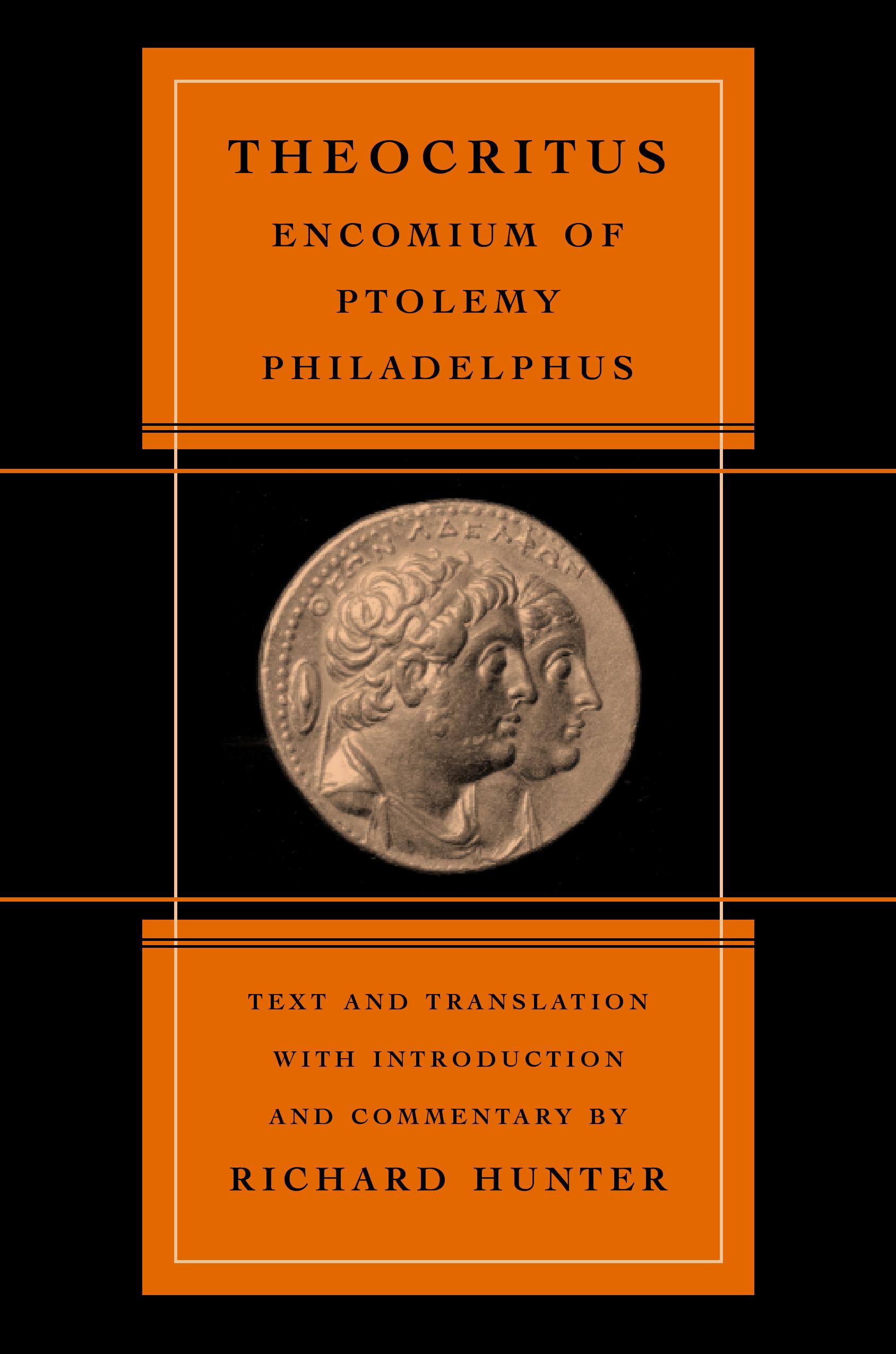
COVER IMAGE: The image on the front cover of this book is incorrectly identified on the jacket flap. The correct caption is: Gold Oktadrachm depicting Ptolemy II and Arsinoe (mid-third century BCE; by permission of the Museum of Fine Arts, Boston).
As the first detailed account of this important poem to show how Theocritus might have drawn on the pharaonic traditions of Egypt as well as earlier Greek poetry, this book affords unique insight into how praise poetry for Ptolemy and his wife may have helped to negotiate the adaptation of Greek culture that changed conditions of the new Hellenistic world. Invaluable for its clear translation and its commentary on genre, dialect, diction, and historical reference in relation to Theocritus's Encomium, the book is also significant for what it reveals about the poem's cultural and social contexts and about Theocritus' devices for addressing his several readerships.
COVER IMAGE: The image on the front cover of this book is incorrectly identified on the jacket flap. The correct caption is: Gold Oktadrachm depicting Ptolemy II and Arsinoe (mid-third century BCE; by permission of the Museum of Fine Arts, Boston).
Betal nemt med kort, Klarna, Apple Pay eller Google Pay. Ikke tilfreds? Du har altid 14 dages fortrydelsesret. Læs mere i vores vilkår. Har du spørgsmål, så send os en mail på hello@memmo.org.
Memmo gør det nemmere at studere – uanset hvor du er i verden. Hos os samler du dine kursusbøger og smarte studieværktøjer ét sted: resuméer, quizzer, podcasts og flashcards. Og så er der Ted, din studieven, der svarer på alt, du undrer dig over. Over 50 000 studerende studerer allerede her – bygget til at hjælpe dig med at lære hurtigere og stresse mindre.
Du kan måske også lide
Køb bogen0