
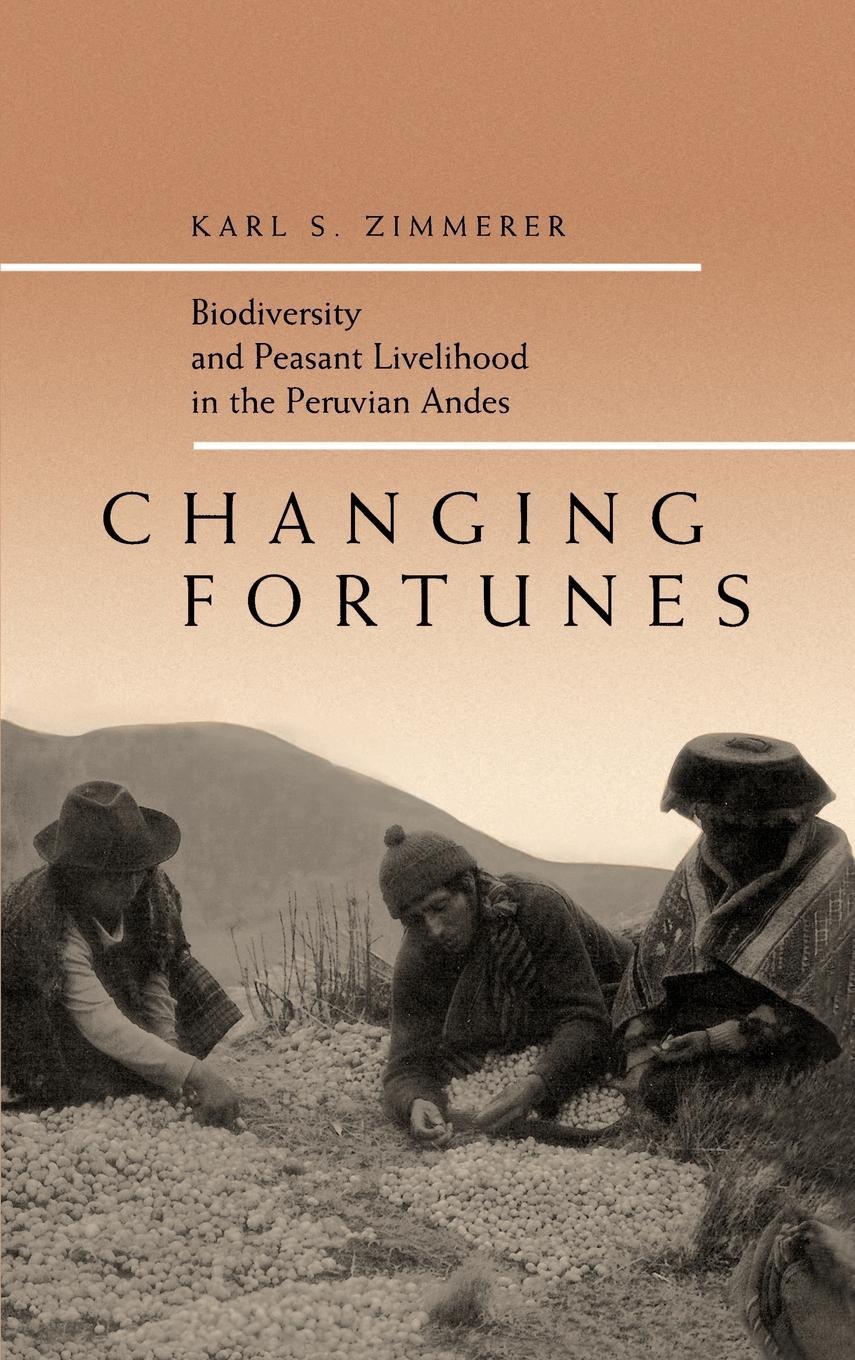
Two of the world's most pressing needs—biodiversity conservation and agricultural development in the Third World—are addressed in Karl S. Zimmerer's multidisciplinary investigation in geography. Zimmerer challenges current opinion by showing that the world-renowned diversity of crops grown in the Andes may not be as hopelessly endangered as is widely believed. He uses the lengthy history of small-scale farming by Indians in Peru, including contemporary practices and attitudes, to shed light on prospects for the future. During prolonged fieldwork among Peru's Quechua peasants and villagers in the mountains near Cuzco, Zimmerer found convincing evidence that much of the region's biodiversity is being skillfully conserved on a de facto basis, as has been true during centuries of tumultuous agrarian transitions.
Diversity occurs unevenly, however, because of the inability of poorer Quechua farmers to plant the same variety as their well-off neighbors and because land use pressures differ in different locations. Social, political, and economic upheavals have accentuated the unevenness, and Zimmerer's geographical findings are all the more important as a result. Diversity is indeed at serious risk, but not necessarily for the same reasons that have been cited by others. The originality of this study is in its correlation of ecological conservation, ethnic expression, and economic development.
Two of the world's most pressing needs—biodiversity conservation and agricultural development in the Third World—are addressed in Karl S. Zimmerer's multidisciplinary investigation in geography. Zimmerer challenges current opinion by showing that the worl
Diversity occurs unevenly, however, because of the inability of poorer Quechua farmers to plant the same variety as their well-off neighbors and because land use pressures differ in different locations. Social, political, and economic upheavals have accentuated the unevenness, and Zimmerer's geographical findings are all the more important as a result. Diversity is indeed at serious risk, but not necessarily for the same reasons that have been cited by others. The originality of this study is in its correlation of ecological conservation, ethnic expression, and economic development.
Two of the world's most pressing needs—biodiversity conservation and agricultural development in the Third World—are addressed in Karl S. Zimmerer's multidisciplinary investigation in geography. Zimmerer challenges current opinion by showing that the worl
Betal nemt med kort, Klarna, Apple Pay eller Google Pay. Ikke tilfreds? Du har altid 14 dages fortrydelsesret. Læs mere i vores vilkår. Har du spørgsmål, så send os en mail på hello@memmo.org.
Memmo gør det nemmere at studere – uanset hvor du er i verden. Hos os samler du dine kursusbøger og smarte studieværktøjer ét sted: resuméer, quizzer, podcasts og flashcards. Og så er der Ted, din studieven, der svarer på alt, du undrer dig over. Over 50 000 studerende studerer allerede her – bygget til at hjælpe dig med at lære hurtigere og stresse mindre.
Du kan måske også lide
Køb bogen0