
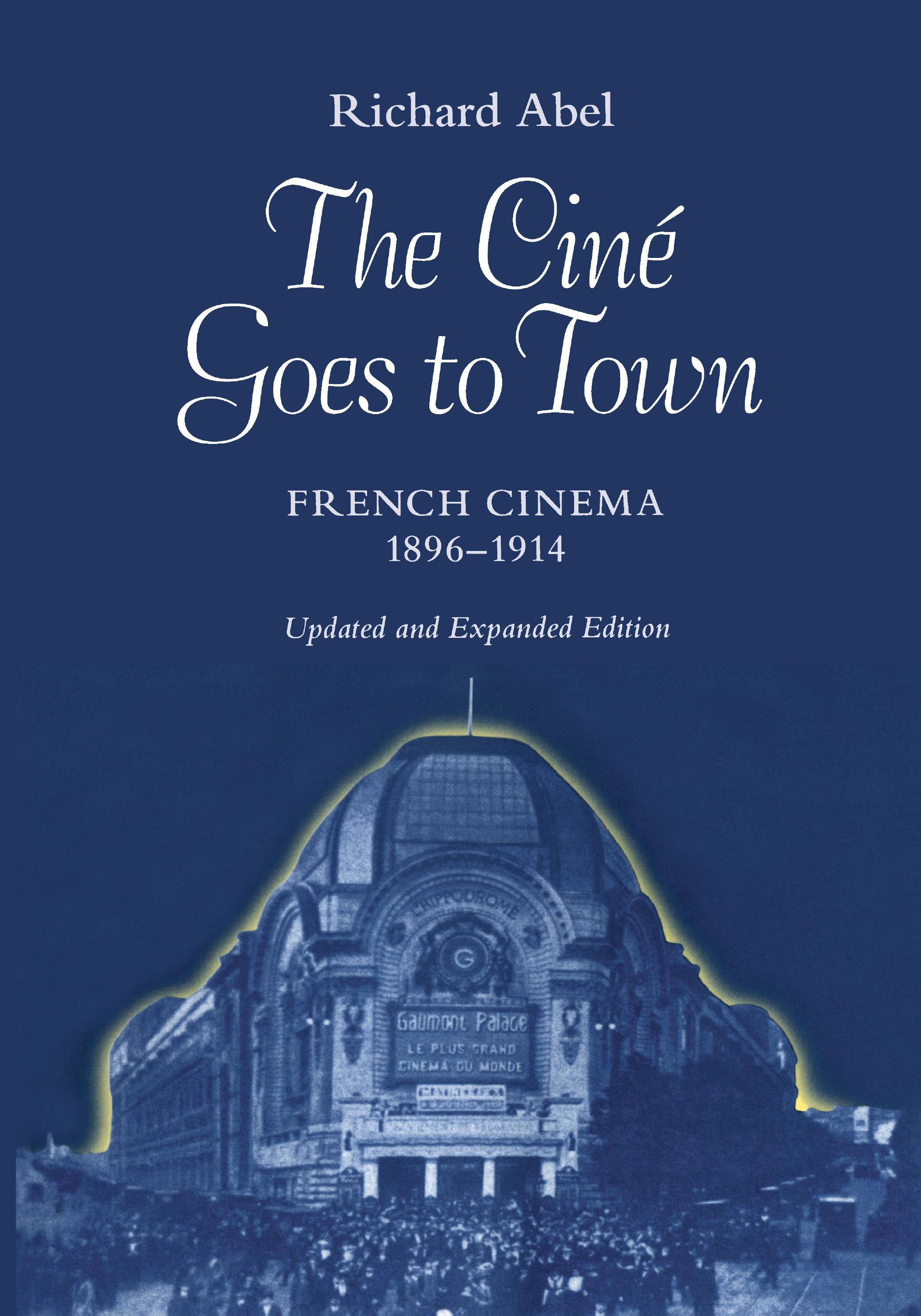
Richard Abel's magisterial new book radically rewrites the history of French cinema between 1896 and 1914, particularly during the years when Pathé-Frères, the first major corporation in the new industry, led the world in film production and distribution. Based on extensive investigation of rare archival films and documents, and drawing on recent social and cultural histories of turn-of-the-century France and the United States, his book provides new insights into the earliest history of the cinema.
Abel tells how early French film entertainment changed from a cinema of attractions to the narrative format that Hollywood would so successfully exploit. He describes the popular genres of the era—comic chases, trick films and féeries, historical and biblical stories, family melodramas and grand guignol tales, crime and detective films—and shows the shift from short subjects to feature-length films. Cinema venues evolved along with the films as live music, color effects, and other new exhibiting techniques and practices drew larger and larger audiences. Abel explores the ways these early films mapped significant differences in French social life, helping to produce thoroughly bourgeois citizens for Third Republic France.
The Ciné Goes to Town recovers early French cinema's unique contribution to the development of the mass culture industry. As the one-hundredth anniversary of cinema approaches, this compelling demonstration of film's role in the formation of social and national identity will attract a wide audience of film scholars, social and cultural historians, and film enthusiasts.
Richard Abel's magisterial new book radically rewrites the history of French cinema between 1896 and 1914, particularly during the years when Pathé-Frères, the first major corporation in the new industry, led the world in film production and distribution.
Abel tells how early French film entertainment changed from a cinema of attractions to the narrative format that Hollywood would so successfully exploit. He describes the popular genres of the era—comic chases, trick films and féeries, historical and biblical stories, family melodramas and grand guignol tales, crime and detective films—and shows the shift from short subjects to feature-length films. Cinema venues evolved along with the films as live music, color effects, and other new exhibiting techniques and practices drew larger and larger audiences. Abel explores the ways these early films mapped significant differences in French social life, helping to produce thoroughly bourgeois citizens for Third Republic France.
The Ciné Goes to Town recovers early French cinema's unique contribution to the development of the mass culture industry. As the one-hundredth anniversary of cinema approaches, this compelling demonstration of film's role in the formation of social and national identity will attract a wide audience of film scholars, social and cultural historians, and film enthusiasts.
Richard Abel's magisterial new book radically rewrites the history of French cinema between 1896 and 1914, particularly during the years when Pathé-Frères, the first major corporation in the new industry, led the world in film production and distribution.
Betal nemt med kort, Klarna, Apple Pay eller Google Pay. Ikke tilfreds? Du har altid 14 dages fortrydelsesret. Læs mere i vores vilkår. Har du spørgsmål, så send os en mail på hello@memmo.org.
Memmo gør det nemmere at studere – uanset hvor du er i verden. Hos os samler du dine kursusbøger og smarte studieværktøjer ét sted: resuméer, quizzer, podcasts og flashcards. Og så er der Ted, din studieven, der svarer på alt, du undrer dig over. Over 50 000 studerende studerer allerede her – bygget til at hjælpe dig med at lære hurtigere og stresse mindre.
Du kan måske også lide
Køb bogen0