
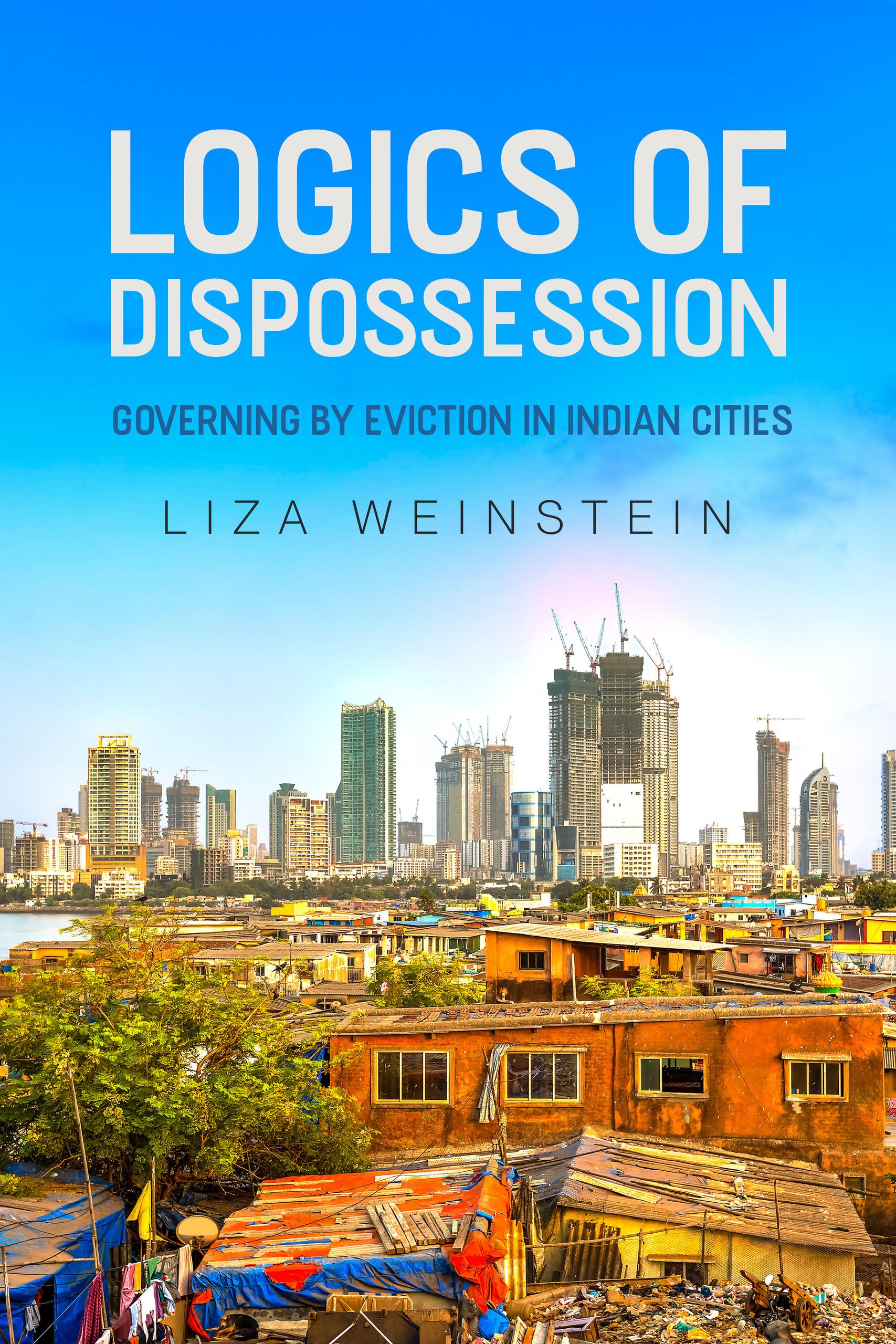
A new "bulldozer politics" has taken hold in many Indian cities, destroying neighborhoods and displacing city residents as it pursues a global city aesthetic. Presentist accounts might explain these evictions as emergent modes of capital accumulation, but Logics of Dispossession challenges that story and situates these acts in a longer historical durée.
Employing a comparative genealogical approach to historical analysis, Liza Weinstein traces the Indian government’s power to evict—from its beginnings in the colonial capitals of the British Raj, to developmental state-building projects and the rise of ethnonationalist politics, up to the present neoliberal conjuncture. Drawing on multicity fieldwork, archival research, and a database of more than a thousand eviction cases, Weinstein argues that evictions constitute a historically entrenched tool of city governance, motivated by a shifting set of intersecting, often contradictory logics that have accumulated over time and in locally specific ways across Indian cities aspiring to be world-class.
Betal nemt med kort, Klarna, Apple Pay eller Google Pay. Ikke tilfreds? Du har altid 14 dages fortrydelsesret. Læs mere i vores vilkår. Har du spørgsmål, så send os en mail på hello@memmo.org.
Memmo gør det nemmere at studere – uanset hvor du er i verden. Hos os samler du dine kursusbøger og smarte studieværktøjer ét sted: resuméer, quizzer, podcasts og flashcards. Og så er der Ted, din studieven, der svarer på alt, du undrer dig over. Over 50 000 studerende studerer allerede her – bygget til at hjælpe dig med at lære hurtigere og stresse mindre.